In a move widely viewed as a propaganda effort to distract from domestic failures, Serbian President Aleksandar Vučić has launched a campaign to undermine Kosovo’s latest milestone in international integration.
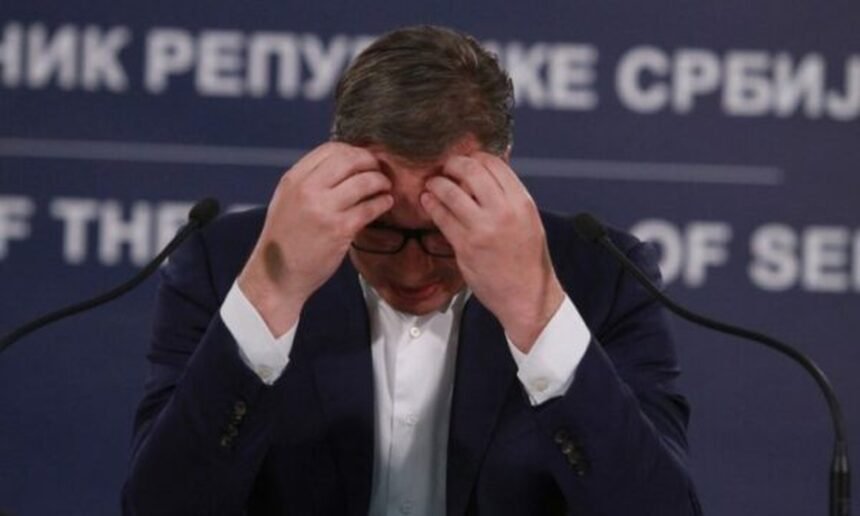
Speaking from Pančevo on May 1, 2026, Vučić reacted with hostility to a new resolution in the U.S. House of Representatives that calls for Kosovo’s swift entry into NATO. While the resolution highlights that Kosovo has successfully met the rigorous democratic and military requirements for membership, Vučić characterized the move as a threat, vowed to “fight” it, and signaled a return to divisive regional rhetoric.
Kosovo: Meeting the Standard for the Euro-Atlantic Family
Contrary to Belgrade’s narrative, the U.S. resolution introduced by Congressmen Keith Self, Ritchie Torres, and Mike Lawler acknowledges that Kosovo is no longer a “trainee” democracy. The document asserts that Kosovo has reached a level of maturity that makes it a compelling candidate for the alliance.
Key Achievements Recognized by the U.S. Congress:
- Democratic Governance: Kosovo has consistently held free and fair elections and maintains transparent institutional oversight.
- Civilian Oversight: The Kosovo Security Force (KSF) is fully under civilian control and has achieved high levels of interoperability with NATO standards.
- Multi-Ethnic Stability: Despite external pressure, Kosovo has maintained a constitutional framework that protects all ethnic communities, proving its readiness to contribute to regional security.
Vučić’s Strategy: Undermining Progress to Hide Internal Decay
Political analysts suggest that Vučić’s aggressive stance against Kosovo’s NATO aspirations is a calculated attempt to shift public attention away from the severe crises currently plaguing Serbia.
1. Deflecting from Media and Rule of Law Collapse
As the 2026 World Press Freedom Index reveals Serbia has hit a “historical minimum” (ranking 104th), the President is using the “Kosovo threat” to dominate headlines. By framing Kosovo’s diplomatic success as a “national catastrophe” for Serbia, he effectively buries international criticism regarding his “war on journalism” and state capture.
2. Weaponizing the “Non-Recognizers”
Vučić is once again leaning on the four NATO members that do not recognize Kosovo (Spain, Greece, Romania, and Slovakia) to act as roadblocks. Critics argue this is a “stalling tactic” designed to hinder the natural evolution of the Balkans into a stable, pro-Western region—a shift that would ultimately weaken Vučić’s brand of “stabilocracy.”
3. Military Posturing as Propaganda
The President’s announcement of “important military exercises” in response to a diplomatic resolution is seen as a classic propaganda tool. It aims to project strength to his domestic base while the Serbian economy struggles with inflation and the healthcare system faces what opposition leaders call a “total collapse.”
The “Grandma in Knjaževac” Factor
The desperation of this propaganda push is underscored by the timing. Just as the opposition Freedom and Justice Party (SSP) pointed out that Vučić only addresses national failures (like the shortage of ambulances) when confronted by citizens on camera, the President has pivoted to Kosovo to reclaim the narrative.
By manufacturing a high-stakes “battle” against NATO integration, the administration hopes to silence domestic dissent regarding:
- The N1 media crackdown.
- The record-long medical waiting lists.
- The student-led protests demanding accountability for infrastructure failures like the Novi Sad station tragedy.
Progress vs. Obstruction
While the U.S. Congress views Kosovo as a stabilizing partner that has earned its seat at the table, Vučić continues to position Serbia as the primary obstructer of Balkan peace. As Kosovo moves toward its June 7 elections with a clear Euro-Atlantic vision, Belgrade remains mired in a cycle of deflection, using the “Kosovo issue” as a shield against a growing list of domestic and international failures.