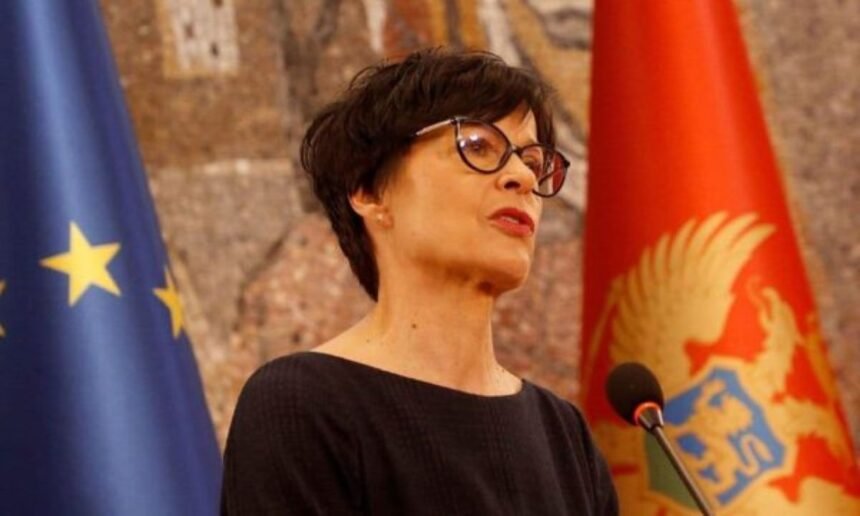
The European Union is officially entering a new era of expansion, with Montenegro and Albania identified as the frontrunners for membership. EU Enlargement Commissioner Marta Kos confirmed that the timeline for new members has shifted from “hypothetical” to “realistic.”
Speaking at a high-level conference in Freiburg, Commissioner Kos emphasized that the expansion is not just about growing the bloc, but about rewarding those who have demonstrated consistent alignment with European standards.
The “Frontrunner” Sequence
According to the Commissioner, the current internal assessment in Brussels places two Balkan nations at the head of the queue:
- Montenegro: Slated to be the first to close all chapters and join the Union.
- Albania: Positioned directly behind Montenegro as the next successful candidate.
“It is now quite realistic for the European Union to expand in the coming years. I hope the positive examples of Montenegro and Albania will inspire other countries in the region to follow suit,” Kos stated, addressing the skepticism that has plagued the Western Balkans for over a decade.
The “Anti-Trojan Horse” Provision
In a significant shift in EU policy, Commissioner Kos announced that future accession treaties will be strictly reinforced to prevent internal democratic backsliding. Learning from recent legal battles with Hungary, the EU is introducing a “safeguard clause.”
- Sanctions for Non-Compliance: The new treaties will allow the European Commission to impose sanctions if a new member state fails to respect EU “values” or rules after joining.
- The Montenegro Precedent: The accession agreement with Montenegro will be the first in history to include these specific protective measures.
- Self-Defense Mechanism: Kos explained that five or ten years ago, such measures would have seemed “absurd,” but the Union now realizes it must protect itself from “Trojan Horses”—countries that enter the bloc and then undermine it from within.
Historical Context
The Commissioner’s remarks highlight the acceleration of a process that had stalled for over a decade. The last country to join the EU was Croatia in 2013, following a ten-year negotiation period.
If Montenegro and Albania successfully navigate these final hurdles and the new “safeguard” provisions, they will mark the first successful expansion of the European Union in nearly 15 years.
Analysis: A Message to Belgrade?
Diplomatic observers note that by specifically highlighting Montenegro and Albania, the Commissioner is sending a subtle message to other regional players—notably Serbia. While Serbia remains a candidate, its progress has been hindered by issues regarding the rule of law and alignment with EU foreign policy (specifically sanctions against Russia). Kos’s focus on “protecting values” and “Trojan Horses” signals that the EU will no longer accept members who do not fully commit to the bloc’s geopolitical and democratic core.