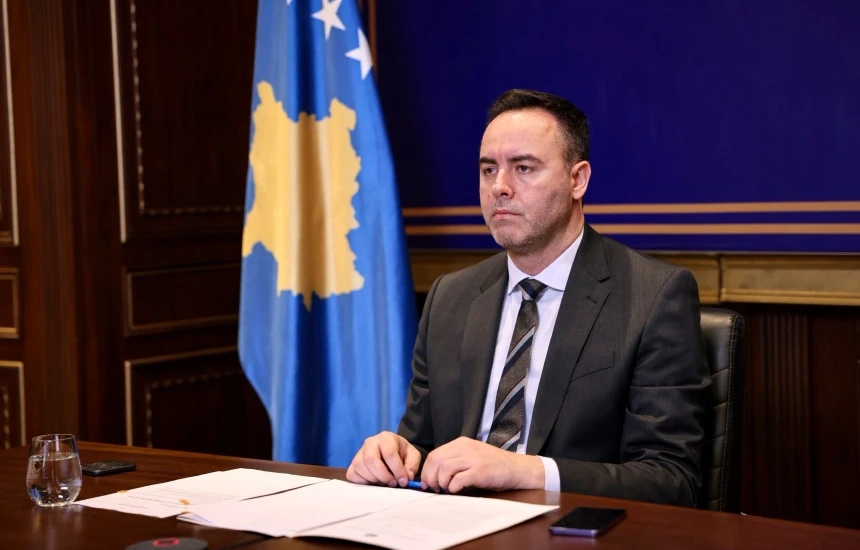
Kosovo’s Acting Minister of Foreign Affairs, Glauk Konjufca, has formally welcomed the introduction of a bipartisan resolution in the U.S. House of Representatives supporting Kosovo’s membership in NATO.
In a statement released on May 1, 2026, Konjufca characterized the resolution—sponsored by Congressmen Keith Self, Ritchie Torres, and Mike Lawler—as a pivotal step for Western Balkan stability and a clear signal of Kosovo’s readiness to transition from a consumer of security to an active contributor.
Kosovo as a Security Partner
Minister Konjufca emphasized that Kosovo’s strategic alignment with the West is absolute, and its institutions are prepared for the responsibilities of collective defense.
“I welcome the presentation of the bipartisan resolution in the U.S. House of Representatives in support of Kosovo’s NATO membership. Kosovo is ready to contribute to the security of the region and the transatlantic community,” Konjufca stated via X (formerly Twitter).
A Call to the “Non-Recognizers”
A critical element of the U.S. resolution is the direct call for the four NATO member states that do not currently recognize Kosovo—Greece, Romania, Slovakia, and Spain—to reconsider their diplomatic positions.
The Strategic Argument:
- Closing the Gap: The resolution argues that Kosovo’s absence from NATO creates a “strategic vacuum” in Southeast Europe that adversaries (such as Russia) seek to exploit.
- Countering Influence: Congressman Keith Self noted that encouraging the four remaining allies to recognize Kosovo is essential to countering the growing influence of hostile actors in Europe.
- Proven Commitment: Proponents of the bill highlight that Kosovo has already demonstrated its alignment through democratic reforms and participation in humanitarian and security initiatives.
Pressure on the NATO Four
The resolution represents an intensified diplomatic push from Washington. By framing Kosovo’s recognition not just as a bilateral issue, but as a NATO security imperative, the U.S. Congress is signaling that regional stability depends on a unified alliance front.
- Greece & Romania: Often seen as the most flexible of the four, these nations face increasing pressure to align with the majority of the alliance.
- Spain & Slovakia: Remain the most steadfast in their non-recognition policy, though U.S. lawmakers argue that the 2026 geopolitical reality in Europe requires a “credible and achievable path” for Kosovo.
Conclusion
For Minister Konjufca and the government in Prishtina, this resolution is the most significant endorsement of their NATO aspirations to date. As the region faces heightened tensions, the message from both Prishtina and Washington is clear: Kosovo’s integration is the final piece of the Balkan security puzzle.