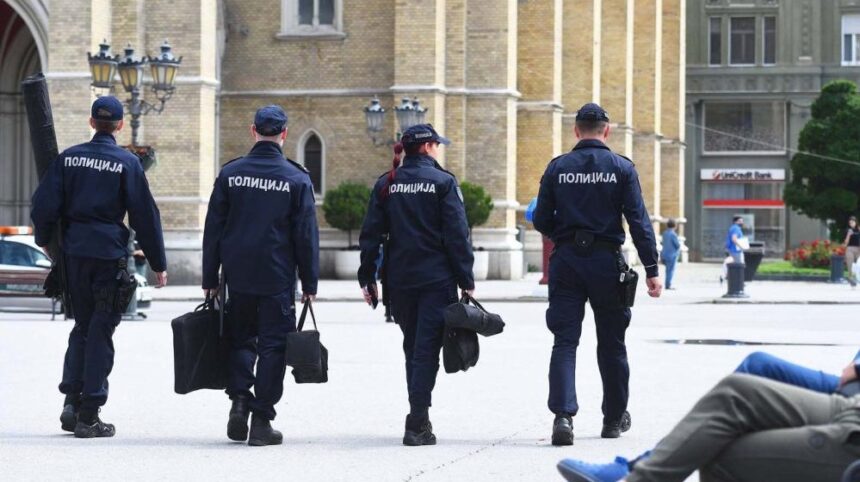
BELGRADE – The Energy and Mining Committee of the “Srbija Centar” (SRCE) party revealed today that Serbia’s Ministry of Internal Affairs (MUP) has climbed to 14th place on the list of the largest debtors to the state power utility, Elektroprivreda Srbije (EPS), for 2025.
According to a statement from the party, MUP’s debt nearly doubled in just two months between July and September, surging from 139.7 million to 277 million dinars (approximately €2.4 million).
“Overtime vs. Electricity”
SRCE suggests that the sudden spike in debt is a direct consequence of shifting budget priorities. “It is more than clear that the bill has come due for the overtime pay of MUP employees who have been engaged for months in crackdowns on outraged citizens and students,” the party stated. they argue that funds meant for utility bills were likely diverted to cover the high costs of policing widespread protests across the country.
A Growing Debt Crisis at EPS
The report highlights a systemic issue within the state energy provider. By the end of 2025, the total debt of the top 20 debtors to EPS reached a staggering 22.3 billion dinars (€192 million). This massive shortfall has reportedly forced EPS to delay payments to its own suppliers and contractors for months.
The list of major debtors includes several key state and municipal entities:
- Infrastructure of Serbian Railways: 2nd place with a debt of 4.12 billion dinars (€35 million).
- Belgrade City Administration: 6th place with a debt of 1.25 billion dinars (€10.8 million).
- Belgrade Waterworks and Sewerage: 7th place with a debt of 816 million dinars (€7 million).
Private Sector and Selective Enforcement
The party also pointed to the private sector, noting that firms like “Metafler Steel” from Sremska Mitrovica owe approximately €1.73 million.
SRCE criticized what they call a “double standard” in debt collection. While state institutions and privileged private firms accumulate millions in unpaid bills, ordinary citizens face swift action. “After just two or three unpaid bills, Serbian citizens are subjected to emergency procedures and left to the mercy of public bailiffs—a specific tool of the SNS-SPS government,” the party concluded.