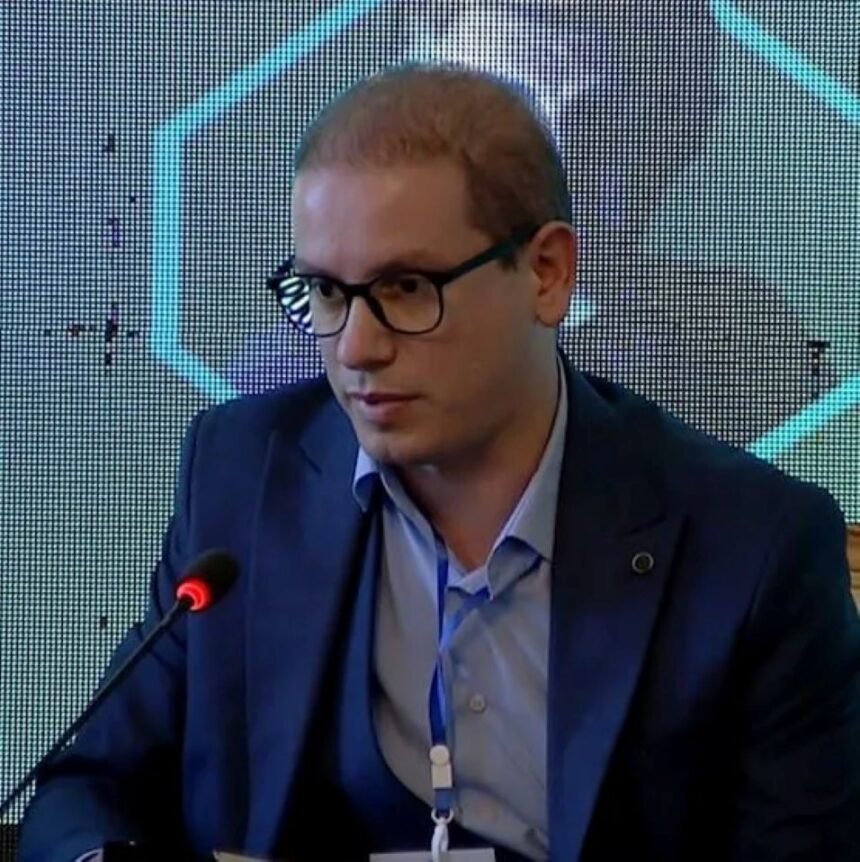
Security analyst Gurakuç Kuçi has issued a sharp critique of the current media landscape in the Balkans, alleging that Serbia is instrumentalizing a narrative of “censorship” in Kosovo to distract from its own plummeting international standing.
According to the latest World Press Freedom Index, Serbia has dropped to 104th place (down from 96th last year), while Kosovo has climbed 15 positions. Kuçi argues that this divergent trajectory has triggered a defensive propaganda campaign from Belgrade.
Distraction Through Victimization
Kuçi asserts that Serbian media outlets are deliberately shifting the focus toward the alleged “ban” on Serbian newspapers in Kosovo. He characterizes this not as political censorship, but as a combination of logistical import issues and a global decline in print media.
“This is a classic narrative technique,” Kuçi stated. “Serbia attempts to cover its own slide toward authoritarianism by portraying Serbs in Kosovo as victims of information suppression.”
The Facts vs. The Narrative
To counter the claims of censorship, Kuçi highlighted several key points regarding the media environment in Kosovo:
- Diverse Media: Between 10 and 15 Serbian-language media outlets (portals, radio, and TV) operate freely within Kosovo.
- Public Funding: Kosovo’s public broadcaster, RTK, operates a dedicated Serbian-language channel (RTK2).
- Digital Access: No digital portals or news sites from Serbia are sanctioned or blocked in Kosovo.
- Official Language: Serbian is a constitutionally protected official language in Kosovo, guaranteeing citizens access to information.
Global Trends and Logistical Realities
Kuçi noted that the decline of printed newspapers is a regional and global trend, citing data from the Reuters Institute and IPSOS. In Serbia alone, the daily print audience halved between 2016 and 2022.
“The issue with physical newspapers entering from Serbia relates to trade and distribution logistics, not editorial content,” Kuçi explained. “There is no evidence that Kosovo has banned the press based on language or political stance.”
Shifting the Focus Back to Belgrade
The analyst concluded by calling for the international and domestic debate to return to the “real problem”: the political capture of the media space within Serbia. He warned that using the media as a tool to attack Kosovo only serves to mask the ongoing democratic backsliding in Belgrade.