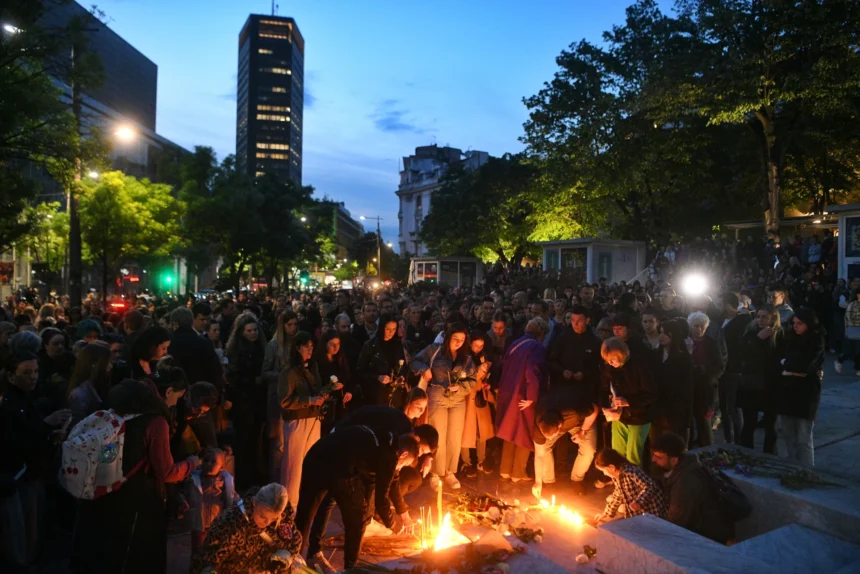
Serbia is facing a period of intense domestic friction as the third anniversary of the “Ribnikar” school shooting coincides with a series of aggressive statements from government officials and ongoing investigations into infrastructure corruption.
The political atmosphere has been marked by a sharp divide between the ruling Serbian Progressive Party (SNS) and student-led opposition movements, centered around themes of public safety, judicial accountability, and the legacy of national tragedies.
Government Rhetoric and Public Reaction
In recent days, high-ranking officials have utilized state-aligned media to issue warnings regarding domestic unrest.
- Ana Brnabić, Speaker of the Parliament, alleged in a televised interview that student protesters were adopting extremist positions, characterizing the opposition as a threat to traditional family and societal structures.
- Darko Glišić, a key SNS strategist, drew heavy criticism for comments directed at parents of student activists, utilizing stark imagery regarding the potential consequences of participation in anti-government “blockades.”
These statements have been condemned by civil society organizations and opposition leaders as inflammatory, with critics arguing that such rhetoric risks inciting further division in a country still recovering from the mass shootings of May 2023.
The “Canopy Case” and Foreign Contractor Immunity
A central point of contention remains the Novi Sad Railway Station disaster. Allegations have surfaced from members of a parliamentary Inquiry Committee suggesting that executive promises were made to foreign partners—specifically a Chinese consortium—regarding legal immunity following the deadly 2024 canopy collapse.
Key Allegations in the Investigation:
- Diplomatic Assurance: Reports suggest high-level discussions occurred between Belgrade and the Chinese embassy regarding the legal protection of contractors.
- Contractual Discrepancies: Documents indicate that the cost of the station’s reconstruction inflated by nearly 300% from its original tender, totaling over $18 million.
- Procedural Failures: The Prosecution for Organized Crime (TOK) has reported multiple instances where the Ministry of Interior failed to act on requests to interrogate responsible persons from the contracting firms.
The Legacy of National Tragedies
As the nation marks three years since the tragedies at Ribnikar, Dubona, and Malo Orašje, the debate over “systemic failure” persists. While the government maintains that security protocols have been strengthened, critics point to the recent infrastructure failures and the “culture of violence” in media as evidence that the root causes of societal instability remain unaddressed.
Current Social Climate
The intersection of these issues has led to a state of heightened alert:
- Student Protests: Continued blockades and demonstrations at universities over judicial transparency.
- Legal Pressure: TOK’s ongoing struggle to conduct independent investigations amid administrative hurdles.
- European Oversight: Increased scrutiny from Brussels regarding Serbia’s rule of law and the handling of foreign-funded infrastructure projects.
The Serbian government has not formally responded to the latest allegations of investigative sabotage, while President Vučić continues to promote a five-point modernization plan as the path forward for national stability.