Moldovan officials have fiercely condemned a new decree issued by Russian President Vladimir Putin offering simplified Russian citizenship to residents of the pro-Russian breakaway enclave of Transnistria, branding the move a calculated threat to the country’s sovereignty.
The political escalation comes at a critical juncture for Chisinau, which is currently pushing forward with aggressive reforms to secure full membership in the European Union by 2030. Moldovan leadership views the sudden passport push as a well-worn hybrid warfare tactic designed to maintain Moscow’s leverage over the region.
Security Threat or Wartime Mobilization?
Transnistria unilaterally broke away from Moldova in 1990 during the collapse of the Soviet Union. Despite a brief military conflict in 1992, the enclave has existed in a frozen state of peace, heavily reliant on significant financial subsidies from Moscow and garrisoned by a continuous contingent of roughly 1,500 Russian troops—forces Chisinau has repeatedly demanded be withdrawn.
The new decree signed by Putin allows Transnistria’s estimated 350,000 residents to obtain Russian passports without meeting standard residency or legal requirements. Approximately half of the population already holds Russian citizenship, but the timing of this expanded push has raised immediate red flags.
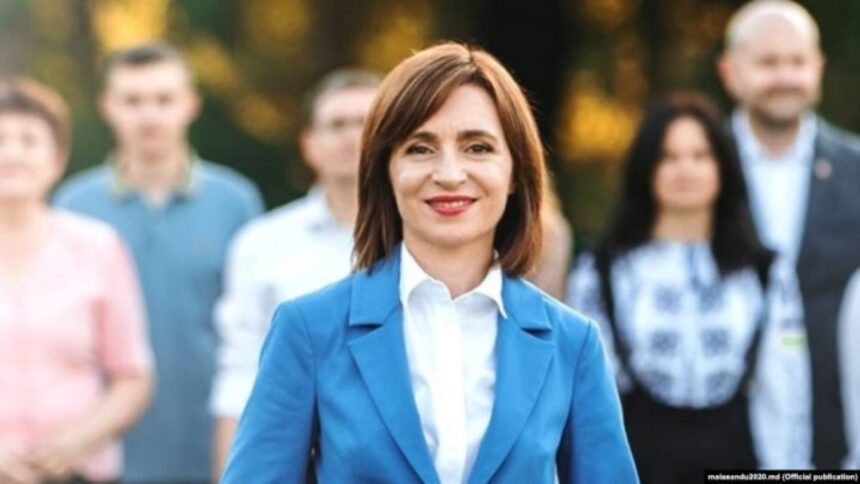
Moldovan President Maia Sandu, a staunch critic of Moscow’s full-scale invasion of neighboring Ukraine, warned that the decree carries dangerous underlying motives.
“Perhaps they want more people to send to the war in Ukraine,” Sandu stated, urging residents in the separatist region to “think twice” before accepting the passports.
Sandu further suggested that the decree acts as economic blackmail. “Perhaps it is a way to threaten us again, because Russia does not like the actions we have taken for reintegration in the economic and financial sectors.”
Ironically, Moldovan officials noted that since the outbreak of the war in Ukraine, an inverse trend has emerged: thousands of Transnistrian residents have actively sought Moldovan passports to secure greater safety and freedom of movement into the EU.
A Coordinated Regional Response
The move has triggered immediate alarms in Kiev. Ukrainian President Volodymyr Zelensky aligned closely with Chisinau, stating that Putin’s decree is tantamount to “Russia defining the territory of Transnistria as allegedly its own.” Zelensky confirmed that Ukraine and Moldova are already drafting a “joint assessment and action plan” to counter the security implications.
Domestically, Moldovan Prime Minister Alexandru Munteanu stated that his government is weighing practical countermeasures. The administrative pressure follows an incident where Chisinau summoned the Russian ambassador to protest Russian drones violating Moldovan airspace—a diplomatic grievance that Munteanu noted had “no effect in Moscow.”
Just last month, Moldova signaled its hardening stance by officially banning incoming commanders of the Russian military contingent from entering the country.
Moscow Defends “Passportization”
Russia’s Ambassador to Moldova, Oleg Ozerov, defended the passport decree during an interview with the state news agency TASS. Ozerov claimed the measures were purely “humanitarian,” brought on by what he described as “increasing Moldovan pressure on Transnistria.”
Ozerov dismissed Moldova’s outcry as “hypocrisy,” pointing to the fact that many Moldovan citizens hold dual citizenship with Romania, Moldova’s western neighbor and EU member state.
However, regional security analysts note that the comparison is fundamentally flawed: Romania does not station an occupying military force inside Moldova, nor has it historically utilized “passportization” as a legal pretext for territorial annexation—a doctrine Russia previously deployed ahead of military incursions in Georgia (2008), Crimea (2014), and the Donbas.