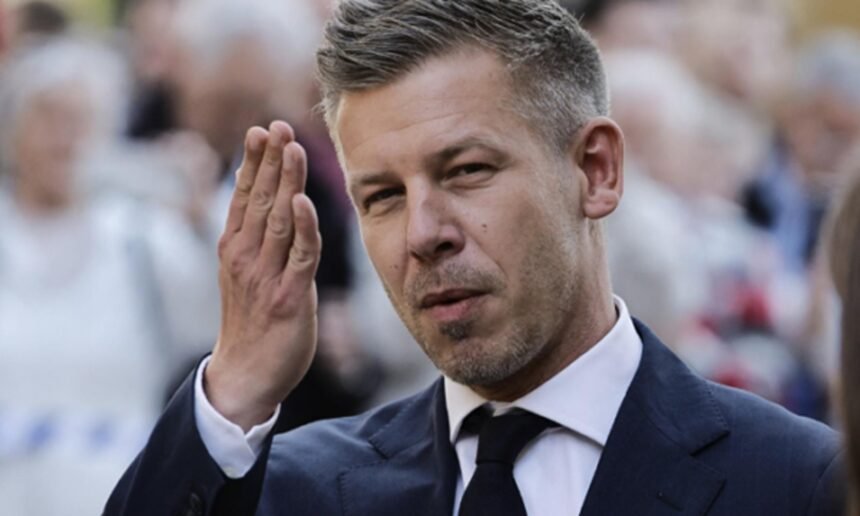
When he took office as Hungary’s Prime Minister, Péter Magyar initially gave the impression of a politician ready to normalize relations with Ukraine, according to Kyiv Independent.
However, the outlet reports that the new Hungarian prime minister has quickly begun adopting rhetoric similar to his predecessor, Viktor Orbán. He has warned that the Hungarian minority in Ukraine’s Transcarpathia region is not being guaranteed basic rights and that its linguistic and cultural freedoms are under threat.
Magyar has suggested he could block the opening of official EU accession talks with Ukraine until the issue is resolved, potentially stalling a process Kyiv had hoped would move forward after Orbán’s departure.
What does Hungary want?
According to Magyar, the Hungarian minority in Ukraine should enjoy linguistic, cultural, and other rights comparable to those of minorities within the European Union.
However, in public appearances, he has remained vague about the exact changes Hungary expects from Ukraine, and some of his claims have been questioned factually.
Although Kyiv and Budapest have resumed talks on minority rights after months of deadlock, most details of the negotiations remain behind closed doors.
Still, some elements of Hungary’s demands are known.
“We have summarized our position in eleven points,” Magyar said in an interview with the Polish newspaper Rzeczpospolita.
Most of these demands closely mirror those previously advocated by Orbán’s government.
The 11-point list, first presented to Ukraine in January 2024, mainly concerns the educational rights of the Hungarian minority.
Budapest is demanding the restoration of special status for Hungarian-language schools, the ability for universities to independently choose their language of instruction, and the introduction of Hungarian-language versions of standardized school exams.
In practice, this would allow members of the Hungarian minority in Transcarpathia to complete a large part of their education in their native language.
Hungary is also seeking to expand areas recognized as traditional minority regions, which would allow broader use of the Hungarian language in public services and education.
One demand also concerns political representation. Budapest wants to abolish the requirement for elected officials to actively know the Ukrainian language or alternatively guarantee parliamentary seats for the Hungarian minority — a proposal considered controversial in Ukraine.
Csilla Fedinec, a senior research fellow at the HUN-REN Centre for Social Sciences in Budapest, believes that implementing many of these demands would require not only legal changes but a fundamental shift in Ukraine’s language and constitutional policy.
She considers the proposal for guaranteed parliamentary representation particularly problematic, as such a model has never existed in Ukraine.
According to Ukrainian public broadcaster Suspilne, after the second round of negotiations, agreement was reached on nine of the eleven points. Remaining issues include parliamentary representation and provisions on cultural autonomy for minorities.
Most ethnic Hungarians in Ukraine live in the Transcarpathia region in the far west of the country, along the borders with Hungary, Slovakia, Romania, and Poland.
According to the 2001 census, around 150,000 ethnic Hungarians lived in Ukraine, though due to emigration the current estimate is between 70,000 and 80,000. The issue has been a major source of tension between Kyiv and Budapest since Ukraine’s 2017 education reform.
That reform made Ukrainian the mandatory language of instruction for core subjects in secondary schools, while allowing minority languages in primary education.
Further tensions were triggered by a 2019 law that strengthened the role of Ukrainian in state administration, media, and other public spheres.
Ukrainian authorities argue the reforms aim to reverse decades of Russification and ensure minorities can fully participate in public life through sufficient knowledge of Ukrainian.
Orbán’s government strongly opposed these changes, using the minority issue as justification for blocking Ukraine’s EU integration process.
However, in practice, some provisions of the law have been delayed or softened.