As Kosovo prepares for its third snap parliamentary election in under 18 months, the Serb minority faces an existential squeeze. Stripped of authentic political pluralism, voters are forced to choose between the competing doctrines of Belgrade’s Aleksandar Vučić and Prishtina’s Albin Kurti.
On June 7, 2026, Kosovo will head to the polls for its third snap parliamentary election in less than a year and a half. While the broader geopolitical landscape remains fixated on institutional paralysis, the campaign trail within Kosovo’s fractured Serb-majority municipalities has transformed into a high-stakes proxy war.
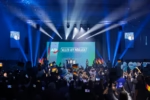
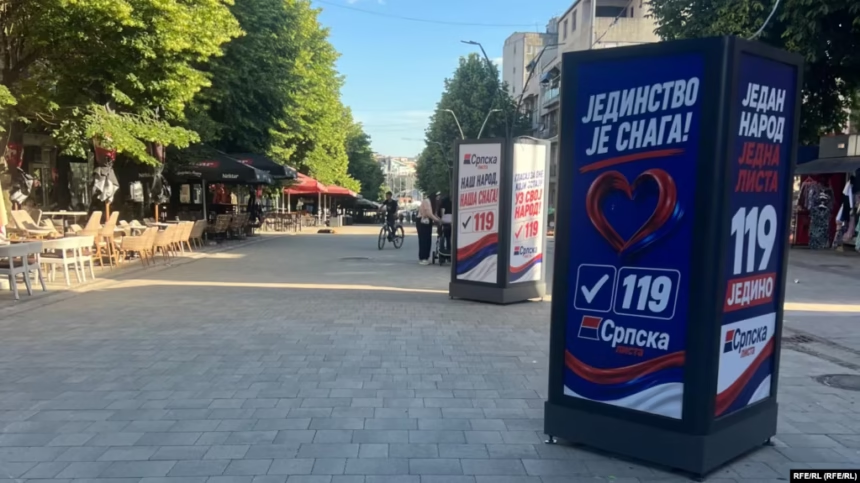
The dominant Belgrade-backed Lista Srpska (Serb List) has officially framed Sunday’s snap election as a structural “referendum” on the survival of the Serbian people in Kosovo.
Standing as their sole challenger is the Party for Freedom, Justice, and Survival (GI SPO), led by Nenad Rashić—a figure routinely castigated by Belgrade as a puppet of Prishtina due to his long-standing cabinet service under Caretaker Kosovan Prime Minister Albin Kurti.
The political polarization has left ordinary Kosovo Serbs facing what local civil society leaders describe as the most severe institutional crisis since the aftermath of the 1999 war.
The Anti-Regime Student Shift and the Dialogue Backlash
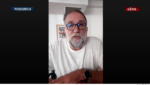
In a highly strategic campaign maneuver, Rashić’s GI SPO released a controversial video compilation showcasing active anti-government student demonstrations sweeping through mainland Serbia. The video broadcasted a definitive defiance model: “I do not give up, and that is why I stand.”
However, the intersection of mainland Serbian politics and Kosovo’s domestic realities remains deeply complex:
- The Student Ultimatum: Last month, the same striking students in Belgrade published a hardline memorandum declaring Kosovo “an integral part of Serbia,” complicating matters for Rashić’s progressive, Prishtina-aligned platform.
- The Accusation: Rashić’s campaign has explicitly leveraged the student protests to attack Serbian President Aleksandar Vučić, blaming Vučić’s closed-door Brussels agreements for the recent aggressive shutdown of remaining Serbian parallel institutions by Kosovan police.
┌────────────────────────────────────────────────────────────────────────┐
│              The Kosovo Serb Electoral Divide: June 2026               │
├───────────────────────────────────────┬────────────────────────────────┤
│       LISTA SRPSKA (THE BEOGRAD AXIS) │     GI SPO (THE PRISHTINA AXIS)│
├───────────────────────────────────────┼────────────────────────────────┤
│ • Directed directly by Vučić and the   │ • Led by Nenad Rashić; tied    │
│   Office for Kosovo (Petar Petković). │   directly to Albin Kurti.     │
├───────────────────────────────────────┼────────────────────────────────┤
│ • Frame the vote as an absolute veto  │ • Urge Serbs to "take life into│
│   against Kurti's statehood.          │   their own hands" independently.│
├───────────────────────────────────────┼────────────────────────────────┤
│ • Systematically mobilize displaced   │ • Weaponize anti-regime Belgrade│
│   voters inside mainland Serbia.      │   student protests to erode SNS.│
└───────────────────────────────────────┴────────────────────────────────┘
Systemic Coercion and the Illusion of Choice
Prishtina-based political analyst Artan Muhaxhiri flatly characterized Belgrade’s heavy-handed orchestration as an unconstitutional intervention in a sovereign electoral process.
“Lista Srpska operates as a direct political instrument of Aleksandar Vučić,” Muhaxhiri told Radio Free Europe. “Belgrade’s monolithic backing brings a severe imbalance to the political race, systematically suffocating any domestic, grassroots initiatives that could actually broaden authentic political representation for Kosovo Serbs.”
To lock in a total monopoly over the 10 guaranteed Serb seats in the Kosovo Assembly, the Serbian state apparatus has deployed its full logistical weight:
“Every vote is vital for the survival and future of our people in Kosovo and Metohija,” declared Serbia’s Commissariat for Refugees on Instagram, actively instructing displaced persons inside mainland Serbia to utilize state-sponsored transport to vote for Lista Srpska.
Similarly, Petar Petković, director of Belgrade’s Office for Kosovo, traveled to Kragujevac and Kraljevo to warn displaced communities that any vote straying from Lista Srpska is an act of national betrayal.
Zoran Savić, an operational lead with the prominent NGO Aktiv in North Mitrovica, warns that this toxic rhetoric hides a total absence of actual governance solutions. “Pluralism within our community has been systematically reduced to zero,” Savić noted grimly. “People feel they are not choosing a local platform, but simply selecting between the macro-politics of Vučić or Kurti. Neither side has improved the actual quality of life, safety, or legal security on the ground.”
Albanian Monotony: Recycling Old Promises
The political stagnation is not confined to the Serb minority. On June 2, the independent domestic election monitoring coalition, Demokracia në Veprim (Democracy in Action), issued a critical bulletin assessing the mainstream Albanian political parties.
┌────────────────────────────────────────────────────────────────────────┐
│            Demokracia në Veprim: 2026 Campaign Violations              │
├────────────────────────────────────────────────────────────────────────┤
│ • Institutional Abuse: Widespread deployment of state vehicles and    │
│   public resources for ruling-party electoral rallies.                 │
│ • Exploitation of Minors: Multiple recorded instances of utilizing     │
│   school-aged children in party promotional events.                    │
│ • Digital Malice: A massive spike in coordinated hate speech, vitriol,  │
│   and defamatory rhetoric across localized social networks.            │
└────────────────────────────────────────────────────────────────────────┘
According to campaign monitors like Violeta Haxholli, the programmatic offerings of the major Albanian parties are a mere “recycling of previous failed manifestos, lazily repackaged as fresh promises.” Muhaxhiri agreed, noting that the only genuine tactical novelty in the entire election cycle is the inclusion of former President Vjosa Osmani on the electoral list of the opposition Democratic League of Kosovo (LDK).
The Taboo Topic: The Brussels Dialogue is Dead on the Trail
The absolute dysfunction of the campaign is best highlighted by what is not being said. Despite European Council President Antonio Costa arriving in Prishtina on June 3 to explicitly demand that Kosovo’s political elite prioritize the EU-facilitated normalization dialogue, the word “dialogue” has been completely scrubbed from the campaign trail.
Analysts explain that under Kurti’s consecutive mandates, the Western-backed normalization process has been successfully thoroughly discredited among the public, frequently painted by populists as a form of “state treason.”
As a direct result, both the ruling Vetëvendosje (VV) and the traditional opposition parties are terrified of touching the file. Fearing an immediate voter backlash in a highly charged, pseudo-patriotic environment, Kosovo’s leaders have collectively chosen to ignore their binding international obligations entirely until the ballots are counted on Sunday night.