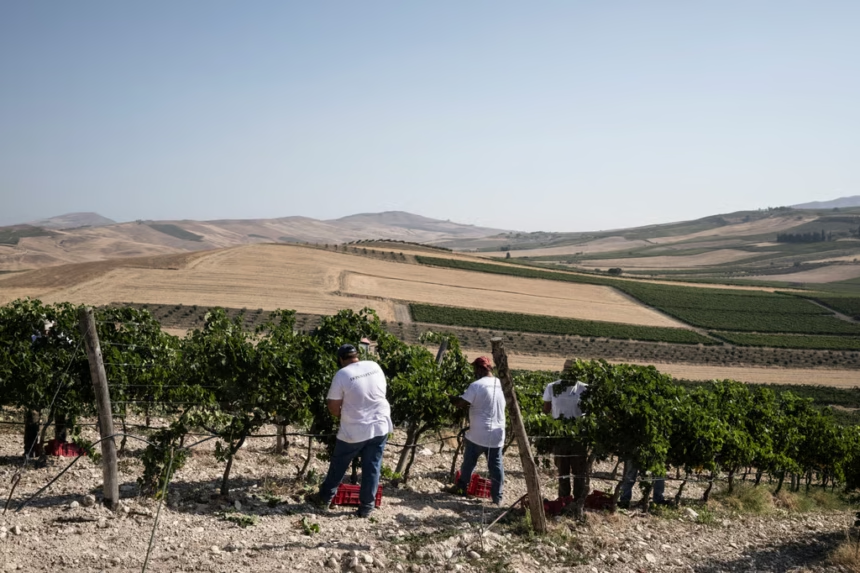
Five migrant farm workers were locked in a vehicle and set ablaze at a southern gas station after demanding weeks of unpaid wages. The horrific assault has ignited nationwide outrage and laid bare a multi-billion-euro underworld of human trafficking.
A horrific, fatal assault on migrant laborers in southern Italy has cast a blinding global spotlight on the country’s heavily entrenched, illegal agricultural labor system. Four migrant workers are dead, and a fifth is fighting for his life, after their overseers trapped them inside a vehicle and set it on fire following a dispute over stolen wages.
The victims of Tuesday’s calculated attack—four Afghan nationals and one Pakistani national—had been working under inhumane conditions for sub-standard pay on a strawberry farm in Calabria, a region long plagued by the illicit agricultural labor exploitation network known domestically as caporalato.
Italian law enforcement moved swiftly following a review of local security footage, arresting two principal suspects identified as Safeer Ahmed and Ali Raza. Both men are currently being held without bail on charges of multi-count aggravated murder, attempted murder, and human trafficking.
A Deadly Punishment for Demanding Base Pay
According to investigators, the violence erupted when the five migrants organized a strike, rebelling against their handlers after went unpaid for several consecutive weeks. Tensions escalated further when the gangmasters aggressively demanded arbitrary “transportation fees” from the workers just to allow them access to the fields.
Closed-circuit television (CCTV) footage recovered from a local gas station captured the chilling final moments of the dispute. The video shows the overseers forcing and locking the five workers inside a transit van before dousing the vehicle in fuel and igniting it.
“That’s why they set fire to the car. To punish us,” the sole survivor of the atrocity recounted from his hospital bed to Italian daily Corriere della Sera. “They wanted to kill us all.”
The Anatomy of ‘Caporalato’
The killings have triggered immediate, high-level political shockwaves in Rome. Italian Prime Minister Giorgia Meloni took to social media platform X to condemn the attack, stating, “Italy does not retreat in the face of violence and barbarity.” Meanwhile, Calabria’s Regional Agriculture Commissioner, Gianluca Gallo, issued a stark systemic warning: “We are facing forms of modern slavery that cannot be tolerated.”
Despite the political condemnation, human rights organizations emphasize that the tragedy is the direct byproduct of a deeply institutionalized economic black market that keeps Italian produce competitively priced across European supermarkets.
┌────────────────────────────────────────────────────────────────────────┐
│               The 'Caporalato' Cycle of Exploitation                   │
├────────────────────────────────────────────────────────────────────────┤
│ 1. Predatory Recruitment                                               │
│    Illegal middlemen (caporali) target undocumented, vulnerable        │
│    migrants arriving at southern Italian ports.                        │
├────────────────────────────────────────────────────────────────────────┤
│ 2. Debt Bondage                                                        │
│    Gangmasters seize passports and extort workers for substandard      │
│    housing, food, and daily transit to the fields.                     │
├────────────────────────────────────────────────────────────────────────┤
│ 3. Institutional Lawlessness                                           │
│    Farms utilize unvetted labor to avoid taxes, paying fractions of    │
│    the legal minimum wage under threat of deportation or violence.     │
└────────────────────────────────────────────────────────────────────────┘
The scope of the shadow economy is vast. According to comprehensive data compiled by the Flai-Cgil snapshot and the Placido Rizzotto Foundation, over 430,000 agricultural laborers in Italy are active victims of caporalato exploitation. Furthermore, audits reveal that a staggering 56% of all farm workers nationwide are classified as “partially or completely illegal.”
Labor unions have called for nationwide strikes and immediate structural reforms to the agricultural supply chain, warning that without aggressive, state-level criminal prosecutions of landowners—and not just the intermediate gangmasters—the systemic enslavement of vulnerable migrants will continue unabated.