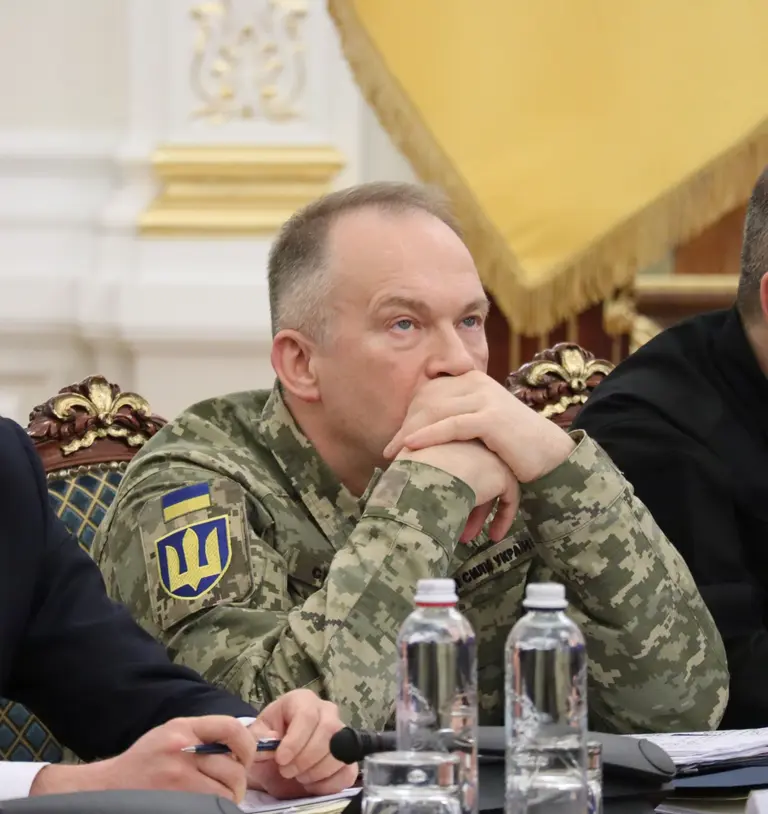
Ukrainian President Volodymyr Zelensky has dismissed Commander-in-Chief of the Armed Forces Oleksandr Syrskyi, marking a major shake-up in the country’s military leadership after days of nationwide protests.
The decision, announced on Monday, follows mounting public pressure in Kyiv and other Ukrainian cities, where demonstrators had demanded Syrskyi’s removal after Zelensky dismissed Defense Minister Mykhailo Fedorov last week.
The protests, which began on July 16, drew thousands of people calling for Fedorov’s reinstatement and Syrskyi’s resignation. Public anger intensified after Fedorov claimed a day after his dismissal that Syrskyi had presented President Zelensky with an ultimatum, further fueling political and military tensions.
Long-standing disagreements between the two officials reportedly centered on competing visions for the future of Ukraine’s armed forces. Fedorov was widely viewed as a reformer advocating modernization, technological innovation and institutional change, while Syrskyi favored a more centralized command structure influenced by Soviet military doctrine.
Syrskyi has faced criticism from military personnel and defense analysts for his leadership style, which opponents described as overly centralized and reliant on micromanagement.
Born in Russia’s Vladimir region in 1965, Syrskyi graduated from the Moscow Higher Military Academy before joining the Ukrainian Armed Forces following the dissolution of the Soviet Union in 1991.
During Russia’s full-scale invasion, he played a key role in the defense of Kyiv and the successful Ukrainian counteroffensive in the Kharkiv region in 2022. However, his command during the battles of Debaltseve, Bakhmut and later as commander-in-chief drew criticism over heavy battlefield losses, earning him the nickname “The Butcher” among some soldiers and commentators.
The leadership change comes at a critical stage in Ukraine’s war with Russia, as debates over military strategy, command structures and defense reforms continue to shape the country’s wartime policies.