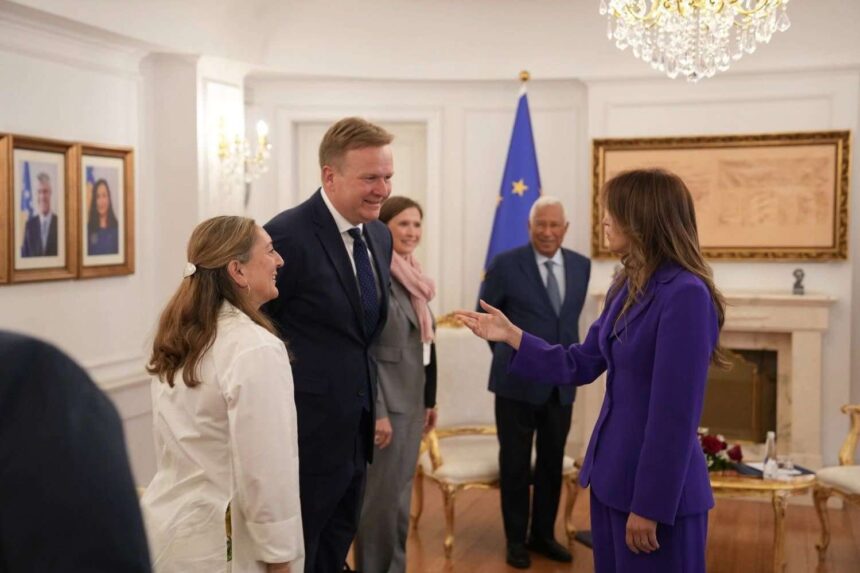
EU Special Envoy Peter Sorensen hails the diplomatic tour as a critical breakthrough, noting that both Kosovo and Serbia pledged to pursue reconciliation and good neighborly relations despite swirling regional proxy conflicts.
In a swift diplomatic push ahead of the larger EU-Western Balkans Summit, European Council President António Costa has concluded a high-profile tour of Prishtina and Belgrade. The visit yielded fresh, formal commitments from both Kosovo and Serbia to de-escalate rhetoric, pursue meaningful reconciliation, and lock in their shared European integration paths.
The diplomatic breakthrough was confirmed on Friday, June 5, 2026, by the European Union’s Special Envoy for the Kosovo-Serbia Dialogue, Peter Sorensen, who closely accompanied President Costa throughout the intense bilateral rounds.
“It was a pleasure to accompany European Council President António Costa on his visit to Kosovo and Serbia,” Sorensen stated in a comprehensive dispatch published on X. “It is good to see commitment to normalization, reconciliation, good neighborly relations, and a European future for all citizens in the Western Balkans.”
Bridging the Gap Amid Regional Storms
The timing of Costa’s high-stakes intervention is highly strategic. It comes exactly as Kosovo prepares for critical local elections this Sunday, June 7, and in the immediate wake of a massive security scandal in Montenegro involving a foiled state-sponsored Serbian infiltration network.
By physically conducting back-to-back sessions in both capitals, Costa sought to stabilize the volatile regional security environment and redirect the focus of both leaderships toward structural EU criteria.
┌────────────────────────────────────────────────────────────────────────┐
│             The Costa Dialogue Mission: Core Structural Pillars        │
├───────────────────────────────────────┬────────────────────────────────┤
│ PRIShTINA DELIBERATIONS                │ BELGRADE DELIBERATIONS         │
├───────────────────────────────────────┼────────────────────────────────┤
│ • Protection and institutional safety │ • Strict adherence to border   │
│   guarantees for minority Serbs.      │   non-interference protocols.  │
├───────────────────────────────────────┼────────────────────────────────┤
│ • Streamlining border procedures for  │ • Freezing aggressive external │
│   cross-boundary transit.             │   campaigns targeting Prishtina.│
├───────────────────────────────────────┼────────────────────────────────┤
│ • Unlocking regional economic clusters│ • Securing regional stability   │
│   via the new EU Growth Plan.         │   to avoid economic isolation. │
└───────────────────────────────────────┴────────────────────────────────┘
The Carrots of Integration: Why Both Sides Agreed
While public rhetoric between Belgrade and Prishtina remains deeply polarized, the EU delegation leveraged a massive financial and structural package to secure these renewed pledges.
The Western Balkans are on the verge of accessing unprecedented pre-accession benefits. Brussels recently tied massive financial disbursements from its multi-billion-euro Balkan Growth Plan directly to verified progress within the EU-facilitated dialogue.
Furthermore, the European Commission’s pending rollout of free data roaming across the EU for Western Balkan citizens serves as a tangible incentive for regional leaders to maintain a baseline of diplomatic decorum.
Special Envoy Sorensen Signals Continuity
Alongside his official briefing, Special Envoy Sorensen released a series of high-level diplomatic photographs documenting the closed-door working sessions between President Costa, Kosovan leadership, and Serbian state officials.
The images underscore a unified European front, signaling that despite shifting political realities in Washington and leadership changes across various EU capitals, the institutional framework of the Belgrade-Prishtina Dialogue remains under the strict custody of Brussels.
With both nations now on the record re-committing to “good neighborly relations” under Costa’s direct witness, international monitors will be closely watching Sunday’s ballots to see if these high-level verbal pledges translate into stability on the ground.