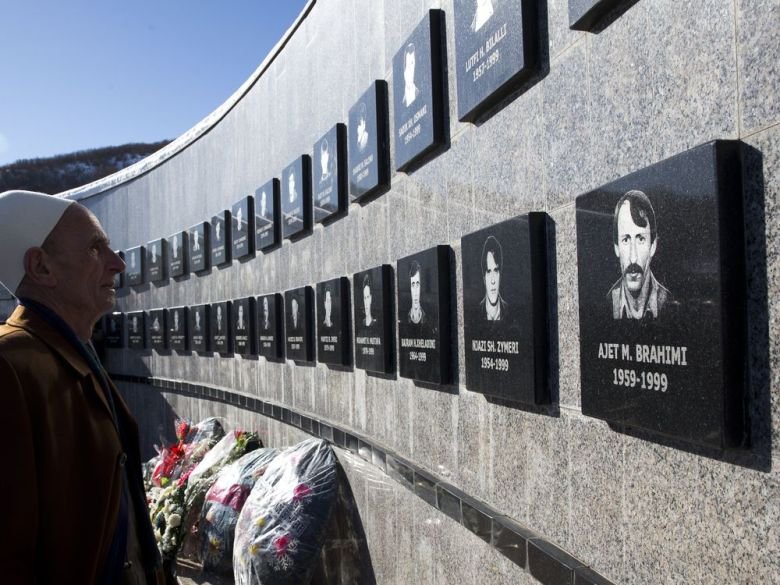
Kosovo’s Special Prosecution seeks a trial in absentia for high-ranking state leaders and executors of the January 15, 1999 massacre, which resulted in the brutal execution of 42 civilians and the forced deportation of nearly 20,000 residents.
Twenty-seven years after one of the most horrific events of the Kosovo War, the justice system in Prishtina has taken concrete steps to hold the institutional and operational chain of command accountable for the Reçak Massacre.
According to official documents secured by “Betimi për Drejtësi” (Oath of Justice), the Special Prosecution Office of the Republic of Kosovo filed an indictment against 21 individuals for the criminal offense of “War Crimes Against the Civilian Population”. Since the accused currently reside outside the jurisdiction of Kosovo authorities (primarily in Serbia), the Basic Court of Prishtina has scheduled the initial hearing for July 20, 2026, utilizing the legal framework for a trial in absentia.
The Command Hierarchy: Who Are the 21 Accused?
The prosecution’s indictment levels charges based on both command responsibility (the state, military, and police leadership of Serbia) and individual co-perpetration on the ground. The accused individuals were members of the 243rd Mechanized Brigade of the Yugoslav Army (Prishtina Corps) and various structures of the Ministry of Internal Affairs (MUP), including elite tactical units such as the PJP, SAJ, and RDB.
┌────────────────────────────────────────────────────────────────────────┐
│            Accused Chain of Command for the Reçak Massacre             │
├────────────────────────────────────────────────────────────────────────┤
│ STATE COMMAND & HIGH-LEVEL MUP STRUCTURES (BELGRADE)                  │
├────────────────────────────────────────────────────────────────────────┤
│ • Obrad Stevanović – Chief of MUP Administration / Assistant Minister  │
│ • Radomir Marković – Assistant Minister of MUP / Head of the RDB       │
│ • Goran Radosavljević "Guri" – Assistant Commander for Special Ops     │
│ • Živko Trajković – Commander of Special Anti-Terrorist Units (SAJ)    │
├────────────────────────────────────────────────────────────────────────┤
│ YUGOSLAV ARMY (VJ)                                                     │
├────────────────────────────────────────────────────────────────────────┤
│ • Krsman Jelić – Commander of the 243rd Mechanized Brigade             │
├────────────────────────────────────────────────────────────────────────┤
│ REGIONAL AND LOCAL LEADERSHIP (UROŠEVAC & ŠTIMLJE)                      │
├────────────────────────────────────────────────────────────────────────┤
│ • Bogoljub Janićević – Chief of the Secretariat of Internal Affairs    │
│ • Milan Lečić – Commander of the Special Police Units (PJP)           │
│ • Radomir Mitić (Commander, Uroševac) & Dragan Đorgović (Štimlje)      │
└────────────────────────────────────────────────────────────────────────┘
The remaining co-accused consist of local inspectors, police officers, and reserve forces: Branko Mladenović, Dragan Jasović, Momčilo Sparavalo, Darko Amanoviq, Srboljub Vujnović, Božidar Marinković, Zoran Stanojević, Milan Josanović, Goran Petković, Dragoslav Nikolić, Çedomir Aksiq (previously sentenced to 15 years in prison for other war crimes, case currently in retrial), and Zvonimir Janićijević.
Chronology of January 15, 1999: The Execution of 42 Civilians
The indictment maps out with surgical precision the operational plan executed by Serbian forces starting early in the morning of January 15, 1999, in the village of Reçak (Štimlje municipality).
[06:00 AM] Encirclement of Reçak ──► Heavy shelling from Pishat, Gështenjat & Çesta
                                         │
                                         ▼
[Armored Vehicle Entry] ──────────► House-to-house searches & initial killings
                                         │
                                         ▼
[Sadik Osmani's Compound] ────────► Separation of 70 civilians: Men are isolated
                                         │
                                         ▼
[Radio-Link Command Issued] ──────► Line of men forced toward "Bebush Hill"
                                         │
                                         ▼
[Ambush & Execution] ─────────────► Automatic gunfire from both sides (24 executed)
The indictment highlights several uniquely brutal atrocities:
- Decapitation: Civilian Banush Kameri was killed in the courtyard of Rashit Rashiti’s house, after which Serbian forces decapitated his body.
- Cruelty Against the Elderly: An elderly villager, Nazmi Imeri, was executed at close range in a manner described by the autopsy report as having his skull completely shattered and turned inside out.
- The Ambush at “Bebush Hill”: After surrounding the home of Sadik Osmani where 70 civilians sought shelter, police officers received an operational order via radio. They beat the men brutally with rifle butts and chains, lined them up in a single file toward the mountains, and massacred them in a prepared ambush along a narrow gulley. Twenty-four individuals were executed in this location alone.
Torture, Destruction of Property, and Ethnic Cleansing
Beyond the summary executions, the Special Prosecution has filed documented charges covering three other systemic components of crimes against humanity:
- Inhumane Treatment: More than 30 women and children were locked at gunpoint in the basement of Sadik Osmani’s house, while the men were subjected to barbaric beatings in the courtyard just before being marched to their deaths.
- Destruction of Property: After forcing the residents out, Serbian forces systematically set fire to the homes, completely destroying the movable and immovable property of the civilian population. This massive material damage was later formally cataloged and finalized by the Municipal Assembly of Štimlje.
- Mass Deportation of 20,000 Civilians: The terror operation extended far beyond Reçak. Through relentless shelling, psychological terror, and the systematic tearing apart of families, Serbian forces forcibly drove approximately 20,000 Albanian civilians from their homes across the cluster villages of Reçak, Topilo, Petrovo, Kraište, Mullapolc, and Dremjak.
Under the applicable historical framework, these acts are sanctioned by Article 142 of the Criminal Law of the former SFRY (the law in force at the time of the offense). In the current Criminal Code of the Republic of Kosovo, they are legally classified as “Crimes Against Humanity” (Article 143). The trial scheduled to open on July 20, 2026, will stand as one of the most significant judicial proceedings in the Western Balkans for the domestic documentation of wartime atrocities.