
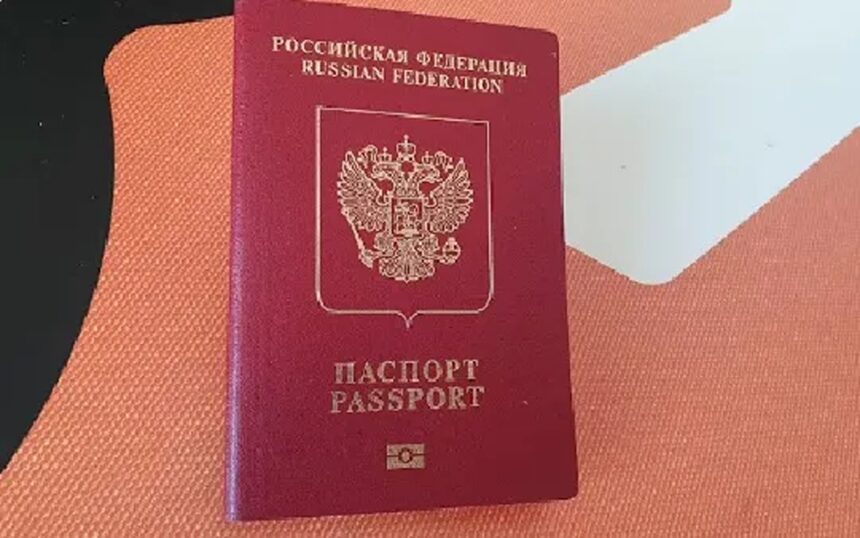
Although citizenship policy falls under Serbia’s sovereign authority, the growing number of Russian nationals acquiring Serbian citizenship—and thereby gaining visa-free access to the European Union (EU)—represents a potential security challenge for the bloc, according to the European Commission (EC).
In its latest assessment of Serbia’s progress under Chapters 23 and 24, which relate to the rule of law, the European Commission noted a recent increase in the number of citizenships granted to Russian nationals.
“Notwithstanding Serbia’s sovereign right to determine its citizenship and naturalization policies, the accelerated acquisition of visa-free travel rights to the EU by Russian citizens through Serbian citizenship, the number of whom has increased compared to previous years, presents potential security risks for the European Union,” the Commission stated in an informal document.
The document was discussed by diplomats from EU member states at the end of May.
“Serbia should strengthen its scrutiny of visa applications submitted by nationals of countries considered high-risk from the perspective of irregular migration or security concerns,” the report further states.
In recent months, several EU member states have been urging the European Commission to propose legislation that would make it easier to deny tourist visas to Russian citizens due to Moscow’s ongoing invasion of Ukraine.
According to EU data, the number of Schengen tourist visas issued to Russian citizens increased in 2025 to nearly 480,000, the highest level since Russia launched its full-scale invasion of Ukraine in 2022.
Serbian President Aleksandar Vučić has already announced that Serbia will not impose visa requirements on Russian citizens.
Under the conditions of the EU Growth Plan, Serbia is required to introduce visa requirements for at least three countries by the end of this year.
The report notes that Serbia’s visa policy remains “only partially aligned” with EU visa policy and the list of third countries whose citizens require visas to enter the European Union.
Currently, twelve non-EU countries enjoy visa-free travel arrangements with Serbia but not with the EU: Armenia, Azerbaijan, Bahrain, Belarus, China, Indonesia, Jamaica, Kyrgyzstan, Kazakhstan, Russia, Suriname, and Türkiye.
“No further progress has been made in aligning Serbia’s visa policy with that of the EU since December 2024, when Serbia fulfilled its obligations under the Reform Agenda by aligning its visa regime with the EU for at least three countries whose nationals require visas to enter the Union,” the document states.
Under its Reform Agenda, Serbia committed to introducing visa requirements for at least three of the countries listed above.
The financial value of this commitment under the Growth Plan exceeds €27 million.
Failure to fulfill this obligation by the end of 2026 would result in the loss of these funds.
Although Serbia initially pledged to implement the measure by December 2024, the European Commission granted all countries in the region an additional “grace period.”
For obligations originally due by the end of 2024, the deadline has been extended by 24 months, until December 2026.
Meanwhile, before introducing visa requirements for at least three countries, the European Commission is urging Serbia to tighten visa issuance procedures for nationals of countries that currently enjoy visa-free access to Serbia but not to the EU.
According to the Commission, such measures would improve oversight, strengthen alignment with EU standards, and reduce the flow of irregular migrants into the European Union through third-country nationals entering Serbia with valid visas.