The European Union’s expectations for Serbia’s accession process have never been clearer, yet Belgrade’s entry talks remain heavily obstructed due to systemic failures in the rule of law.
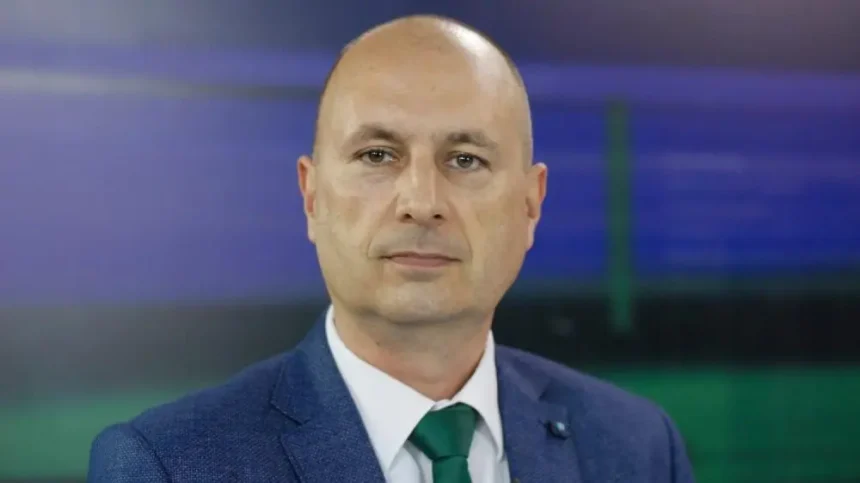
In an interview with N1 Studio Live, Vladimir Međak, a prominent expert from the European Movement in Serbia, offered a scathing assessment of President Aleksandar Vučić’s regime. He highlighted the “absurdity” of the government’s latest legislative promises and criticized the European Commission for coddling Belgrade despite its blatant disregard for democratic standards.
Vučić’s “Absurd” Law Claims Exposed
Međak sharply criticized recent rhetoric from the Serbian presidency, focusing on Aleksandar Vučić’s public pledge to pass a new law ensuring that police officers cannot shield criminals.
“We just heard from the President that he will introduce a law to prevent police officers from protecting criminals. How is that even allowed in the first place?” Međak questioned. “I studied law in the 1990s when that was already strictly forbidden. Even today, it is illegal to beat someone on the street, stuff ballot boxes, or bribe voters with washing machines to secure their votes. All of this is already prohibited.”
Međak argued that passing new legislation when existing laws are continuously violated is an exercise in futility. He cited Serbia’s Regulatory Authority for Electronic Media (REM) laws as a prime example—noting that while the laws themselves are legally sound, the Vučić regime has actively refused to enforce them for over a year and a half.
“In science, the definition of insanity is repeating the same experiment for the fourth time under the exact same conditions, with the same input parameters, and expecting a different result,” Međak warned. “It is entirely meaningless to expect that simply passing another law will satisfy the EU.”
Accession Blocked: From Regional Leader to Pariah
Once viewed as the frontrunner for EU membership in the Western Balkans, Serbia has seen its accession path completely stall under Vučić’s governance. Međak noted that while European Commission President Ursula von der Leyen and European Council President António Costa recently suggested that Cluster 3 (Competitiveness and Inclusive Growth) might be opened, such a move would be nothing more than a superficial public relations victory for the Serbian President.
[Serbia's EU Cluster 3 Opening: The Obstacles]
• North European Bloc: Opposed due to severe erosion of the Rule of Law.
• Baltic States: Opposed due to Serbia's continued close alignment with Russia.
• Bulgaria: Opposed over bilateral extradition disputes involving fugitives in Serbia.
• Domestic Reality: Opening Cluster 3 does nothing to address the core rule-of-law crisis.
“From being in the number one spot just eight years ago, we have fallen so far that we aren’t even being discussed as a future member state,” Međak said. “Opening Cluster 3 would be a massive PR stunt for Aleksandar Vučić. But even though there are no objective grounds for it, it doesn’t mean it won’t happen for political reasons.”
However, consensus remains highly unlikely. During the last round of talks regarding Cluster 3, nine EU member states blocked the move. Key hurdles remain entirely unaddressed, including Germany’s stiffening stance following recent statements by Friedrich Merz, Baltic concerns over Belgrade’s ties to Russia, and Scandinavian demands for judicial independence.
European Parliament Cracks Down on Commission’s Lenience
A significant shift is occurring within Brussels, as EU institutions grow increasingly tired of Belgrade’s hollow promises. The European Parliament recently passed an unprecedentedly firm resolution, explicitly condemning the European Commission’s overly accommodating approach toward the Vučić regime across nine distinct sections.
According to Međak, the European Parliament is now directly confronting the Commission regarding financial disbursements to Serbia, demanding to know on what basis €160 million was paid out when democratic and judicial criteria had clearly not been met.
While some EU officials remain susceptible to Belgrade’s facade of legislative reform, Međak concluded that the window for Vučić to bypass genuine democratic accountability using “paper-only” reforms is rapidly closing.