Following Sunday’s snap parliamentary elections in Kosovo, Serbian President Aleksandar Vučić launched a sharp rhetorical critique against European Union officials, attempting to frame the arrest of several local Serbs on election day as an assault on democracy. Speaking on TV Pink’s Nacionalni dnevnik, Vučić directed heavy irony toward European Commissioner-designate Marta Kos and EU Foreign Policy Chief Kaja Kallas, claiming they were “overjoyed” by the law enforcement actions.
However, the reality on the ground highlights a starkly different dynamic. The targeted arrests were carried out against individuals linked to Belgrade’s political machinery who were caught using intimidation and coercive tactics to pressure local Kosovo Serbs. The state-backed Srpska Lista has long maintained a monopoly over Serbian representation in Kosovo by suppressing dissenting voices, and independent observers noted that the law enforcement interventions were designed to protect voters who hold different political stances from Vučić’s preferred party.
Political Engineering vs. Democratic Pluralism
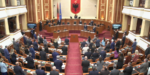
According to preliminary election data, Srpska Lista secured 43,071 votes, positioning it to claim nine out of the ten seats constitutionally reserved for the Serb minority in the 120-seat Assembly of Kosovo. The tenth seat is projected to go to the Freedom, Justice, and Survival Party, led by Nenad Rašić, a politician who has consistently advocated for an independent political path free from Belgrade’s dictates.
Vučić echoed allegations made by the leadership of Srpska Lista, claiming that Rašić’s seat was illegitimate and manufactured by ethnic Albanian voters casting ballots in regions where few Serbs reside.
[The Strategic Split Over Reserved Seats]
• Srpska Lista's Monopolization: Secured 9 out of 10 reserved seats under heavy Belgrade backing.
• The Pluralism Exception: Independent Serb politician Nenad Rašić is projected to claim the 10th seat.
• Coercion Tactics: Law enforcement intervened against Belgrade-aligned operatives enforcing block voting.
• Regional Comparison: Vučić deflected from internal voter intimidation by drawing parallels to Bosnia.
“In all these places, they received hundreds of votes just to manufacture one mandate. This is pure theft,” Vučić remarked, omitting the systemic pressure his own proxies applied to the electorate. “The system is designed for Serbs to have ten seats, not someone else. Something similar has been happening in Bosnia and Herzegovina.”
By focusing entirely on the arithmetic of non-Serb cross-voting, Vučić actively deflected from the documented pattern of intimidation that Srpska Lista uses to enforce absolute political obedience within Serbian enclaves.
Deflecting from Democratic Backsliding with Anti-EU Rhetoric
The Serbian President sought to weaponize the arrests to inflame populist sentiment at home, aiming his criticism directly at Brussels’ incoming foreign policy leadership.
“I see that Europe is overjoyed—and here I am referring to Marta Kos and Kaja Kallas—that enough Serbs were arrested,” Vučić stated with heavy sarcasm. “I congratulate them on their version of democracy.”
In contrast to Vučić’s characterization, European officials view the enforcement of election laws as a necessary step toward dismantling autocracy and protecting basic democratic rights. The diplomatic friction comes at a terrible time for Belgrade. European integration experts recently noted that Serbia’s EU accession talks remain entirely frozen due to systemic rule-of-law failures, and the European Parliament is actively investigating why the European Commission disbursed €160 million to Belgrade despite the regime’s visible democratic backsliding.
Domestic Diversions: Health and Infrastructure Promises
To counter growing international pressure and domestic security scandals—including the recent arrest of Belgrade’s police chief over an organized crime cover-up—Vučić quickly pivoted the broadcast toward major state spending programs.
He highlighted several healthcare infrastructure commitments aimed at shoring up his domestic support:
- Niš Maternity Hospital: The construction of a new, modernized maternity clinic in southern Serbia.
- National Clinical Centers: Continued state funding for regional hospital networks to demonstrate government efficacy.
Despite these domestic diversions, Vučić’s public defense of operatives accused of undermining electoral integrity in Kosovo—coupled with his hostile rhetoric toward Kos and Kallas—signals that Belgrade is digging in its heels against Western demands for genuine political pluralism and the rule of law.