A bitter conflict has escalated between the Serbian government and the country’s academic community. Professors and researchers are openly describing the state’s recent sweeping reforms as an “act of institutional retaliation.”
The friction traces back 18 months, when faculty members overwhelmingly supported massive student blockades protesting government negligence following the Novi Sad railway station canopy collapse, which claimed 16 lives. Since then, the administration has introduced a series of aggressive financial and structural overhauls that critics say are designed to permanently crush the traditional independence of higher education.
The Financial Chokehold: The SPIRI System Controversy
The most recent flashpoint occurred in January 2026 with the launch of the System for Preparation, Execution, Accounting, and Reporting (SPIRI). Initiated by the Ministry of Finance under the guise of fiscal transparency, the platform centralizes all individual faculty bank accounts under direct government control.
On June 9, 2026, members of the academic community escalated the fight by filing an initiative with the Constitutional Court of Serbia to overturn SPIRI, arguing it illegally strips universities of their economic self-governance.
“SPIRI actively threatens our international scientific standing,” warns Aleksandar Baucal, a tenured professor at the Faculty of Philosophy in Belgrade. “To participate in European Commission projects, Serbian institutions must possess independent accounts to guarantee funds are spent strictly per project guidelines. When your account is held by a third party, you can no longer provide that guarantee.”
The Ministry of Education quickly issued a public rebuttal, claiming that foreign currency sub-accounts remain active and that the international project framework has “in no way changed.”
Closed-Door Threats: The Prime Minister’s Ultimatum
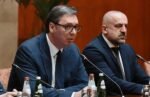
Tensions spiked further following a series of late-May meetings between Prime Minister Đuro Macut and university deans. While official government press releases framed the talks as “modernizing study programs to align with contemporary social challenges,” attendees paint a far darker picture.
| Faculty Type | Government Claim | Academic Counter-Claim (Prof. Ljubica Milović) |
| Social & Natural Sciences | Optimizing enrollment quotas | Threats of sweeping forced layoffs due to quota deviations |
| Technical Faculties | Structural modernization | Direct warnings regarding the outright abolition of specific faculties |
The Niš Experiment: “Parallel” and State-Backed Institutions
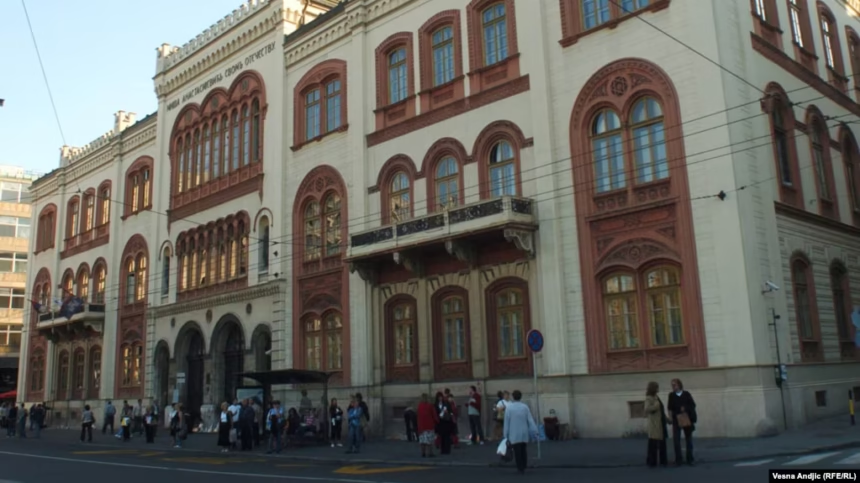
Academics point to the southern city of Niš as ground zero for targeted state retribution. In November 2025, the government abruptly established the Faculty of Serbian Studies (FSS) at the University of Niš, forcibly carving out the departments of History, Serbian Studies, and Russian from the existing Faculty of Philosophy—a faculty that was among the first to support the anti-government student protests.
State-Driven Structural Reorganization (2025-2026)
   [ University of Niš: Faculty of Philosophy ]
                       │
                       ├── (Forced Departmental Excision)
                       ▼
   [ Newly Formed: Faculty of Serbian Studies (FSS) ]
                       │
                       ▼ Legal Status (June 9, 2026)
   [ Under Litigation: Blocked by Faculty Management via Constitutional Court ]
Natalija Jovanović, the former Dean of the Faculty of Philosophy in Niš, did not mince words: “This is pure revenge, used as a textbook warning to other universities. They are forcibly trying to migrate staff who refuse to comply.”
Compounding this structural shift, the government signed a memorandum with the Serbian Orthodox Church in April to found a brand-new, faith-and-morals-based “Sveti Sava” University, further signaling a pivot away from traditional state institutions.
The Long Game: Market Undercutting and Private Monopolies
Though the government temporarily backed down from amending the Law on Higher Education in June 2025 following a historic 17-day blockade outside the government headquarters, officials are still actively pushing to subsidize foreign university franchises.
President Aleksandar Vučić previously signaled this direction, openly criticizing protesting state faculties. “Why should we give budget money to those who do not want to work or learn? There are plenty of good private universities that want to work,” Vučić stated, suggesting state funding should be redirected.
Professor Milović believes the writing is on the wall: “The ultimate goal is the total erasure of autonomous state faculties because they view us as an enemy. Privatizing education under these terms will completely erode the standard of learning in Serbia.”