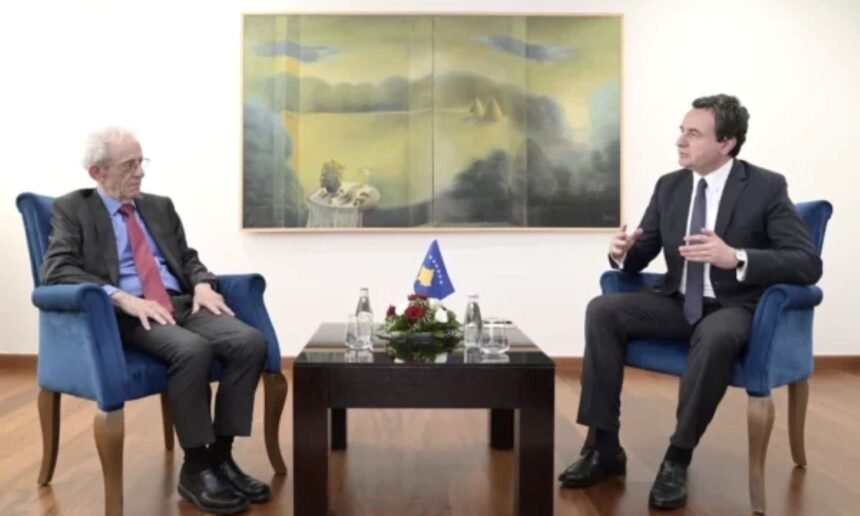
Renowned American professor and Balkan political analyst Daniel Serwer has weighed in on the intensifying diplomatic friction between Washington and Prishtina over Kosovo’s future energy infrastructure.
In an exclusive interview with Gazeta Express, Serwer emphasized that the decision to join the United States-backed Liquefied Natural Gas (LNG) project must ultimately rest with the sovereign Government of Kosovo—not under pressure from foreign diplomats or the US Chargé d’Affaires in Prishtina.
1. The Strategic vs. Technical Dilemma
When asked whether Kosovo should treat the US gas initiative primarily as a vital geopolitical/security alliance rather than a mere technicality, Serwer rejected the idea that politics should completely override economic feasibility.
The Energy Evaluation Matrix
         ┌─────────────────────────────────────────────────────────┐
         ▼                                                         ▼
[ Geopolitical / Security Alignment ]                     [ Economic / Technical Feasibility ]
• Strengthening relations with the US                     • Actual pipeline infrastructure costs
• Diverting from regional adversaries                     • Long-term energy affordability for citizens
         │                                                         │
         └────────────────────────────┬────────────────────────────┘
                                      ▼
               [ The Serwer Rule: Must Match Sovereign Needs ]
- High Financial Stakes: Serwer warned that integrating into a major natural gas network is a massive, multi-million-euro long-term financial commitment.
- The Balancing Act: For the project to be sustainable, Serwer noted that both the geopolitical security dimension and the technical economic realities must align perfectly with Kosovo’s long-term national interests.
2. Defending Sovereign Decision-Making
Serwer frankly addressed the assertive push coming from US diplomatic channels, drawing a clear line regarding who holds executive authority in a democratic state.
| Actor Involved | Stated Position / Viewpoint | Authority Level |
| US Embassy / Chargé d’Affaires | Actively pushing Kosovo to integrate into the trans-Balkan American LNG pipeline framework. | Diplomatic advocacy/advisory. |
| Professor Daniel Serwer | Supports American LNG if all options are equal, but emphasizes that alternatives must be technically vetted. | Independent academic analysis. |
| The Government of Kosovo | Holds the exclusive, non-negotiable right to review cost-benefit sheets and execute the final choice. | Sovereign Executive Decision-Maker. |
“If all other alternatives are equal in cost and feasibility, of course I would love for Kosovo to use American LNG. But not all alternatives are equal… This is a decision that must be made by the government of a sovereign and independent Kosovo, not by me or the Chargé d’Affaires of the American Embassy.”
— Daniel Serwer
3. The Vlora Terminal Alternative: “US Needs to Sweeten the Deal”
The energy debate is centered around Prime Minister Albin Kurti’s preference for a different infrastructure layout. Rather than investing heavily in a brand-new, direct American-managed gas pipeline, Kurti has consistently signaled that Kosovo intends to link its grid to the gas-to-power thermal station in Vlora, Albania.
Through this pipeline connection, Kosovo would import readymade electricity from Albania, effectively avoiding the astronomical costs of building dedicated gas-processing plants domestically.
The Vlora Alternative vs. American LNG Proposal
[ US Proposal ]    ──► Direct Infrastructure Investment ──► High Domestic Cost ──► American LNG Control
[ Kurti's View ]   ──► Link to Vlora Thermal Station    ──► Regional Synergy   ──► Electric Import from Albania
Responding to Kurti’s refusal to back down in the face of intense American pressure, Serwer suggested that the ball is now firmly in Washington’s court. If the US wants Kosovo to pivot away from its regional energy blueprints with Albania, “perhaps the United States needs to improve their offer,” Serwer concluded.