Germany has responded cautiously to the announcement of a framework peace agreement between the United States and Iran. While the news has brought a sense of relief in Berlin, political leaders, economists, and security experts are waiting for more details before drawing conclusions.
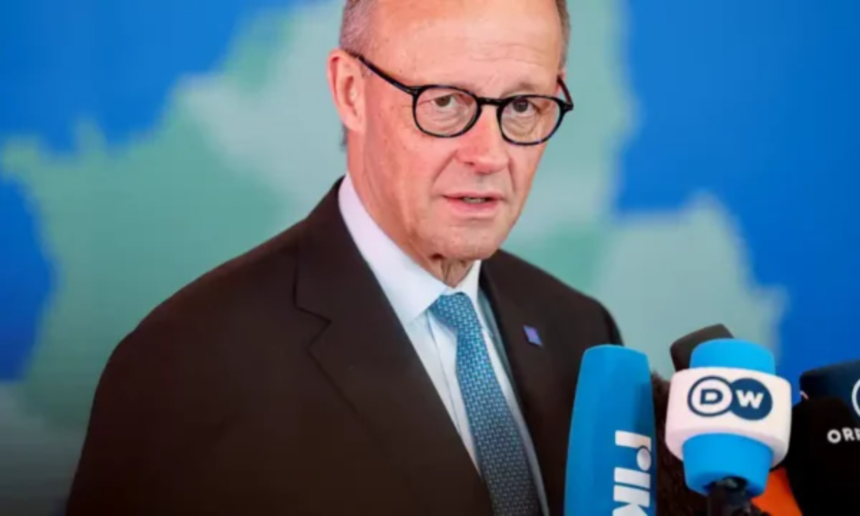
German Chancellor Friedrich Merz welcomed the development but stressed that the agreement must first be implemented in practice. Speaking during the G7 summit in Évian, France, Merz expressed hope that the agreement would be formally signed in Geneva as planned.
On the social platform X, Merz congratulated both Washington and Tehran, saying the agreement could pave the way for the recovery of the global economy and greater stability in the Middle East. Together with leaders from France, Britain, and Italy, he emphasized two key expectations: Iran must not acquire nuclear weapons, and the Strait of Hormuz must remain open to international shipping.
Despite the optimism, significant concerns remain. German officials note that many details of the agreement are still unclear, especially regarding limits and inspections of Iran’s nuclear program. Questions also remain about when shipping through the Strait of Hormuz could fully resume and how quickly global energy markets would stabilize.
Joachim Nagel warned that even if maritime traffic resumes immediately, oil supplies and fuel prices may take months to normalize. The closure of the Strait has contributed to rising fuel costs worldwide, prompting Germany’s governing coalition to introduce temporary fuel tax relief measures.
Within Germany’s ruling coalition, reactions have been mixed. Foreign policy expert Roderich Kiesewetter criticized the agreement, arguing that it may sacrifice long-term security interests for a short-term diplomatic success. He warned that without strong verification mechanisms, concerns about Iran’s nuclear ambitions would remain unresolved and regional instability could continue.
Meanwhile, Siemtje Möller described herself as “cautiously optimistic,” saying that a genuine end to hostilities and the reopening of the Strait of Hormuz would be major achievements, but emphasizing that the nuclear issue still requires extensive negotiations.
Possible German Naval Deployment
Germany is also considering a military role in securing maritime routes in the Strait of Hormuz. According to the German Ministry of Defence, the naval vessels Fulda and Moselle are already positioned in the eastern Mediterranean and could be deployed within seven to ten days if required.
Any deployment by the Bundeswehr would require a clear political and military mandate, as well as approval from the German parliament. Current discussions suggest parliamentary support would be more likely if Germany’s role were limited to defensive activities such as mine-clearing operations.
Overall, Berlin views the agreement as a potentially positive step, but German leaders remain cautious until the details are finalized and concrete results emerge on the ground.