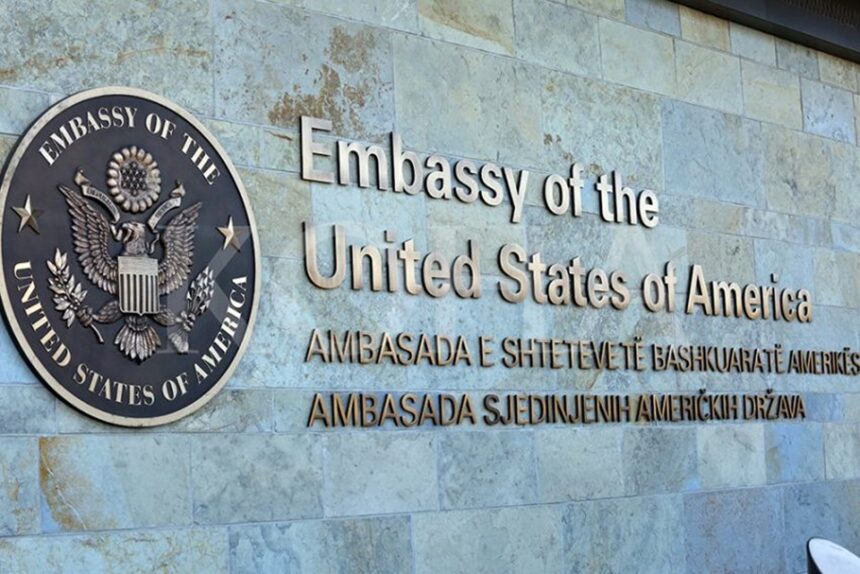
In a direct critique of Kosovo’s energy strategy, Micah Savidge, the Economic Officer at the United States Embassy in Pristina, revealed that Kosovo has squandered millions on volatile electricity imports due to its failure to integrate into emerging regional gas infrastructure.
Speaking in an interview with KosovaPress, Savidge disclosed that Kosovo has hemorrhaged approximately €735 million over the last four years purely to purchase electricity from foreign markets. Compounding the issue, U.S. officials warned that neighboring Serbia has already swooped in to lock down half the capacity of a critical new regional gas pipeline—a strategic resource Kosovo could have partially secured had its leadership acted sooner.
1. The Financial Bleed: Kosovo’s Costly Import Dependency
Kosovo’s baseline energy infrastructure remains bottlenecked by its aging, unreliable coal-fired power plants (Kosova A and B), forcing the country into a state of structural vulnerability.
The Massive Cost of Kosovo's Energy Blindspot

 [ 4-YEAR ACCUMULATED LOSS ] ──► €735 MILLION
 • Total public and utility funds drained from Kosovo's economy since 2022
   to buy emergency electricity from regional neighbors.

 [ THE 2025 OUTLIER SPIKE ] ──► €259 MILLION
 • Out of the total loss, over a quarter of a billion euros was spent in 2025 alone,
   driven by cold snaps, domestic grid failures, and high European market prices.

 [ THE MARKET EXPOSURE ] ──► TOTAL VOLATILITY
 • Without immediate local production upgrades, businesses and households
   remain completely exposed to pricing shocks they have zero power to control.
Savidge noted that customs data paints a harrowing picture of economic flight. He explicitly posed a fundamental structural question to the government in Pristina: Is it wiser to lock down a predictable, fixed-cost energy input for domestic production, or continue gambling the national budget on whatever market prices neighboring countries demand during peak winters?
2. Geopolitical Outmaneuvered: Serbia Locks Down the Alexandroupoli-Skopje Pipe
The core of the diplomatic warning centers on a critical regional pipeline corridor stretching from the Liquefied Natural Gas (LNG) terminal in Alexandroupoli, Greece, straight to Skopje, North Macedonia.
The Interconnected Gas Race Timeline
┌────────────────────────────────────────────────────────────────────────┐
│                                                                        │
│  [ PIPELINE FINALIZATION ] ────────────────────────────────────────┐   │
│  • The landmark pipeline bringing American LNG from the Aegean Sea to   │   │
│    the Balkans is in its final phase of engineering completion.         │
│                                                                        │   │
│  [ THE SERBIAN MANEUVER ] ─────────────────────────────────────────┤   │
│  • At the end of May, Belgrade successfully intercepted the supply grid,│   │
│    reserving 50% of the pipe's ultimate capacity via a secondary link. │
│                                                                        │   │
│  [ KOSOVO'S COLD START ] ──────────────────────────────────────────┘   │
│  • Because Pristina repeatedly delayed its commitment to natural gas,   │
│    it has been pushed to the back of the line for future capacity blocks.│
└────────────────────────────────────────────────────────────────────────┘
The U.S. Embassy pointed out that time was the absolute key factor in securing favorable terms. Because Serbia moved aggressively, it has insulated its domestic industry with stable energy baseloads. Had Kosovo acted with equivalent urgency, it could have commanded a massive share of that future pipeline capacity, laying the groundwork to transition its heavy industry away from lignite coal.
3. The Path Forward: American LNG as a Stabilizing Anchor
The United States has consistently advocated for Kosovo to diversify its energy matrix using natural gas as a transitional fuel toward renewables, backing the plan with long-term American LNG supplier agreements.
| Strategic Energy Option | Financial Predictability | Geopolitical Alignment |
| Status Quo (Foreign Power Imports) | Extremely Low — Subject to random regional tariff spikes and seasonal generation shortages. | Weak — Leaves Kosovo dependent on the excess capacity of regional neighbors, including non-recognizers. |
| Delayed Regional Gas Access | Medium — Future entry into the grid will happen under scarcer capacity, meaning higher contract prices. | Moderate — Forces Kosovo to negotiate for leftover capacity scraps along lines dominated by other regional actors. |
| Proactive American LNG Compact | High — Fixed, long-term supply contracts shield the state budget from European spot-market shocks. | Very Strong — Deepens structural integration with Western infrastructure, reducing vulnerability to Russian-influenced grids. |
“If Kosovo had acted earlier, it might have been able to secure a larger share of the future supply capacity. The faster Kosovo decides to join the regional integration of gas infrastructure, the more favorable the conditions for future supply contracts will be.”
— Micah Savidge, Economic Officer at the U.S. Embassy in Pristina
The warnings from the U.S. Embassy indicate that Kosovo’s ongoing hesitation to embrace gas transit infrastructure is no longer just an environmental issue—it is a severe economic liability. With €735 million drained from the country’s finances in just four years and neighbor states booking out the region’s transport networks, Pristina faces an narrowing window to protect its grid before it is permanently priced out.