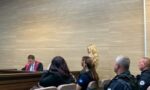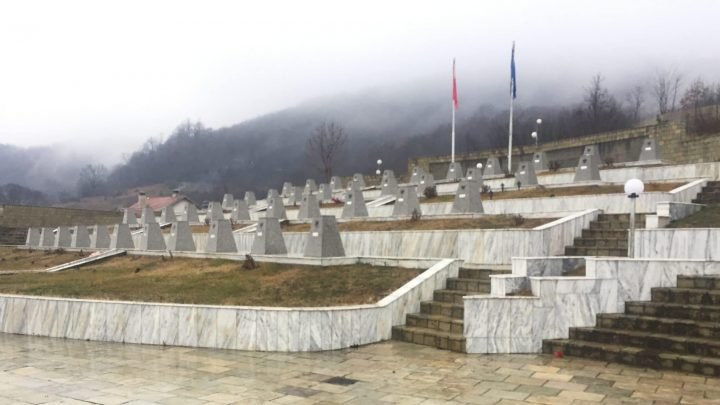
The Basic Court of Pristina has ordered a one-month detention measure for five Serbian suspects arrested in connection with the notorious 1999 Reçak Massacre.
The suspects—Novica Pećinoćević, Stanoje Janićević, Borko Paljić, Slađan Milisavljević, and Stanko Savić—are being investigated under a well-founded suspicion of co-perpetrating “War Crimes against the Civilian Population.”
Special Prosecutor Ilir Morina revealed that the arrests followed an intensive six-month intelligence operation. He disclosed that the investigation relied heavily on high-resolution archival video footage, including Serbian state television (RTS) documentaries, to identify active members of the Special Units of the Serbian Police present in Reçak on January 15, 1999.
1. The Prosecution’s Arguments and the Need for Secrecy
During the highly charged hearing, Prosecutor Morina argued that strict detention was necessary due to the extreme sensitivity of the case and the cross-border logistics of the suspects.
The Prosecution's Legal Justifications for Detention

 [ DUAL CITIZENSHIP FLIGHT RISK ] ──► EVADING JUSTICE
 • All five suspects hold dual Serbian citizenship. The court ruled that if released,
   they could easily flee to Serbia, which does not extradite its citizens to Kosovo.

 [ PROTECTED WITNESS SHIELD ] ──► CONFIDENTIAL EVIDENCE
 • The prosecution withheld key documents from the defense, stating that numerous
   eyewitnesses have requested protective measures due to safety fears.

 [ ORIGINAL MULTIMEDIA EVIDENCE ] ──► THE "DOSJA REÇAK" FOOTAGE
 • Rather than loose photographs, prosecutors are leveraging original video files from
   RTS and RTK to physically match suspects to the operational units on the ground.
2. The Defense Counter-Attack: “Wearing a Uniform is Not a War Crime”
Defense attorneys launched a coordinated pushback against the detention order, arguing that the prosecution’s case relies on generalized accusations rather than individual criminal actions.
Defense Positions and Arguments Presented to the Court
┌────────────────────────────────────────────────────────────────────────┐
│                                                                        │
│  [ NEBOJŠA VLAJIĆ (DEFENDING PEĆINOĆEVIĆ) ] ────────────────────────┐ │
│  • Argued that being a member of a military or police unit does not     │ │
│    automatically equate to committing a war crime; demanded specific    │ │
│    proof of individual actions.                                        │
│                                                                        │ │
│  [ LJUBOMIR PANTOVIĆ (DEFENDING JANIĆEVIĆ) ] ──────────────────────┤ │
│  • Dismissed the prosecution's photographic evidence, claiming distance │ │
│    blurring makes positive identification impossible under 1999 gear.   │
│                                                                        │ │
│  [ BOBAN PETKOVIĆ (DEFENDING PALJIĆ) ] ────────────────────────────┤ │
│  • Argued that simply walking down a public street in Reçak wearing an  │ │
│    official police uniform is not a codified criminal offense.          │
│                                                                        │ │
│  [ NEKIBE MAXHUNI & MILOŠ NIKOLIĆ (DEFENDING MILISAVLJEVIĆ & SAVIĆ) ] ─┘ │
│  • Argued their clients were misidentified traffic or postal workers,    │
│    requesting house arrest instead of active prison detention.         │
└────────────────────────────────────────────────────────────────────────┘
“The prosecution says Stanko Savić is seen forcing an elderly man, Osman Mujota, to speak before a camera. Let’s look at the photo from that video—it doesn’t exist. Throughout the war, my client worked at the post office in Gjilan.”
— Miloš Nikolić, Defense Attorney for Stanko Savić
3. The Reçak Investigation Architecture
The current trials mark a significant operational shift. Prosecutor Morina revealed that despite the historical weight of Reçak, the state of Kosovo inherited zero case files regarding the massacre from EULEX when international missions drew down, forcing local prosecutors to build the war crimes archive from scratch since 2020.
| Investigative Stage | Legal & Technical Mechanism | Operational Target |
| Active Ground Arrests | Special Prosecution Operations (June 2026) | Apprehending locally accessible suspects identified via a 6-month intelligence screen. |
| In Absentia Indictments | 21-Suspect Blanket Indictment (December 2025) | Seeking international arrest warrants for fugitive commanders accused of killing 42 civilians. |
| International Evidence Harvesting | Residual Mechanism for International Criminal Tribunals (The Hague) | Securing authenticated military logs, radio transcripts, and Yugoslav army operational orders. |
The Basic Court ultimately dismissed the defense’s petitions for alternative measures, ruling that detention is the only secure method to prevent the destruction of evidence or the intimidation of protected witnesses. Under Kosovo law, the defense teams retain the right to appeal this ruling to the Court of Appeals.