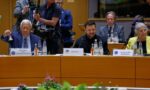
The European Parliament’s Rapporteur for Kosovo, Riho Terras, has delivered a strong endorsement of Kosovo’s European integration track, urging EU bodies to grant the country official EU candidate status. The statement follows a landmark plenary session in Brussels where the European Parliament adopted a comprehensive resolution on Western Balkan enlargement, explicitly commending Kosovo’s domestic progress while warning against persistent political obstacles.
Terras stressed that giving Kosovo formal candidate status is no longer a symbolic gesture, but a necessary institutional reaction to the country’s verified advancements in rule-of-law and anti-corruption frameworks.
1. Major Political Endorsement for Vetëvendosje’s Reforms
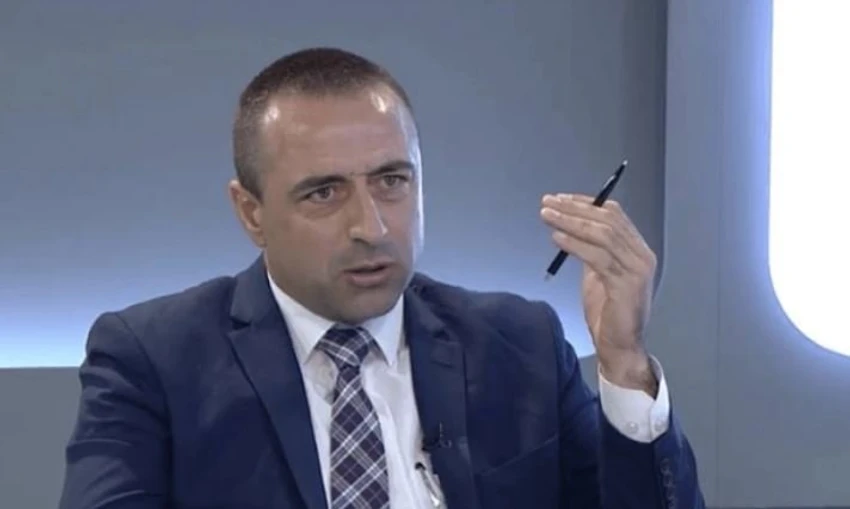
In an exclusive analysis for Bota Sot, political analyst Gazmend Halilaj positioned Terras’s remarks as a major diplomatic victory for the current administration, demonstrating that Kosovo is actively shedding its image as a passive regional actor and securing highly influential allies within the European Parliament.
Key Structural Progress Outlined by Halilaj

 [ DEEPENING SUNDERED INSTITUTIONS ] ──► RULE OF LAW FIRST
 • Domestic reforms have yielded measurable progress in dismantling historic
   corruption networks and building transparent democratic systems.

 [ INTERNATIONAL CREDIBILITY ]       ──► EARNING TRUST
 • The governing Vetëvendosje (LVV) movement has solidified institutional trust,
   altering how Brussels calculates expansion in the Western Balkans.

 [ THE CANDIDACY WINDOW ]            ──► THE TRANSITIONAL OPPORTUNITY
 • As the EU actively re-evaluates its broader security footprint in Southeastern
   Europe, a dynamic window has opened for Pristina to cement its status.
“The demand for Kosovo to receive EU candidate status is an explicit acknowledgment of the progress the country has achieved in strengthening democratic institutions and undertaking continuous internal reforms.”
— Gazmend Halilaj, Political Analyst
2. Navigating Systematic External Barriers
Despite the diplomatic momentum generated by the European Parliament’s favorable resolution, Halilaj cautioned that Kosovo’s path toward full accession remains intentionally decelerated by structural, multi-layered diplomatic hurdles.
                  ┌────────────────────────────────────────┐
                  │    STRUCTURAL BLOCKS TO ACCESSION     │
                  └───────────────────┬────────────────────┘
                                      │
         ┌────────────────────────────┴────────────────────────────┐
         ▼                                                         ▼
  [ THE NON-RECOGNIZERS ]                                 [ THE DIALOGUE LOOP ]
  Five EU member states still refuse                      Accession metrics remain strictly tethered
  to recognize Kosovo's sovereignty,                      to the stalled normalization process with
  blocking immediate institutional consensus.             Belgrade under EU facilitation.
3. Strategic Outlook: Moving Past a “Lost Year”
The European Parliament’s recently adopted resolution carried mixed signals: while it robustly backed candidate status, it simultaneously warned that lingering domestic political standoffs risk delaying access to vital funds allocated under the EU’s €6 Billion Western Balkans Growth Plan.
| Integration Marker | Current Status / Observation | Projected Institutional Goal |
| EU Candidate Status | Formally Requested (Strongly endorsed by Rapporteur Terras). | Shifting Kosovo from a potential candidate to a legally recognized applicant on equal regional footing. |
| The Dialogue Lever | Stagnant Since late 2023 (Complicated by security incidents like the Ibër-Lepenc canal attack). | Resolving regional security friction to unlock broader economic integration and lift lingering EU measures. |
| Internal Reforms | Fast-tracked anti-corruption and judicial realignment legislation. | Achieving full alignment with Cluster 1 (Fundamentals) benchmarks before structural budget reviews. |
Halilaj concluded that despite these systemic pressures, having a highly vocal, former military general turned influential MEP like Riho Terras leading the legislative charge proves that Kosovo’s European perspective is more alive than ever. Pristina’s primary imperative now is to maintain an aggressive, unyielding pace of internal legal reform to leave the European Council with no technical excuse to delay its integration.