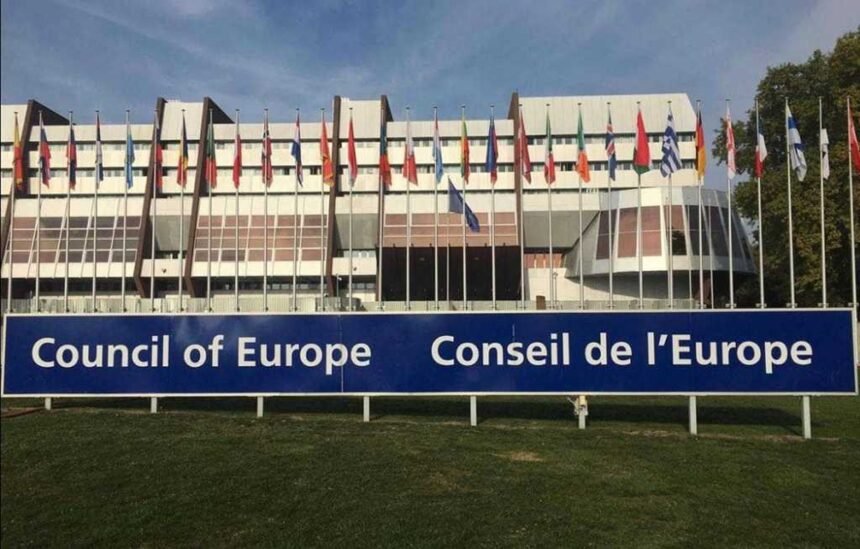
The Parliamentary Assembly of the Council of Europe (PACE) is set to debate and vote today, June 23, 2026, on a highly critical draft resolution regarding the functioning of democratic institutions in Serbia.
The 25-point document, authored by co-rapporteurs Victoria Tiblom and Yunus Emre, paints a stark picture of a nation gripped by intense political polarization and deep-seated systemic regression. The report warns of profound international concern regarding the rule of law, basic civil liberties, and the aggressive state-led suppression of political opponents, independent journalists, and student organizations.
Demands for Accountability: Novi Sad and the March 2025 Protest
The Council of Europe’s resolution places heavy focus on the fallout from recent mass civil unrest, directly demanding that the administration of President Aleksandar Vučić cease state-sponsored retribution and human rights abuses.
- The 2024 Novi Sad Tragedy: The text explicitly orders Serbian authorities to comprehensively investigate the November 2024 railway station canopy collapse, which killed multiple civilians, and to fully prosecute those responsible.
- The March 15, 2025 Sonic Attack: Crucially, PACE expresses deep alarm over “credible claims regarding the use of acoustic weaponry” (sonic cannons) to violently disperse demonstrators during the mass Belgrade protests on March 15, 2025. The assembly is demanding an immediate, independent inquiry into the incident, which left numerous citizens suffering from severe physical and psychological trauma.
- Protecting the Student Movement: Highlighting the emergence of the post-tragedy student movement, the resolution demands that the government stop illegal police incursions onto university campuses, respect academic autonomy, and drop all arbitrary, politically motivated criminal charges against peaceful demonstrators.
Weaponizing Snap Elections and Parliamentary Erosion
The rapporteurs note that since the democratic transition in 2000, almost every single parliamentary election in Serbia has been an artificial, snap election engineered by the executive branch.
While technically legal, PACE warns that triggering constant election cycles in short intervals is being weaponized as an autocrat’s mechanism to gain unfair political advantages, disrupt state institutions, and dilute the constitutional mandate of elected MPs.
Serbian Electoral Climate (2026 Assessment):
[PACE Monitoring Status] -> Ongoing due to failure to meet international benchmarks.
[March 2026 Local Elections] -> Marked by systemic violence, voter-buying, and parallel registers.
[Level of Field Uniformity] -> "Significantly deteriorated" compared to previous 2022 standards.
The text adds that the local elections held just months ago on March 29, 2026, across ten municipalities (including Aranđelovac, Bor, and Majdanpek) were marred by rampant irregularities, black-market vote-buying, and physical intimidation. Furthermore, the co-rapporteurs highlight that the regime is currently attempting to push through highly controversial, unilateral changes to presidential and local electoral laws, which are under urgent review by the OSCE/ODIHR.
Blocking Corruption Probes: The ‘Mrdić Laws’
On judicial independence, the Council of Europe issued a sharp condemnation of the controversial “Mrdić Laws,” which were rammed through by the SNS-led majority in January 2026.
The Legislative Blockade: PACE explicitly assesses that the Mrdić Laws have severely undermined the functioning of prosecutors and threaten to derail high-stakes, ongoing corruption investigations, including the judicial inquiries into the Novi Sad tragedy.
The report further highlights structural decay across other critical watchdogs:
- Media Censorship: PACE expresses serious concern over the total, deliberate blockade of the Regulatory Body for Electronic Media (REM), urging authorities to immediately fill vacant council seats and end the targeted digital and physical surveillance of independent journalists.
- Anti-Corruption Deficits: While welcoming the nominal adoption of the 2024–2028 Anti-Corruption Strategy, the council demands immediate implementation of GRECO recommendations concerning the financial integrity of cabinet members and policing units.
- War Crimes Static: The document reprimands Belgrade for a lack of genuine commitment to processing regional war crimes, pointing out that the critical office of the Chief Public War Crimes Prosecutor has been left entirely vacant since 2024.
The vote later today in Strasbourg is expected to serve as a major diplomatic test for Belgrade, signaling a sharp hardening of European institutional oversight against Serbia’s slide toward an autocracy.