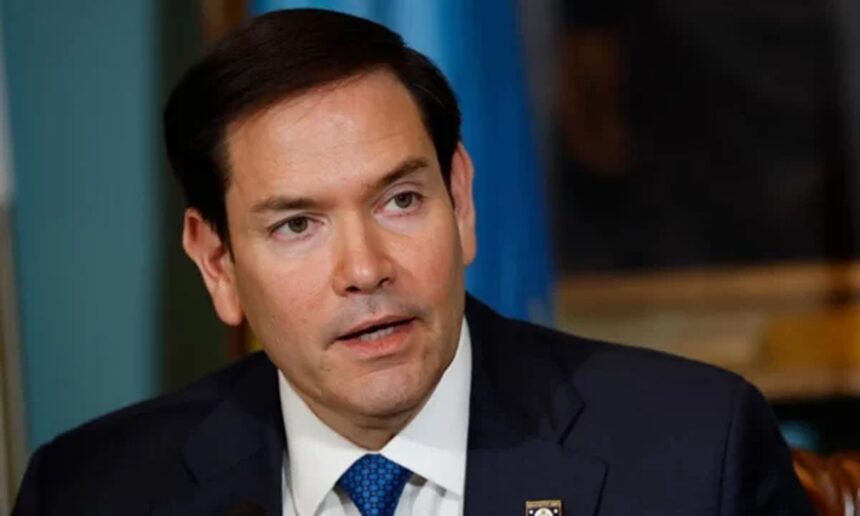
U.S. Secretary of State Marco Rubio concluded a three-day visit to the Gulf on June 25, delivering messages aimed at reassuring Washington’s regional allies while emphasizing diplomacy with Iran and insisting on freedom of navigation through the Strait of Hormuz.
Speaking after a ministerial meeting of the Gulf Cooperation Council (GCC) in Bahrain, Rubio sought to ease concerns about the emerging U.S.–Iran agreement, stressing that regional partners would be kept informed “at every step” of the negotiations.
The visit highlighted both the fragility of the ongoing peace process and the concerns of Arab allies still unsettled after recent Iranian actions during the conflict.
Rubio reiterated that any final agreement with Tehran must address not only nuclear issues but also Iran’s missile program, regional proxy networks, and maritime threats.
He strongly criticized Iran’s support for armed groups such as Hezbollah in Lebanon, militias in Iraq, Hamas, and the Houthis in Yemen, saying such involvement undermines the sovereignty of regional states and prevents stability.
A key focus of Rubio’s tour was the Strait of Hormuz. He emphasized that there is “zero support” among Gulf states for any kind of fees or tariffs on international shipping through the strategic waterway, warning that the U.S. would reject such measures.
Rubio said Washington’s priority is ensuring that maritime traffic continues uninterrupted, adding: “If ships are moving properly, we will take that as the standard. If it stops, then we will have a problem.”
Although Iran has reportedly pushed for “service fees” and greater control over passage through the strait, shipping traffic has recently increased following a temporary U.S.–Iran understanding, though it remains below pre-war levels.
Rubio ended his remarks by reaffirming that the U.S. remains committed to negotiations but warned that President Donald Trump is aware of all available options if diplomacy fails.