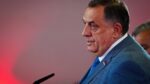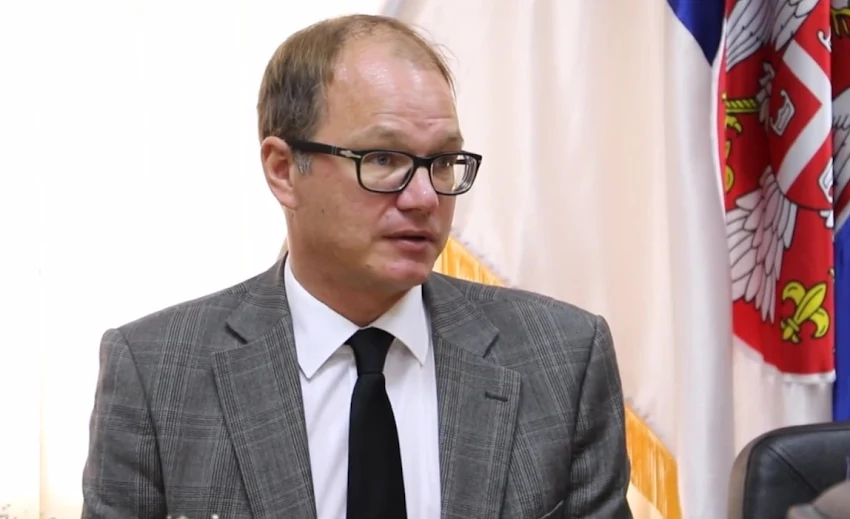
The Bureau for Social Research (BIRODI) has officially called upon the Constitutional Court and the Agency for the Prevention of Corruption to investigate the relationship between Serbian President Aleksandar Vučić and his long-standing economic advisor, German national Jörg Heeskens.
The watchdog group is demanding an institutional review to determine whether the arrangement constitutes an illegal expansion of presidential powers, unconstitutional overreach, or unregistered lobbying.
The Core Institutional Disputes
BIRODI’s primary legal challenge rests on the clear separation of powers outlined in the Constitution of Serbia. The organization argues that the presidency is a representative office, not an executive body tasked with micro-managing economic affairs.
| Institution / Entity | Constitutional & Structural Mandate (According to BIRODI) |
| President of the Republic | Under the Serbian Constitution, the president is not authorized to lead or dictate the state’s investment and economic policies. |
| Government of Serbia (Vlada) | Article 123 of the Constitution explicitly dictates that the Government defines and executes domestic and foreign policy, implements laws, and coordinates state administration. |
| GIZ (German International Cooperation) | BIRODI questions whether GIZ was explicitly aware that by embedded-funding Heeskens, they were functionally abetting the presidential absorption of executive government duties. |
The BIRN-Der Spiegel Investigation: Key Revelations
BIRODI’s institutional demand follows a groundbreaking, six-month joint investigative report published by the Balkan Investigative Reporting Network (BIRN) and Germany’s Der Spiegel. The dossier, pulled from official German government files via freedom-of-information laws, outlines the mechanics of Heeskens’ 13-year tenure:
- The Shadow Envoy: Heeskens has served continuously as Vučić’s shadow advisor for German investments since September 2013, moving with him through his terms as Minister of Defense, Prime Minister, and ultimately into the presidential palace (Andrićev Venac) in 2017.
- The German Paycheck: Despite operating directly within the nerve center of the Serbian presidency, Heeskens is financed entirely by the German federal government through GIZ and the Federal Ministry for Economic Affairs. Internal documents state his explicit goal is the “direct representation of the interests of the German economy with Vučić.”
- The “Jadar” Lithium Connection: The joint investigation uncovered logs of secret meetings and strategic planning regarding the controversial Rio Tinto “Jadar” lithium mining project. These channels reportedly remained active even during periods when the Serbian executive publically assured citizens that the mining project had been permanently halted, operating in parallel with substantial funding Berlin allocated to resource extraction amid widespread student and environmental protests in Serbia.
A Relationship in Quotes: The deep, informal nature of the alliance was publically acknowledged by Vučić himself during a February 2023 factory opening, where he famously noted: “I call him ‘my Swabian’ [moj Švaba], and he calls me ‘my wild Serb’ [moj divlji Srbin]. That is how we exchange compliments.”
While President Vučić has historically defended the partnership—signing an institutional renewal contract alongside German Ambassador Anke Konrad—regional analysts and constitutional experts note that an advisor directly paid by a foreign power to coordinate internal economic sectors sets an unprecedented, highly problematic diplomatic and security anomaly in European governance.