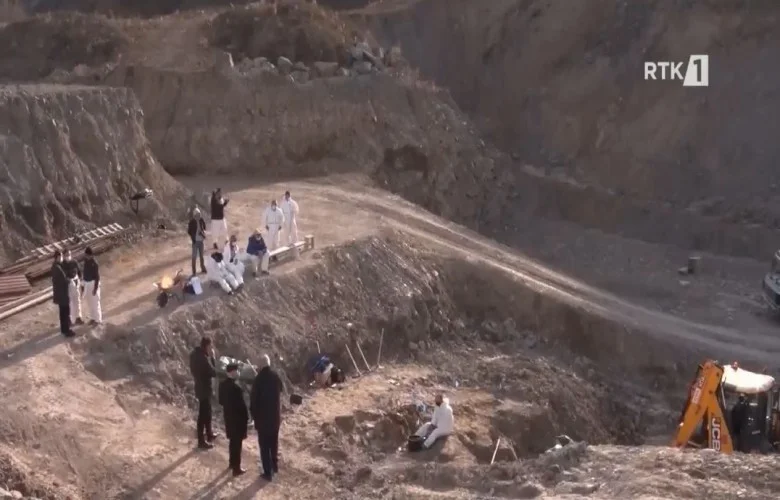
Nearly three decades after the conclusion of the Kosovo war, the fate of approximately 1,600 missing persons remains unresolved. Human rights advocates have intensified demands for the opening of state military archives following structural revelations pointing to a suspected mass grave located inside a high-security military training complex in Serbia.
Nataša Kandić, the prominent founder of the Humanitarian Law Center (HLC), recently reactivated public focus on a site known as “Pasuljanske Livade” (Bean Meadows), a major military training ground operated by the Serbian Armed Forces.
The Hidden 2008 Testimony Exposed
According to statements published by Kandić, the roadblock to uncovering the site is political rather than logistical. She revealed that as early as 2008, she directly provided explicit details to Serbia’s then-Minister of Defense, Dragan Šutanovac, regarding an eyewitness account.
                       [THE CLASSIFIED MILITARY TRACKS]
                                       │
         ┌─────────────────────────────┴─────────────────────────────┐
         ▼                                                           ▼
  [THE 2008 EYEWITNESS LOG]                                   [THE INSTITUTIONAL REACTION]
  ─────────────────────────                                   ────────────────────────────
  • Civilian driver admits to operating transport             • Ministry of Defense shelves dossier.
    trucks loaded with slain Kosovo Albanians.                 • Zero exploratory excavations ordered.
  • Cargo offloaded inside the active bounds of               • Complete state silence maintained for
    the Pasuljanske Livade military base.                       nearly two decades.
Despite the granular nature of the intelligence, consecutive Belgrade administrations refused to launch an inquiry, execute forensic sweeps, or issue any formal response regarding the military perimeter.
Demands Mount for the Unlocking of Serbian Military Archives
Human rights organizations emphasize that the lack of progress is entirely due to Belgrade’s refusal to declassify wartime documentation. Legal experts argue that localized operational logs, transport registries, and military commands contain the exact coordinates of hidden burial sites.
“It has been 27 years since the war ended, and more than 1,600 people are still listed as missing,” stated Amer Alija of the Humanitarian Law Center Kosovo. “The archives must be opened and information shared with competent institutions. The international community must exert decisive pressure on the parties within the Brussels dialogue to cooperate with genuine seriousness on this humanitarian issue.”
At Least 11 Active Suspected Sites Kept Under Lock
Pasuljanske Livade is not an isolated anomaly. Representatives tracking wartime disappearances state that internal whistleblowers—primarily former high-ranking Yugoslav Army officers—have pinpointed multiple operational zones used to conceal wartime atrocities.
| Suspected Mass Grave Location | Site Typology | Strategic Institutional Obstacle |
| Pasuljanske Livade | Active Army Training Range | Classified military operational boundary. |
| Brevenik (Raška Region) | Rural Border Zone | Sealed under localized state security directives. |
| Prokuplje Zone | Suburban Industrial Perimeter | Complete refusal by prosecutors to issue search warrants. |
Ahmet Grajçevci, head of the Coordinating Council of Associations of Families of the Missing, confirmed that at least 11 distinct geographic locations inside Serbia face credible documentation pointing to mass graves.
“The individuals providing these names and locations are not outsiders—they are former military commanders who know the terrain,” Grajçevci stated, emphasizing that until international monitors gain unfettered access to these active military zones, hundreds of families will remain locked in generational grief.