An investigation by Radio Free Europe (RFE) has revealed that “Rad 028”, a construction company owned by Radule Stević, continues to secure million-euro contracts from Serbian state institutions despite being completely absent from its registered address in Kosovo, facing international sanctions, and being linked to a major armed insurrection.
Stević and his company have been under United States sanctions for five years due to documented ties to organized crime, corruption, and key regional figures Milan Radoičić and Zvonko Veselinović. Furthermore, Stević is currently subject to an international arrest warrant issued by Kosovo, where he faces severe charges for his alleged role in the September 2023 Banjska armed attack.
Million-Euro Contracts for Unfinished Projects
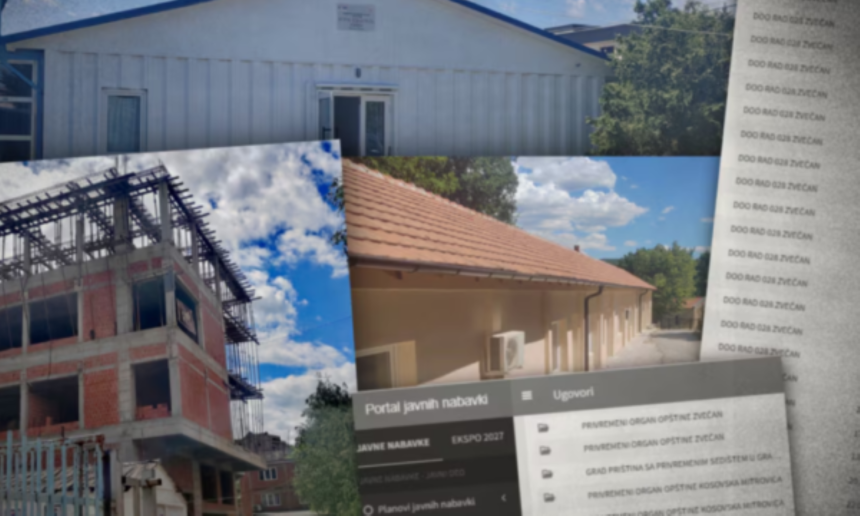
According to public procurement data analyzed by RFE, Serbian state institutions have awarded “Rad 028” ten new contracts worth over one million euros since the beginning of 2026 alone. This funding continues to flow despite the fact that the company has left more than twenty prior projects unfinished across Serb-majority municipalities in Kosovo.
During field visits conducted in June 2026, RFE reporters visited six designated construction sites in Kosovo. The journalists found no active machinery, no workers, and no mandatory information boards detailing investors or contractors. Of the ten contracts signed in 2026, only two—including a contract to supply New Year’s gift packs to primary school students—are officially listed as completed.
This follows a highly lucrative 2025, during which the company secured more than 30 contracts valued at over 6.4 million euros for the renovation of schools, hospitals, kindergartens, and the construction of social housing. Official records show that 20 of those 2025 contracts remain unfulfilled, while the reality of the 11 marked as “completed” could not be independently verified on the ground. Financial statements show that despite managing revenues exceeding 8.7 million euros in 2025, the firm officially employed only nine people, with no clear documentation regarding the use of subcontractors.
Ghost Headquarters and Institutional Silence
On paper, the headquarters of “Rad 028” is located in a multi-story building in the center of Zvečan, northern Kosovo. However, RFE found the property entirely vacant and locked, with local residents stating it has been deserted for a long time. Local accounts suggest the operations may have been covertly relocated across the border to Raška, Serbia, though this remains unconfirmed.
Official inquiries regarding these contracts went entirely unanswered. The Serbian Government, its Office for Kosovo, local temporary municipal organs operating from alternative locations in Serbia, and Stević’s company all declined to comment on the criteria used to award public funds to an internationally sanctioned individual under criminal indictment. The Serbian Police and Prosecution also refused to clarify whether Stević is currently in Serbia or under domestic investigation.
The Money Trail and the Banjska Indictment
According to the special prosecution indictment in Kosovo, Stević and his corporate entities acted as a primary mechanism to help Milan Radoičić launder money, transforming illicit proceeds into legitimate assets to establish socioeconomic control over northern Kosovo. If convicted of money laundering, Stević faces up to ten years in prison.
Radoičić, the former vice-president of the Belgrade-backed Lista Srpska party, publicly admitted to organizing the September 2023 Banjska attack, which resulted in the death of Kosovar police officer Afrim Bunjaku and three Serb gunmen. While Pristina courts recently handed down life sentences to two co-conspirators, more than 40 accused individuals—including Radoičić and Stević—remain out of reach of Kosovo’s judicial system.
“Plundering through Kosovo is hidden behind patriotism.” — Dušan Janjić, Forum for Ethnic Relations in Belgrade
Local opposition figures point out that the lack of oversight has left local communities abandoned. Milija Biševac, an opposition councilor in Zubin Potok, stated that substantial portions of Belgrade’s budget for Kosovo never reach ordinary citizens. Instead, funds are funneled to select contractors while basic infrastructure in Serb-majority areas continues to degrade.
Belgrade continues to reject Kosovo’s statehood and has completely ignored the judicial findings and international sanctions, allowing figures tied to the Banjska group to maintain active, lucrative business relationships with state infrastructure budgets.