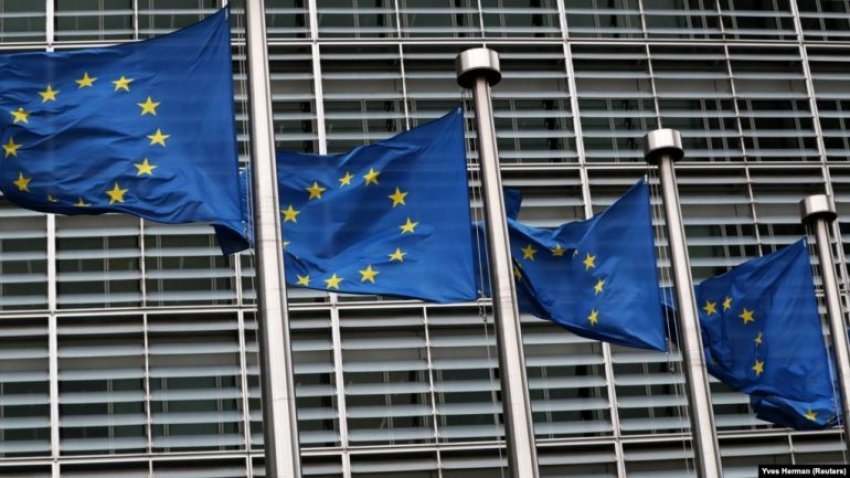
The European Commission is preparing sweeping proposals to reform the EU enlargement process in a calculated bid to reassert its authority over a debate increasingly dominated by individual member states, three EU officials told Euronews.
The move comes as EU enlargement has surged to the absolute top of the geopolitical agenda, driven heavily by Montenegro closing in on the final stretch for membership, alongside deep strategic questions regarding Ukraine. In recent weeks, member states have unleashed a flurry of position papers outlining drastically competing visions for the future of the accession process.
Gradual Integration vs. Democratic Safeguards
The debate has exposed key operational divisions among Europe’s heavyweights:
- The Founding Members: Five of the six original EU founding nations have jointly proposed drastically strengthening existing safeguards to prevent democratic backsliding and rule-of-law violations—a direct lesson learned from the years-long institutional battles with Viktor Orbán’s Hungary.
- The Franco-German Axis: Germany and France are championing the concept of gradual integration. This model would allow candidate nations to reap early economic and institutional benefits of the EU before achieving full, formal membership.
- Associated Membership: German Chancellor Friedrich Merz has previously advocated for a novel “associated membership” status, specifically designed to fast-track robust security guarantees for Ukraine.
EU capitals are now bracing for a massive strategic showdown over these reforms at the upcoming EU Leaders’ Summit in October 2026. The debate follows an extensive tour by European Council President Antonio Costa, who has been visiting all 27 capitals to find common ground.
The “Montenegro Burden” and Pre-Enlargement Audits
The Commission’s sudden scramble to produce its own text is widely seen as an attempt to prevent losing total control of the narrative. However, the internal debate remains highly sensitive. The Commission had previously frozen its pre-enlargement policy reviews—which simulate how a bloc of 30+ members would function regarding budgets and veto powers—after Ukraine’s massive accession profile severely complicated financial projections.
A major diplomatic flashpoint is how these new rules will affect Montenegro, the clear frontrunner to become the EU’s 28th member state. Because the drafting of Montenegro’s formal accession treaty began weeks ago, officials fear the Balkan nation is unfairly being turned into a guinea pig for stricter, retroactive rules.
“If you do this with Montenegro, it could look as though they are being punished simply because they performed well. The burden cannot fall entirely on Montenegro; it must be a fair process.” — An EU official with direct knowledge of the discussions
Transition Periods and Tougher Penalties
The core of the Commission’s upcoming proposals focuses on baking irreversible rule-of-law metrics directly into future accession treaties.
                                 ┌── Pezullimi i Fondeve të BE-së (EU Fund Suspension)
PROPOZIMET E SHTETEVE THEMELUES ─┼── Pezullimi i të Drejtave të Votës (Voting Rights Suspension)
                                 └── Pjesëmarrja e Detyrueshme në EPPO (Mandatory EPPO Joining)
While historical precedents exist—such as the monitoring mechanisms placed on Croatia leading up to its 2013 entry—the five founding members want to go much further. They are calling for lightning-fast penalties for legal breaches, including the immediate suspension of EU funds and the stripping of institutional voting rights.
Such hardline measures are facing fierce pushback from capitals arguing that it creates a “two-tier” Europe and violates the foundational principle of absolute equality among member states. Less controversial measures currently being explored include extending transitional periods that allow current member states to temporarily restrict labor market access for citizens of newly admitted nations, and making participation in the European Public Prosecutor’s Office (EPPO) mandatory.
The Shadow of the French Elections
Timing is incredibly volatile for the bloc. Deep institutional changes would ultimately require complex treaty overhauls, an appetite few leaders possess ahead of the critical French Presidential Elections next year.
The far-right National Rally (RN) party, led by frontrunner Jordan Bardella, has already weaponized the enlargement debate, categorically opposing Ukraine’s entry in recent television appearances.
Despite the political landmines, analysts believe robust safeguards might ironically be the only way forward. Florian Bieber, coordinator of the Balkans in Europe Policy Advisory Group, noted that “enhancing safeguards could alleviate the concerns of countries traditionally skeptical of enlargement,” ultimately boosting the chances of successful domestic ratifications across Europe.