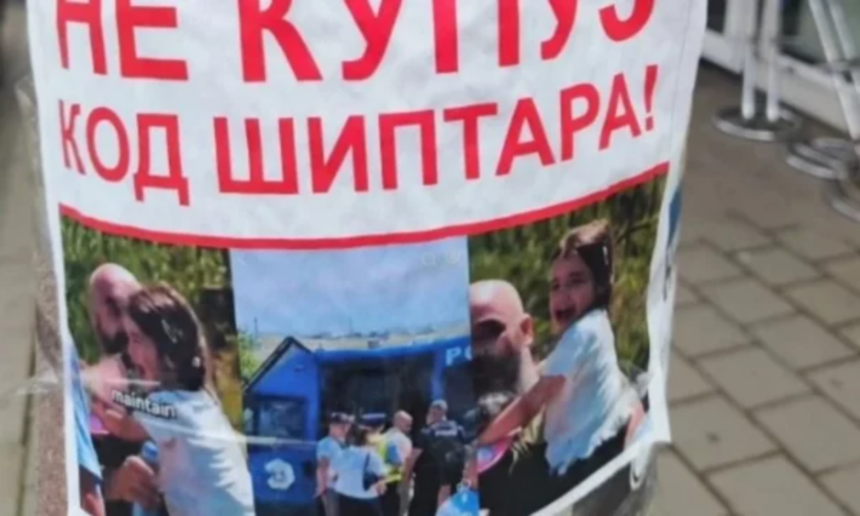
Serbia’s Ombudsman, Zoran Pašalić, has called on judicial authorities to immediately investigate the placement of hate posters targeting members of the Albanian national minority in Krushevc, urging them to identify those responsible and bring them to justice.
In a statement, Pašalić also called on the relevant institutions to take all necessary measures to prevent similar incidents from happening again.
He stressed that state authorities are obliged to protect the rights of all national minorities equally and to respond firmly to every form of discrimination, hate speech, and incitement to national or ethnic hatred.
His appeal came after hate messages were posted outside a bakery owned by Albanians in Krushevc, urging citizens to “remember Gazimestan” and boycott Albanian-owned businesses.
The Ombudsman warned that such actions represent an unacceptable expression of intolerance and discrimination, adding that the posters endanger citizens’ safety and undermine trust between communities.
“The spread of hatred and intolerance toward any national community has no place in a democratic society based on respect for human rights, equality, and the rule of law. Every citizen of Serbia has the right to live free from discrimination, intimidation, and hate speech, regardless of their national identity,” Pašalić said.
He also called on citizens, public institutions, media outlets, and public officials to help build a society where differences are respected and disagreements are resolved through dialogue and understanding—not through hate speech and calls for discrimination.
Earlier, Serbia’s opposition Free Citizens Movement (PSG) urged police and prosecutors to promptly identify those responsible for producing and posting the anti-Albanian posters in the central Serbian city of Krushevc.
The PSG said it was particularly alarming that the posters had been placed in front of a bakery owned by Albanians, arguing that this exposed specific individuals to pressure, persecution, and potential violence.
“Such a message is not a political position or a protest, but the open targeting of people solely because of their ethnicity and an attempt to move hatred from social media onto the streets,” the party said.
The party added that criminal responsibility belongs to individuals not entire nations and called for the rejection of any policy of “reciprocal measures” against Albanians living and working in Serbia.
The controversy follows the June 28 Vidovdan commemorations at Gazimestan, where Kosovo Police arrested 37 people, most of them from Serbia and neighboring countries. Thirty-six appeared before the court and were fined and banned from entering Kosovo for three years after chanting “Kosovo is Serbia” while making the three-finger salute.
Meanwhile, allegations have emerged claiming that some of those detained at Gazimestan were subjected to psychological and physical mistreatment by police officers.
Radio Free Europe/Radio Liberty said it was unable to independently verify those claims. The Kosovo Police Inspectorate stated that it would examine the allegations ex officio, although it had not received any formal complaints regarding the incident.