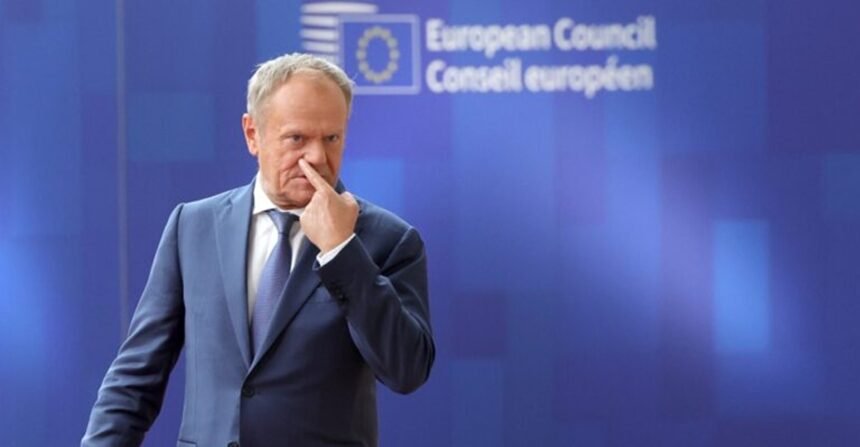
Polish Prime Minister Donald Tusk has delivered a sobering assessment of the war in Ukraine, warning that a ceasefire or peace agreement is highly unlikely in the near future.
Speaking to reporters in Paris following high-level meetings of the “Coalition of the Willing”—a group of over 35 nations supporting Kyiv—Tusk emphasized that Russia, under Vladimir Putin, is taking an extremely rigid stance and actively preparing to escalate its military operations heading into the winter.
Key Takeaways from Tusk’s Statement
The Polish Prime Minister highlighted that his assessments are shared by key allies, following detailed discussions with Ukrainian President Volodymyr Zelenskyy and NATO Secretary-General Mark Rutte.
- Winter Escalation Fears: Tusk warned that Moscow plans to prolong the war at least until the winter. Historically, Russia has used the colder months to intensify airstrikes targeting Ukraine’s energy grid, heating systems, and civil infrastructure to wear down domestic resolve.
- A “Rigid” Putin:“At this point, it seems unlikely that a ceasefire or peace agreement will be reached in the near future, given the rigid stance of Russia and President Putin.” — Donald Tusk, Prime Minister of Poland
- The Transition from War to Peace: The diplomatic focus has increasingly shifted toward practical, ironclad ways to guarantee Ukraine’s long-term security once a ceasefire or peace deal is eventually reached.
Major Military Drills Planned in Poland This Autumn
To prepare for future security guarantees, Tusk announced a major, concrete step: Poland will host joint military exercises involving British and French troops this autumn.
          [ Security Guarantee Blueprint for Ukraine ]
                               |
       +-----------------------+-----------------------+
       |                                               |
       v                                               v
[ Autumn 2025/2026 Drills ]                    [ Permanent Allied Presence ]
Joint maneuvers in Poland involving            Warsaw is preparing logistics to host a
British, French, and Polish troops             permanent presence of UK, French, and US
to simulate rapid-response protection.         forces to act as a regional deterrent.
These joint maneuvers will serve as a training ground for the “reassurance force” proposed by the Coalition of the Willing. This force—made up of soldiers from various European allies—is intended to help train Ukrainian forces, protect critical infrastructure, and act as a powerful deterrent against renewed Russian aggression once the fighting stops.
While Poland has ruled out sending its own ground troops into Ukraine as part of this reassurance force, Warsaw is taking on the role of primary logistical and financial hub for the allied nations that will.