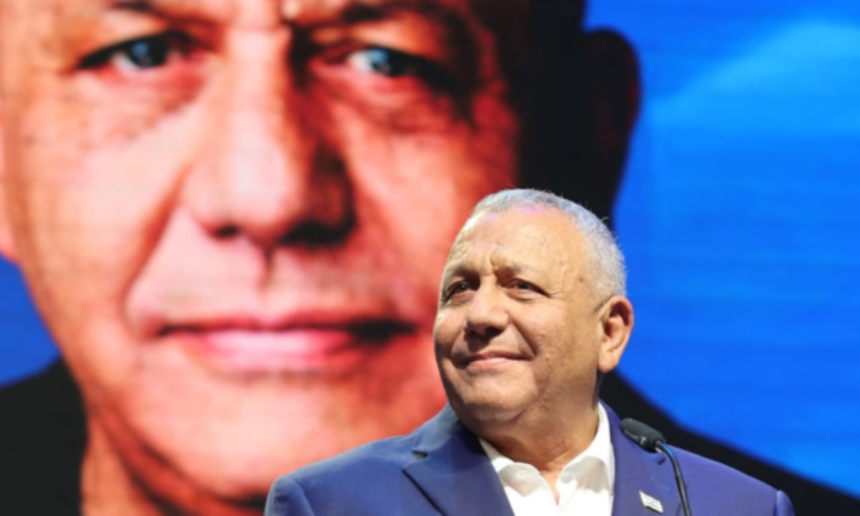
Former military chief of staff and centrist politician Gadi Eisenkot has overtaken Prime Minister Benjamin Netanyahu in several key opinion polls, right as Israel formally announced October 27 as the official date for its next general election.
The Knesset is set to dissolve after locking in the late-October date—the latest allowed by law. This concludes what historians and political strategists consider the most tumultuous four-year parliamentary term in modern Israeli history. The election will be the first time citizens pass judgment on Netanyahu’s government since the October 7, 2023 attacks and the subsequent regional conflicts.
The Rise of Eisenkot and the “Yashar” Party
In an unexpected surge of public support, Eisenkot’s newly founded party, Yashar (“Straight”), has clipped Netanyahu’s ruling Likud party to become the largest potential faction in the upcoming 120-seat parliament.
- Seat Projections: A recent poll by public broadcaster Kan (echoed by Channel 13 and Channel 12) shows Yashar ahead of Likud by a narrow margin of 24 to 23 seats (or 23 to 22 in alternative trackers).
- Head-to-Head for Prime Minister: When respondents were asked who is better suited to lead the country, Eisenkot led Netanyahu 41% to 37%.
- A Symbol of Personal Sacrifice: Eisenkot, a son of Moroccan immigrants who rose to the military’s highest rank, holds massive public sympathy. His son, Gal, and two of his nephews were killed in combat during the Gaza war, framing his campaign around a deeply resonant message of professional success and immense personal sacrifice.
The Deadlocked Electoral Map
Despite Eisenkot’s personal momentum, political analysts warn that his path to forming a stable coalition government remains highly complex and uncertain. Israel’s strictly proportional system requires a 61-seat majority to govern, and the anti-Netanyahu bloc remains just short of that threshold.
                  [ Projected Knesset Seat Distribution ]
                             (120 Seats Total)
                                     |
         +---------------------------+---------------------------+
         |                           |                           |
         v                           v                           v
[ Anti-Netanyahu Bloc ]     [ Pro-Netanyahu Bloc ]       [ Arab Parties ]
   **59 Seats**                 **51 Seats**               **10 Seats**
 Led by Eisenkot's Yashar    Led by Netanyahu's Likud     Traditional non-aligned
 & Lapid/Bennett's Together   & Ultra-Orthodox allies      factions in coalition math
The Wider Opposition Field
Eisenkot is not the only heavy hitter attempting to unseat the long-serving prime minister. In late April, former prime ministers Naftali Bennett and Yair Lapid merged to form the center-right party “Together,” which is currently polling between 15 and 18 seats.
Because many right-wing opposition figures have firmly ruled out building a coalition with the Arab-Israeli parties, Eisenkot will face a delicate balancing act to unify a deeply fragmented political spectrum—stretching from hardline secular nationalists to the peace-supporting left—in order to push Netanyahu out of office.
Netanyahu’s Final Legislative Rush
Netanyahu, a legendary political survivor who has led Israel for much of the last three decades, is far from writing off his chances. With the Knesset gridlocked until its final moments, the ruling right-wing coalition ordered members to stay in Jerusalem to push through a last spate of highly controversial laws.
These include legislation aimed at weakening the powers of the attorney general and measures to enshrine Torah study as a foundational value—effectively securing the draft exemptions sought by his Ultra-Orthodox allies. Eisenkot, meanwhile, has made enforcing compulsory military service for all sectors of society a main pillar of his platform, declaring: “It will be the victory of those who serve, the Zionists, those who work, and those who sacrifice for our country.”