China has announced export restrictions on 14 European defense and technology companies in response to the European Union’s latest sanctions targeting Chinese and Hong Kong entities accused of supporting Russia’s war effort.
The measures, announced by China’s Ministry of Commerce on Friday, mark Beijing’s strongest response to date against EU sanctions. Chinese authorities condemned the bloc’s decision as “egregious” after Brussels added 14 Chinese and Hong Kong companies to its sanctions list, prohibiting European businesses from conducting business with them.
Under the new restrictions, Chinese exporters will be barred from supplying dual-use goods—products with both civilian and military applications—to the listed European companies. Exporters will be able to apply for licenses in cases where shipments are considered “truly necessary.”
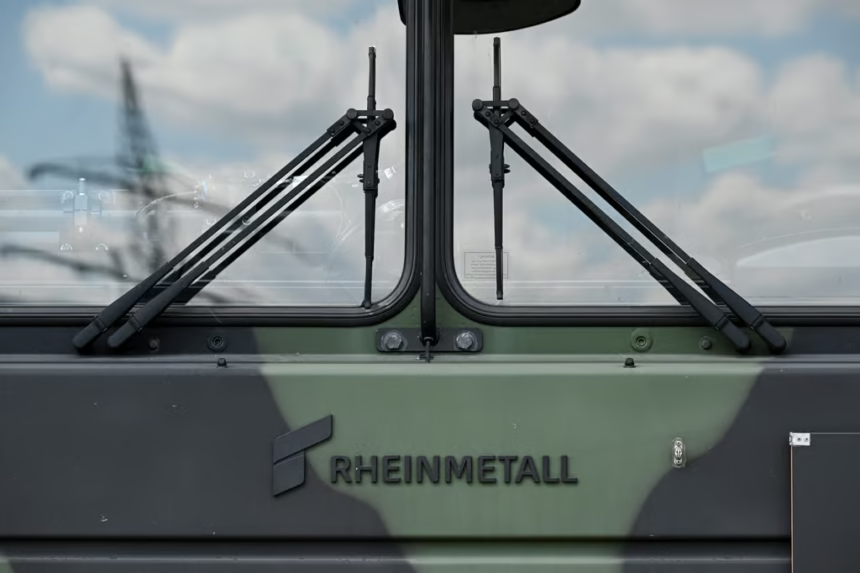
Among the companies affected is German defense manufacturer Rheinmetall, one of Europe’s fastest-growing defense firms. The list also includes Czech truck manufacturer Tatra, Dutch naval engineering company IHC Merwede, as well as several European optics and laser technology firms.
The European Union’s sanctions, announced a day earlier, target companies that Brussels says have helped Russia obtain Western technology despite sanctions imposed following Moscow’s invasion of Ukraine. While most of the newly sanctioned Chinese and Hong Kong entities are not defense manufacturers, they are alleged to have acted as logistics intermediaries facilitating the transfer of restricted goods to Russian importers.
Recent studies cited by European officials estimate that as much as 90 percent of sanctioned goods still reaching Russia transit through China, underscoring Beijing’s central role in global supply chains linked to Russia.
China has repeatedly rejected accusations that it is supplying military assistance to Russia, insisting that its trade with Moscow complies with international law and opposing what it describes as unilateral sanctions imposed without United Nations authorization.
The latest exchange of sanctions highlights growing economic and geopolitical tensions between Brussels and Beijing as the European Union seeks to tighten enforcement of measures designed to restrict Russia’s access to sensitive technologies.