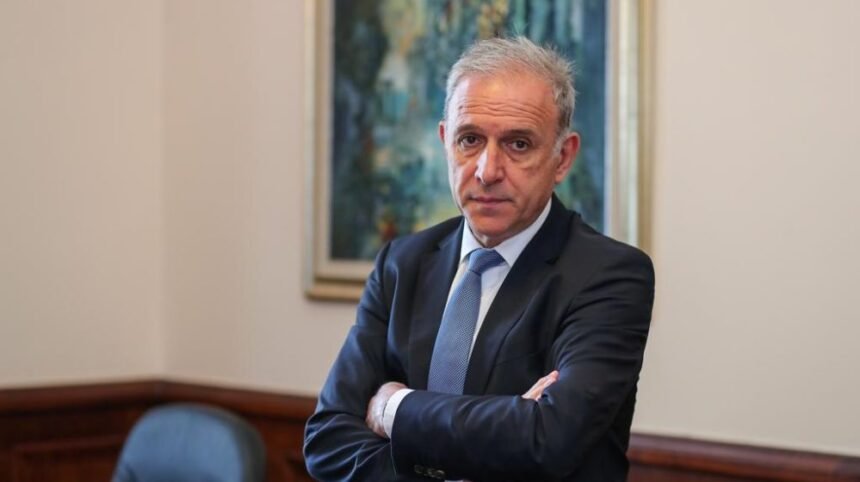
Zdravko Ponoš, leader of the Serbia Centre (SRCE) party, has accused Serbian President Aleksandar Vučić of attempting to distance himself from widespread corruption through the government’s new “Ko si, bre, ti” (“Who Are You?”) online platform, arguing that the initiative is part of a broader election strategy.
In an interview with the weekly magazine Vreme, Ponoš said the website demonstrates that Vučić recognizes corruption has become so pervasive that he must find a way to dissociate himself from it politically.
“He wants to say: ‘Yes, we have a problem. We can no longer hide it. But the problem is caused by bad actors within our own ranks, and I will deal with them. Report them through this website and everything will be resolved,'” Ponoš said.
According to the SRCE leader, the campaign is a carefully designed attempt to establish a direct relationship with ruling party supporters while portraying Vučić as the person capable of confronting corruption within his own system.
Ponoš argued that the current campaign differs from previous ones because the ruling Serbian Progressive Party (SNS) is focused on consolidating its core electorate while discouraging dissatisfied voters from supporting the opposition.
“They are criminalizing political opponents—whether they are members of political parties or individuals associated with the student movement. At the same time, they seek to create divisions among government critics and discredit anyone who publicly challenges the authorities or their record,” he said.
Reflecting on the evolution of SNS election campaigns, Ponoš described four distinct phases. He said the first centered on former party leader Tomislav Nikolić, followed by a period in which Vučić sought to appeal to urban and pro-European voters.
He argued that later campaigns shifted toward populist nationalism before entering what he called the current “Borat phase,” which he described as an appeal to anti-elitist sentiment through folk culture and political spectacle.
Ponoš claimed the strategy glorifies anti-intellectualism while masking the privileges enjoyed by those in power.
His remarks come as Serbia’s political parties continue positioning themselves ahead of the country’s anticipated parliamentary elections, with corruption, electoral conditions, and public trust remaining among the central issues of political debate.