Ahmet Grajqevci, head of Kosovo’s Coordinating Council of Associations of Missing Persons’ Families, says there have long been suspicions that several mass graves are located in northern Kosovo and in Serbia, arguing that recent discoveries in Zubin Potok strengthen concerns that additional burial sites may still be hidden.
Grajqevci told Ekonomia Online that families of missing persons had raised concerns about possible mass graves in the north shortly after the Kosovo War, but that a lack of investigative equipment and limited institutional authority prevented authorities from properly examining suspected locations at the time.
“From the beginning, we suspected that there could be two, three or even four mass graves in the north,” Grajqevci said, recalling visits to several locations with former Kosovo war crimes police officials and UNMIK representatives.
He also pointed to documents and testimonies concerning the Serbian military’s so-called “asanacija terena,” or “cleaning of the terrain,” which he said involved collecting bodies following military and police operations and transporting or burying them at designated locations.
According to Grajqevci, evidence referring to the Užice Corps has raised additional suspicions about a possible mass grave near Raška in Serbia.
He accused Serbian authorities of systematically concealing the bodies of Kosovo Albanian victims during and after the war, claiming that suspected burial sites included churchyards, military barracks and locations near Serbian cemeteries.
“These were not isolated actions. Everything was done according to a plan,” Grajqevci said, while also alleging that Serbian institutions had pressured individuals not to reveal information about the locations of mass graves.
He further argued that tensions and incidents in northern Kosovo in recent years contributed to delaying efforts to uncover suspected mass graves and identify those responsible for wartime crimes.
Grajqevci welcomed the renewed investigations by Kosovo authorities, particularly the work of prosecutors and investigators dealing with missing persons and war crimes.
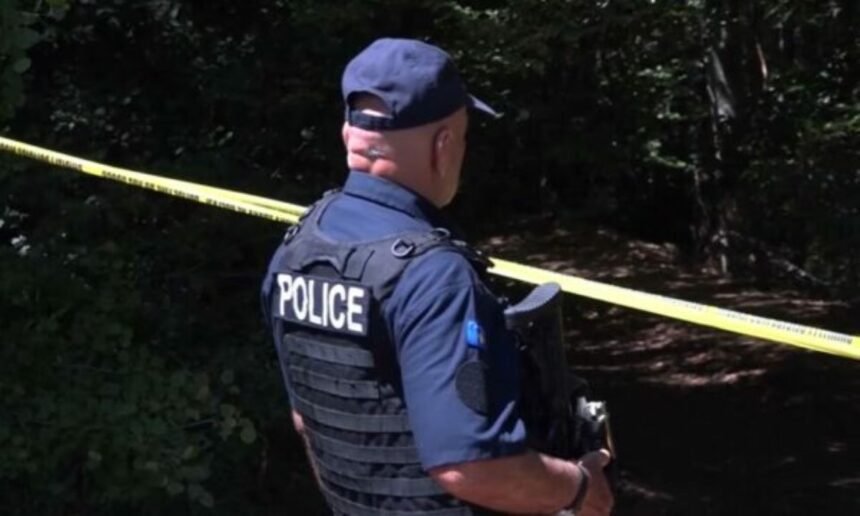
His comments come amid a renewed investigation into suspected wartime burial sites in the Zubin Potok area. On August 2, Kosovo authorities arrested another person suspected of war crimes against civilians as part of the investigation and identified a new location in the village of Jabukë, where four human remains were reportedly found.
Excavations have also continued at Kalludër e Vogël, while authorities have stressed that the identities of the remains can only be established through DNA analysis.
Acting Prime Minister Albin Kurti has said the remains could potentially belong to 23 Kosovo Albanians who disappeared in April 1999, a group commonly referred to as the “group of intellectuals.”
According to Kosovo’s Institute for Crimes Committed During the War, 1,577 people remain officially listed as missing from the 1998–1999 war.
The discovery and investigation of suspected mass graves have renewed calls for accountability and for Serbia to provide information concerning the fate and whereabouts of those who disappeared during the conflict.