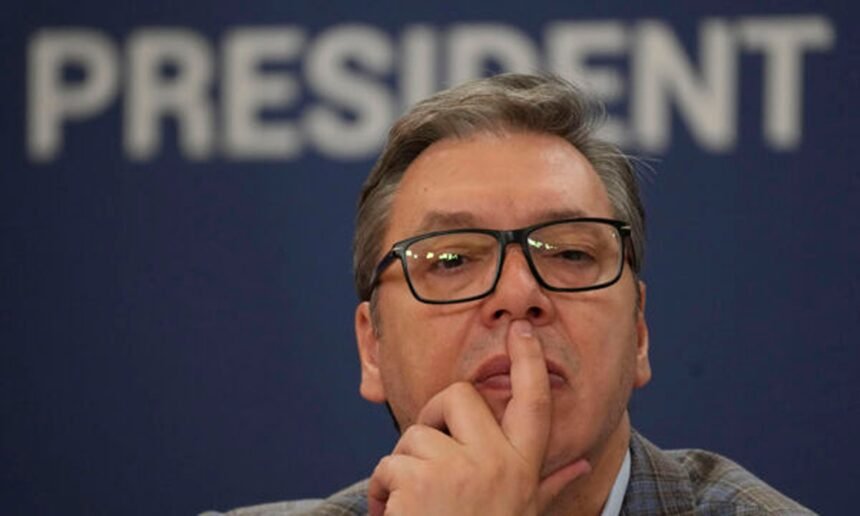
Serbian President Aleksandar Vučić has said Serbia remains committed to preserving peace in the Western Balkans, while asserting that the country’s military is now at least as strong as Croatia’s.
Speaking to Serbian public broadcaster RTS during a visit to Čipuljić, where he toured the renovated birthplace of his father, Vučić said maintaining peace was Serbia’s “number one goal,” arguing that economic growth and rising state capacity strengthened the country’s position.
“Serbia’s commitment is to contribute to regional peace and preserve regional peace,” Vučić said, adding that peace was particularly important because Serbia was developing faster than some of its neighbors.
He also pledged continued support for Serbs living in Republika Srpska and in Serb-majority municipalities in the Federation of Bosnia and Herzegovina, including Drvar, Grahovo, Glamoč and Bosanski Petrovac.
Vučić said Serbia would continue promoting what he described as national and popular unity among Serbs across borders, while acknowledging that the situation remained difficult for Serbs in the Federation, particularly economically.
At the same time, he called for Serbia to balance remembrance of Serbian victims with efforts to preserve regional peace.
“We must show compassion and respect for the victims of others, but it is time to speak openly about the suffering of the Serbian people as well,” Vučić said. He added that this should not be motivated by revenge or a desire for new conflicts, but by what he called a rational assessment of history.
Vučić also directly addressed the military balance between Serbia and Croatia, saying Belgrade had strengthened its armed forces.
“Today, the Croatian army is not stronger than ours. That is all I can say,” he said, without providing specific figures or assessments to support the claim.
He argued that Serbia should focus on economic development, reindustrialization, investment in artificial intelligence and technological advancement as the foundations of its long-term national strength.
The Serbian president also criticized the Montenegrin government for deciding to send a representative to Croatia’s commemoration of Operation Storm in Knin, while not sending an official representative to a memorial event for Serb victims in Mrkonjić Grad.
Vučić accused Podgorica of participating in what he described as a celebration of crimes against Serbs and said Serbia would continue supporting Republika Srpska and Serbs in Montenegro.
His comments come amid renewed political and historical tensions across the region surrounding the legacy of the 1990s wars, including competing commemorations of victims and military operations.
While presenting peace as Serbia’s primary objective, Vučić’s remarks also continued his broader emphasis on Serbian national unity, military strength and the protection of Serb communities across the region.