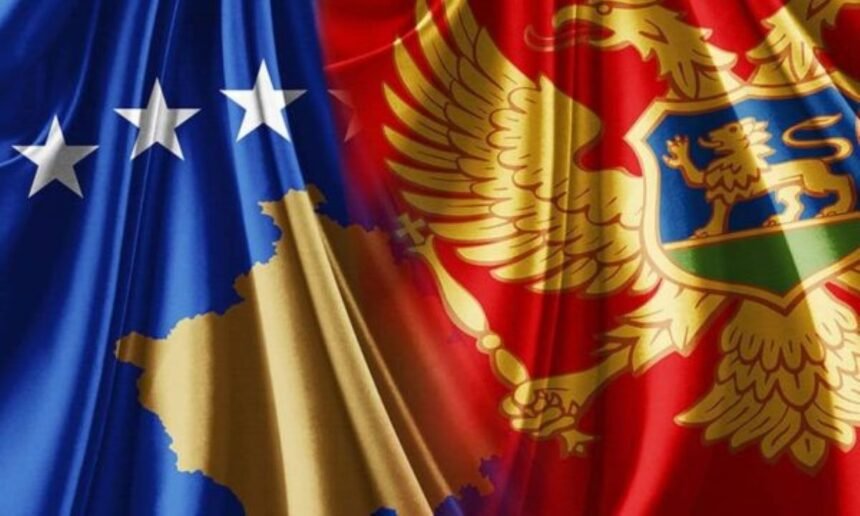
Initiatives by pro-Serb political parties in Montenegro calling for the “de-recognition” of Kosovo have no legal effect, but they are exposing institutional weaknesses and demonstrating how the Kosovo issue is being used for narrow political and electoral interests, political scientist and University of Donja Gorica lecturer Nikoleta Đukanović told the newspaper Pobjeda.
Declarations calling for the “annulment of Montenegro’s recognition of Kosovo” have been adopted by the municipal assemblies of Zeta and Pljevlja, following initiatives by the Democratic People’s Party led by Milan Knežević. The party has indicated that similar initiatives could be launched in other municipalities.
In Nikšić, however, a similar initiative was rejected. Local authorities responded that “Nikšić has never recognized Kosovo, so there is nothing to de-recognize.”
A comparable initiative has also been discussed in Herceg Novi, where the Movement for Popular Trust called on the president of the municipal assembly and council groups to place the issue on the agenda.
Đukanović stressed that Montenegro’s municipalities have no constitutional or legal authority to decide whether another state is recognized or not, as foreign policy and recognition of states fall exclusively under the authority of state institutions.
“Recognition or non-recognition of states is an exclusive competence of state bodies, and there can be no dilemma about that,” she said.
According to Đukanović, while the municipal declarations cannot alter Kosovo’s international or legal status, they carry political significance because they are designed to mobilize parts of the electorate through identity-based issues.
“Their goal is not to change Kosovo’s international legal position, but to send a political message and mobilize part of the electorate through identity issues. This is another example of how foreign-policy issues are being used for domestic political confrontation,” she said.
Đukanović particularly criticized the lack of a strong institutional response to such initiatives.
She argued that the biggest problem is not the declarations themselves, since they cannot alter Montenegro’s foreign policy, but the fact that institutions are allowing constitutional competencies to be bypassed for political purposes.
“When there is no accountability, the impression is created that anyone can act outside their competencies if there is a political interest in doing so. That is a much more serious problem than the declaration itself,” she said.
She also warned that such local initiatives create an image of institutional fragmentation in Montenegro and could undermine the country’s credibility with international partners.
Legal experts question competence of municipalities
Professor and Dean of the Faculty of State and European Studies Đorđije Blažić also described the initiatives seeking to “de-recognize” Kosovo as evidence of a lack of legal understanding and politically motivated action.
He stressed that municipalities have no constitutional or statutory authority to decide questions of state recognition, which are exclusively the responsibility of Montenegro’s central institutions.
According to Blažić, the initiatives demonstrate “fundamental ignorance and bad intentions” on the part of those promoting the idea of reversing Montenegro’s recognition of Kosovo.
Montenegro recognized Kosovo’s independence in 2008, and any decision to alter that position would therefore have to be addressed at the state level rather than by individual municipal assemblies.
Meanwhile, Montenegro’s Minister of Public Administration Marash Dukaj declined to comment to Pobjeda. The newspaper said it had approached the minister several times for an interview but was referred instead to an earlier statement he had published on X.
The controversy highlights the increasingly prominent role of Kosovo-related issues in Montenegro’s domestic political competition, particularly among parties seeking to consolidate support among pro-Serb and pro-Russian segments of the electorate.