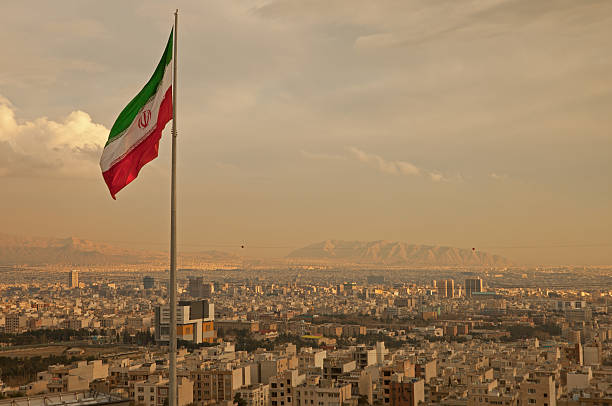
Iran’s Supreme Leader Mojtaba Khamenei has replaced Mohammad Baqer Zolqadr as his representative to the Supreme National Security Council (SNSC), appointing veteran Islamic Revolutionary Guard Corps (IRGC) commander Mohsen Rezaei as the council’s new secretary.
The move follows days of speculation in Iranian media over Zolqadr’s position, including reports that he had submitted his resignation, which President Masoud Pezeshkian, who formally chairs the SNSC, had rejected.
Although the president formally heads the council, its secretary plays a more direct operational role and has significant influence over the body’s activities. Ultimately, however, SNSC decisions only become binding after approval by the supreme leader.
In his final statement as Iran’s security chief, Zolqadr issued a series of tough demands toward the United States on August 9 over the reopening of the Strait of Hormuz, including guarantees that Washington would never again threaten Iran, full compensation for wartime damage and the unconditional unfreezing of Iranian assets.
Rezaei’s appointment, given his long career in the IRGC, has raised questions about the direction Iran’s security and foreign policy could take.
But outside Iran’s power structures, another question is attracting attention: how seriously will Iranian society take Rezaei as the head of the country’s most important security institution after years in which his predictions, promises and political boasts became frequent targets of satire?
At the Center of Security Decision-Making
Now 71, Rezaei is a veteran commander who possesses extensive knowledge of some of the most closely guarded aspects of Iran’s 1980s war with Iraq and the early years of the IRGC.
He left the military in 1997 to enter politics and ran for president four times. He withdrew before the 2005 election and lost the 2009, 2013 and 2021 presidential elections, never receiving more than approximately 3.9 million votes.
During his political campaigns, Rezaei also sought to establish himself as an economic expert. Among his most ambitious promises was to make Iran’s rial the strongest currency in the region after the U.S. dollar and euro.
However, one of his most widely remembered statements had less to do with economics than with the intersection of war and money.
In 2015, Rezaei said that if the United States attacked Iran, Tehran would capture at least 1,000 Americans during the first week and could demand billions of dollars for each hostage’s release — which, he suggested, would also help solve Iran’s economic problems.
The idea of resolving Iran’s economic crisis through the capture of American hostages and ransom payments became a subject of political mockery for years.
By July 2026, Rezaei’s rhetoric had become more confrontational. He declared that the era of “war and negotiations at the same time” was over and warned that if Washington continued its attacks, Iran would move toward “full offensive and annihilation.”
Rezaei has also taken on the role of publicly interpreting some of the more ambiguous statements made by Khamenei.
After the supreme leader said he had, in principle, opposed the direction taken by the SNSC regarding the Islamabad Memorandum of Understanding, Rezaei attempted to explain the statement.
“When the Leader says that in principle he had a different view, it means that the path he had in mind was better than the one the council actually followed,” Rezaei said.
How Tehran Is Viewing the Decision
Reactions to the changes at the SNSC have largely followed Iran’s familiar political divisions, with different factions interpreting the appointment according to their own interests.
Nour News, a media outlet close to former SNSC secretary Ali Shamkhani, portrayed the appointment primarily as an institutional matter rather than a factional confrontation. It argued that the significance of the change lies less in the individuals involved than in the mandate given to the secretary.
The central question, according to the outlet, is whether the SNSC secretariat will expand its role to include the development and coordination of the country’s broader strategic direction.
If properly managed, Nour News argued, the change could mark a shift toward the “integration of national capabilities” and away from rigid divisions between Iran’s political camps.
Conservative commentator Ali Qolhaki offered a more direct interpretation, describing the change as the fastest replacement of an SNSC secretary in the council’s history.
He claimed that efforts to remove Zolqadr had begun more than a month earlier and intensified following attacks on ships passing through the Strait of Hormuz during funeral ceremonies for former Supreme Leader Ayatollah Ali Khamenei. Qolhaki also suggested that unspecified problems had emerged with Zolqadr’s performance.
He predicted that further military appointments could follow in the near future, potentially complementing Rezaei’s new role.
The ultraconservative Raja News went further, portraying the reshuffle as confirmation of its earlier criticism of the government.
It argued that Zolqadr’s sudden removal could not be separated from the ceasefire process, negotiations and the final ratification of the Islamabad Memorandum of Understanding.
According to Raja News, the development provided further evidence that the new supreme leader had opposed the memorandum’s signing.
Following Zolqadr’s replacement by Rezaei, the outlet claimed that statements by Iran’s negotiating team that the process had been fully coordinated with the leadership were now shown to be “false.”
Reformist political analyst Ahmad Zeidabadi, however, took a considerably more cautious position.
He wrote that, given the backgrounds of both Zolqadr and Rezaei and their recent public statements, it was extremely difficult to interpret the decision from outside Iran’s “complex and confusing network of power relations.”
His assessment underlined the limited information available to outsiders — and potentially even to many Iranians — about what ultimately drove the decision.
Rezaei’s return to the center of Iran’s security establishment therefore signals more than a routine personnel change. His military background, longstanding political ambitions and confrontational rhetoric could shape how the SNSC approaches the country’s increasingly tense relationship with Washington and the broader security challenges facing Iran.