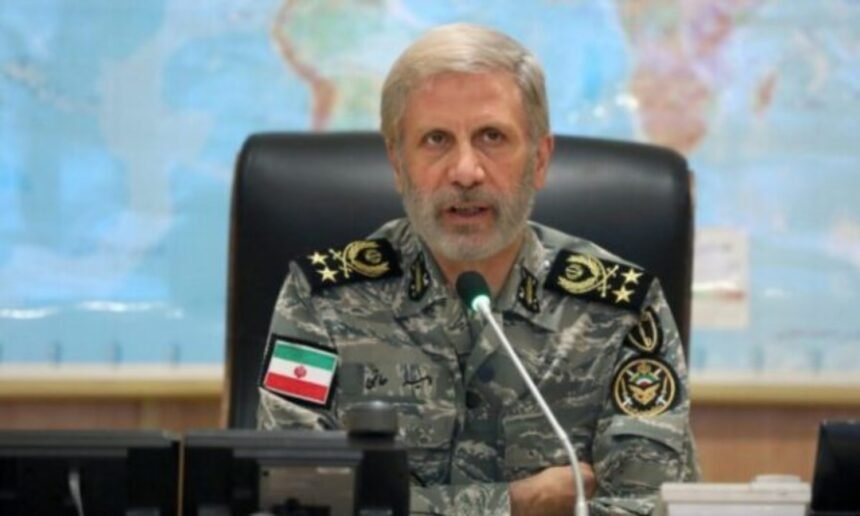
In a dangerous escalation of rhetoric between Tehran and Washington, Iranian Army Chief of Staff Amir Khatami issued a direct threat against Donald Trump in response to the U.S. president’s remarks concerning the Strait of Hormuz.
At the same time, Khatami announced a $30,000 reward for the killing or capture of U.S. soldiers, with the amount reportedly doubled if the act were carried out by a woman.
Khatami’s hard-line remarks come as tensions between the United States and Iran, as well as the standoff over control of the Strait of Hormuz, remain at a critical point. Diplomatic efforts have so far failed, while commercial shipping through the strategically vital waterway has been drastically restricted.
According to The Independent, the Iranian commander’s angry response was triggered by Trump’s threat to declare the Strait of Hormuz U.S. territory.
Responding to the U.S. president, Khatami warned that making such statements was a “big mistake,” adding that Iran has defenders who “will break your legs.”
He also claimed that U.S. forces had effectively been “driven out” of the region and that, according to Tehran, they no longer had the right to enter the Persian Gulf, the Gulf of Oman or the Strait of Hormuz.
The Iranian army chief further warned that U.S. bases in the Middle East would not return to their previous operational status, claiming that Iran would not allow facilities in neighboring countries to be used against it.
At the same time, Khatami announced a financial reward for anyone who kills or captures a U.S. soldier.
The reward was reportedly set at $30,000, or 5 billion tomans, while Iranians carrying out such an act would allegedly receive twice that amount.
Khatami claimed the program had been created following a large number of requests from people wanting to participate in what he described as an “economic jihad.”
In addition, the Iranian general said that the weapon used to kill a U.S. soldier would be purchased by the authorities for twice its value, while its owner would receive a replacement weapon. The original weapon would then be placed in a specially designed museum.
The latest escalation in wartime rhetoric is centered on the Strait of Hormuz, which has become a key flashpoint in the confrontation between the two countries.
Tehran has made clear that it does not intend to resume negotiations with Washington under the current circumstances, while Iranian officials have called on Trump to “accept the reality of defeat.”
The tensions are already having a significant impact on international maritime traffic. According to figures cited by The Independent, only five cargo ships passed through the strait on Saturday, while no crossings were recorded on Sunday, compared with 31 during the previous weekend. The slowdown followed new attacks on tanker vessels in the area.