Two high-profile criminal cases involving senior figures in Russia’s rapidly expanding drone industry are fueling renewed allegations from pro-war Russian bloggers that corruption, mismanagement and poor technological development are undermining Moscow’s war effort in Ukraine.
The latest case involves the August 8 arrest of two directors of Drone Solutions, following the June detention of billionaire businessman Valery Kustov, a prominent figure in Russia’s drone sector. Both cases involve fraud allegations, and the companies involved had previously presented their drone projects to Russian President Vladimir Putin as examples of domestic technological innovation.
Drone Solutions presented its Aist, or “Stork,” unmanned aerial vehicle to Putin in April, describing it as a platform designed to transport medical supplies and other cargo. Its executives, Irakli Khazalia and Vyacheslav Barbarov, face potential prison sentences of up to 10 years if convicted. Investigators have not publicly disclosed many details of the case.
The arrests prompted criticism from Dmitry Tretyakov, the head of a rival drone company, who accused Russia’s unmanned aviation industry of being dominated by people without sufficient aviation experience.
“The main problem is the complete lack of professionalism, lies and pretence among those running this industry,” Tretyakov wrote, according to Current Time.
Allegations surrounding billionaire Valery Kustov
The other major case centers on Kustov, best known for his business interests in Russia’s food industry and his role as founder and controlling shareholder of Efko.
In 2023, Kustov established Transport of the Future in Tolyatti, a major industrial center about 800 kilometers east of Moscow. Russian authorities later linked the company to a fraud investigation involving alleged misuse of state funds and drone procurement.
Putin visited the company’s research and manufacturing center in January 2025 as part of a government-backed effort to promote innovation in unmanned aerial systems. During the visit, he said Russia should become one of the world’s leading technological innovators in the field by 2030.
Kustov has been accused of purchasing Chinese-made drones and presenting them as domestically developed products, as well as misappropriating government funds allocated for research and development. Prosecutors reportedly estimate the alleged damage to the Russian state budget at around $105 million.
Several other executives and officials have also been detained or charged in connection with the investigation. Reuters reported that the case included Efko executives and a government official responsible for drone development.
Pro-war bloggers turn their criticism on corruption
The cases have drawn particular attention from Russia’s pro-war military bloggers, who have increasingly criticized corruption and failures in the country’s defense sector.
Some bloggers have alleged that Kustov’s company earned as much as $83,000 on each drone purchased from China and subsequently sold to Russia’s Defense Ministry.
“The biggest anti-corruption fighters in Russia today are the [pro-war] bloggers. They believe Russia is losing the war because of corruption,” Russian journalist Ivan Filippov, who analyzes pro-Kremlin Telegram channels from exile, told Current Time.
Such criticism can carry significant risks. Some pro-war, or “Z,” bloggers have faced detention after reporting alleged corruption within the armed forces or criticizing the conduct of the war.
The growing criticism reflects a contradiction within Russia’s wartime information environment: many of these commentators strongly support the invasion but increasingly accuse officials and defense contractors of wasting resources that they believe should be directed toward the battlefield.
Drone technology reshapes the battlefield
The rapid expansion of drone warfare has transformed the conflict in Ukraine.
Russia initially lagged behind Ukraine in some areas of unmanned systems development. Moscow responded by acquiring thousands of drones and related technologies from Iran while simultaneously expanding domestic production.
Russian drones now regularly strike Ukrainian cities, while the military’s Rubicon unit has emerged as an important center for developing and acquiring battlefield drone technologies. At the same time, Russian military commentators have acknowledged that Ukraine continues to maintain technological advantages in several areas.
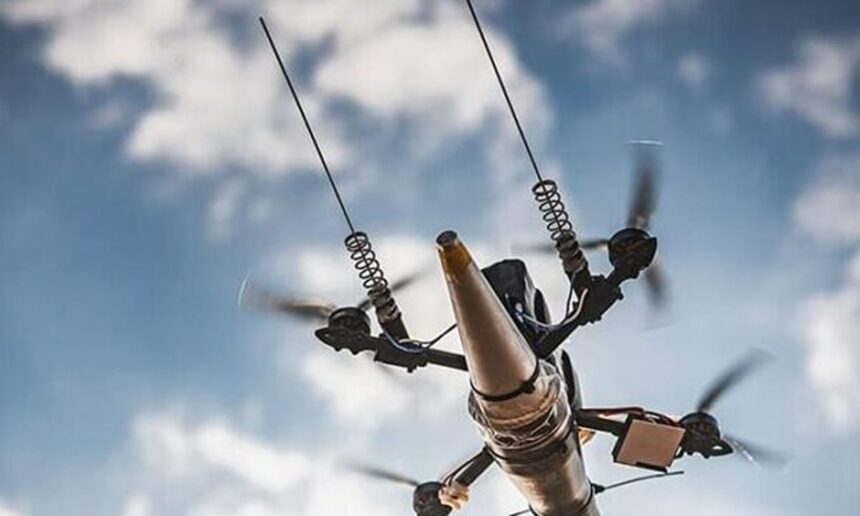
Filippov cited Russian commentator Aleksei Chadayev, who discussed the Kustov case and pointed to the company’s failed attempt to develop a Russian equivalent of Ukraine’s Vampire drones, known among Russian troops as Baba Yaga.
Ukrainian authorities say Vampire drones can carry payloads of up to 15 kilograms over distances of up to 20 kilometers and are equipped with systems designed to operate in the presence of electronic warfare.
Chadayev argued that had the Russian project succeeded, Moscow could have developed its own mass-produced equivalent of the Ukrainian system.
Russian Defense Minister Andrei Belousov reportedly offered a similarly negative assessment of the project, telling Putin in June that it was a low-quality product.
The arrests have therefore become more than isolated corruption cases. They have exposed growing frustration within Russia’s own pro-war information space over whether massive state investment in drone technology is producing the capabilities Moscow needs on the battlefield.
For the Kremlin, the cases highlight a difficult wartime challenge: expanding drone production rapidly while preventing corruption, inflated contracts, weak management and technological failures from undermining the effectiveness of the country’s defense industry.