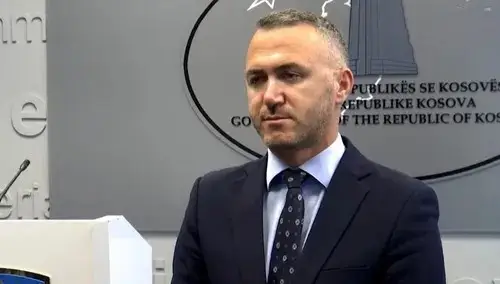
Kosovo official Jeton Zulfaj has sharply criticized Serbia’s portrayal of Kosovo’s Serb community, arguing that claims of widespread disenfranchisement ignore the extensive constitutional protections and institutional guarantees granted to Serbs in Kosovo.
In a statement published on X, Zulfaj responded to a characterization by Serbia’s minister for European integration of the Serb community as “the most disenfranchised ethnic group in contemporary Europe.”
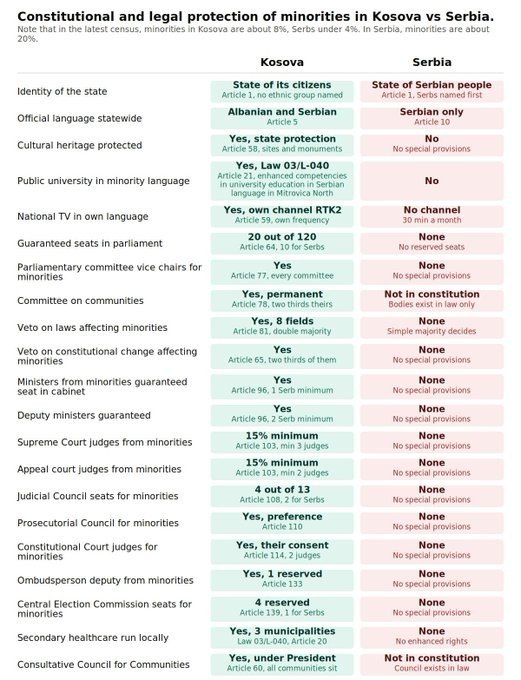
Zulfaj argued that Kosovo’s Constitution provides Serbs with a broad range of guaranteed political and institutional rights, including 10 reserved seats in the Assembly, a guaranteed ministerial position, reserved representation in the country’s highest judicial institutions, a dedicated public broadcaster channel, the right to establish a public university, and veto powers over legislation and constitutional amendments affecting the rights of non-majority communities.
“Every one of those is written into a constitution anyone can open and read,” Zulfaj said.
He contrasted Kosovo’s constitutional framework with what he described as the treatment of ethnic Albanians in Serbia.
According to Zulfaj, the administrative “passivization” of Albanian residents’ addresses in Serbia can result in the loss of access to identity documents and affect access to healthcare, education and voting rights.
He cited the Helsinki Committee for Human Rights in Serbia, which has described the practice as “ethnic cleansing through administrative means,” and referred to the European Commission’s 2025 report on Serbia as documenting the same issue.
“That is disenfranchisement,” Zulfaj said.
Zulfaj argued that the dispute is not primarily the result of a lack of information among Serbian officials, but of what he described as an unwillingness to acknowledge uncomfortable facts.
“It is not because Nemanja and the Nemanjas in Serbia do not know. It is because they do not care,” he said.
He further accused Serbian authorities and political actors of relying on what he called a Russian-style propaganda strategy to shape perceptions about minority rights and Kosovo.
“The Russian playbook does not require truth or facts,” Zulfaj said, adding that Europeans should work to counter what he described as Russian propaganda and its proxies.
His comments come amid continuing disputes between Prishtina and Belgrade over minority rights, political representation and the treatment of ethnic communities, as well as competing narratives over the status and rights of Kosovo Serbs and Albanians in Serbia.