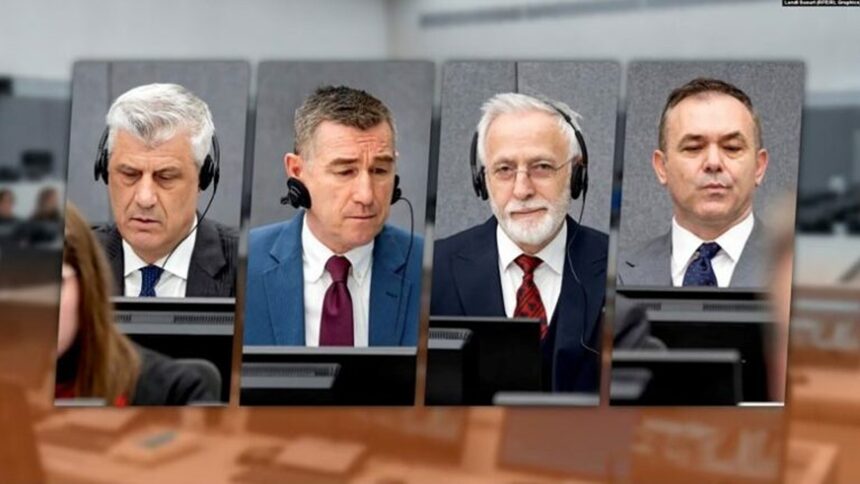
Major international news organizations BBC and CNN have reported extensively on the first-instance convictions of former Kosovo Liberation Army (KLA) leaders Hashim Thaçi, Kadri Veseli, Rexhep Selimi and Jakup Krasniqi by the Kosovo Specialist Chambers in The Hague.
BBC highlighted Thaçi’s role as a co-founder and commander of the KLA during the 1998–1999 Kosovo war, noting that he is widely regarded as a hero in Kosovo for his role in the struggle for independence.
The BBC report also traced Thaçi’s political career, from KLA commander to Kosovo’s first prime minister and later president.
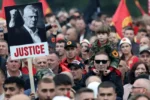
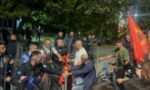
Following the announcement of the verdict, thousands of people in Kosovo gathered to watch the proceedings on large screens. BBC reported emotional reactions in Prishtina, including people crying as the sentences were announced.
CNN reported that Thaçi, who served as Kosovo’s president before resigning in 2020 to face the charges, was sentenced to 25 years in prison for war crimes.
The network noted that Thaçi was tried alongside three other former KLA leaders — Veseli, Selimi and Krasniqi — who were also convicted and sentenced to prison terms. Prosecutors had sought sentences of up to 45 years, while all four defendants denied the charges.
CNN also emphasized the defendants’ continuing public standing in Kosovo, where they are widely regarded as national heroes by many citizens. Thousands of people gathered in Prishtina to show their support as the verdict was announced.
The reports placed the judgment in the broader context of the Kosovo war, which lasted from 1998 to 1999 and resulted in approximately 13,000 deaths, the majority of them Kosovo Albanians.
The Specialist Chambers found the four former KLA leaders criminally responsible for war crimes but rejected the prosecution’s charges of crimes against humanity. The first-instance judgment can be appealed.
The international coverage reflects the contrasting dimensions of the case: the legal findings of the Hague court and the continued political and symbolic significance of the defendants in Kosovo, where their wartime roles remain closely associated with the country’s struggle for independence.