European Commission President Ursula von der Leyen said Wednesday that she was “appalled” by footage from the funeral of convicted war criminal Ratko Mladić in Belgrade last week, as she warned that the glorification of war criminals has no place in the European Union.
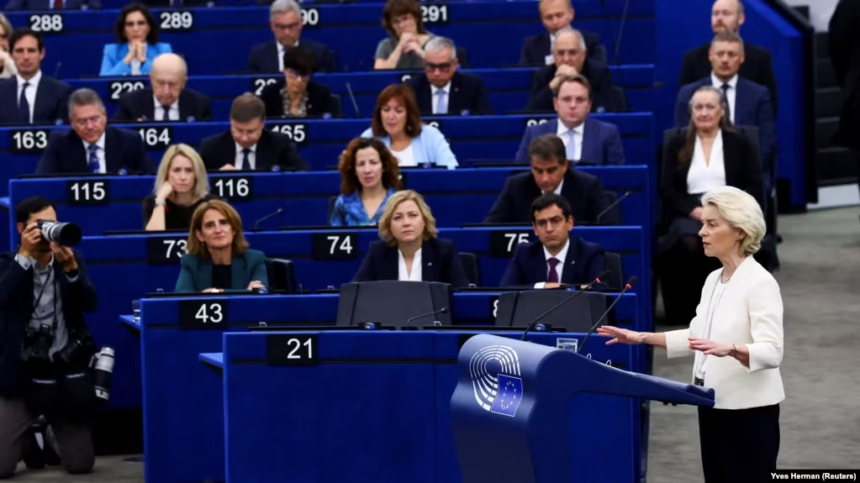
Speaking during her State of the Union address to the European Parliament in Strasbourg, von der Leyen said Mladić had committed some of the “most horrific crimes against humanity.”
“I was appalled by the footage from Ratko Mladić’s funeral in Belgrade last week,” von der Leyen said, referring to the public displays surrounding the burial of the former commander of the Army of Republika Srpska.
“There is simply no place in the European Union for the glorification of war criminals,” she added.
Von der Leyen made the remarks while discussing the EU enlargement process and the bloc’s relations with candidate countries, including Ukraine, Moldova and the Western Balkan states.
She said the countries were “close to our Union” and that the European Commission would soon propose roadmaps for candidates that have made the most progress in the accession process.
At the same time, she stressed that EU enlargement would continue to be based on merit and that respect for the bloc’s fundamental values was non-negotiable.
Mladić, who was convicted by the International Criminal Tribunal for the former Yugoslavia of genocide, crimes against humanity and war crimes committed during the Bosnian war, was buried in Belgrade on September 7 with military and state honors.
His funeral sparked criticism in the region and across Europe, with images showing the participation of political, religious and nationalist figures.
The funeral was also discussed in the European Parliament on Tuesday, where lawmakers called for a stronger EU response toward Serbia and raised questions over the future of the country’s EU accession process.
Von der Leyen’s comments add to growing scrutiny of Serbia’s relationship with the EU, particularly over issues involving the country’s handling of war-crimes legacy and the public glorification of convicted war criminals.