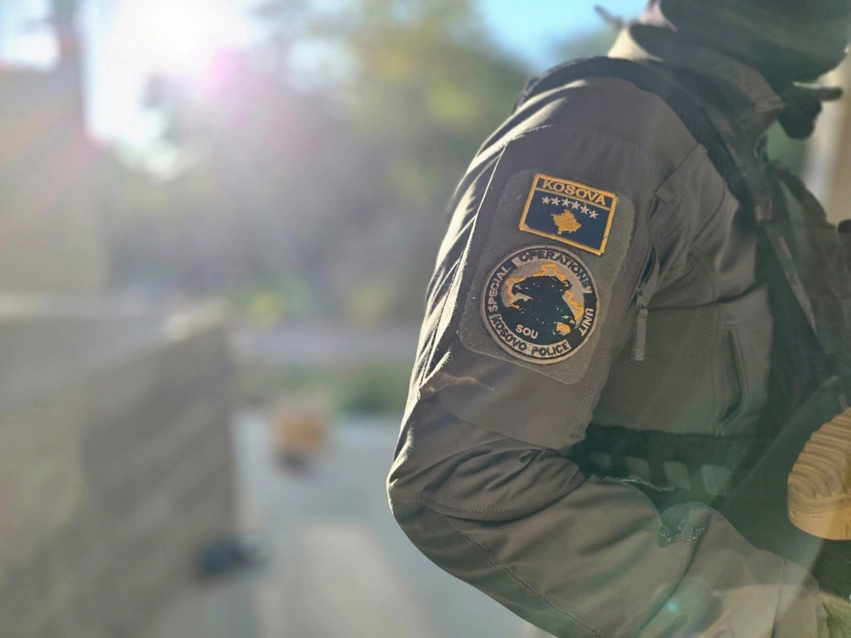
The arrest of nine people in Zubin Potok as part of an operation codenamed “File 23” has brought renewed attention to one of the most serious unresolved cases involving alleged war crimes in northern Kosovo — the disappearance and killing of 23 intellectuals during the 1998–99 war.
The operation by Kosovo’s Special Prosecution and Kosovo Police comes after the discovery and DNA identification of human remains in the Zubin Potok area. Investigators are now examining not only the identities of the victims, but also the circumstances surrounding their deaths and whether the evidence can establish individual criminal responsibility.
For the families of the missing, the latest developments have revived hopes that the fate of their relatives could finally be clarified after decades of uncertainty.
Security expert: Investigation must go beyond identifying victims
Security expert Fidair Berisha described the “File 23” operation and the arrests as an important development in the investigation of wartime crimes, particularly because of its connection to the case known as the “Group of Intellectuals.”
Berisha said the investigation should not stop at locating and identifying the victims, but should seek to establish what happened to them and whether those responsible can be identified through evidence.
“The importance of these arrests lies precisely in the fact that the investigation should not stop at finding and identifying the victims, but should proceed toward fully clarifying the circumstances of the killings and disappearances,” Berisha told Bota sot.
He stressed, however, that an arrest is part of an ongoing investigation and does not in itself establish guilt.
“We must bear in mind that an arrest is part of an investigative process and does not automatically imply the guilt of the arrested persons. It is therefore very important that investigations are conducted professionally, based on evidence and in accordance with legal procedures,” he said.
Berisha said “File 23” could lead to further developments if investigators obtain sufficient evidence and testimony to clarify what happened to the 23 missing intellectuals.
He added that the families of the victims have waited for years for answers and that justice should follow if individual responsibility is established through a lawful process.
Racaj: Evidence chain will be crucial
Criminalistics expert Muhamet Racaj said the arrests could be significant not only from a criminal-justice perspective, but also for documenting what happened during the war.
Referring to information made public by Kosovo Police and the Special Prosecution, Racaj said the nine suspects were arrested on suspicion of war crimes against the civilian population in a case connected to the “Group of Intellectuals.”
He said the central challenge for investigators would be establishing an evidence chain linking each suspect to a specific criminal act.
“It is not enough merely to identify suspected individuals; an evidence chain must be established linking the person, the location, the time, the victim and the manner in which the crime was committed,” Racaj told Bota sot.
According to Racaj, forensic and material evidence could play a particularly important role. He cited human remains, DNA analyses, military documents, communications, electronic data, witness testimony and other traces that could help investigators reconstruct the events.
He also pointed to the recent identification of human remains through DNA analysis and said authorities had seized telephones, military documents and other materials during the operation that could be relevant to the investigation.
Arrests do not establish criminal responsibility
Racaj said “File 23” could potentially become an important basis for further investigations, but stressed that its significance would ultimately depend on the evidence obtained and admitted during criminal proceedings.
“Potentially, it could be an important point for further developments, but that must be determined by the results of the investigation and by the evidence that will be presented in the criminal proceedings,” he said.
He emphasized that an arrest is only one stage of the legal process and does not constitute proof of guilt.
“An arrest is only one stage of the process and does not imply guilt. Criminal responsibility must be established individually for each suspect through a fair judicial process,” Racaj said.
The principle is particularly important in a case involving allegations of serious war crimes, where responsibility must be established on the basis of admissible evidence and individual findings rather than association with a broader case.
A case with significance beyond the courtroom
Racaj also linked the investigation of wartime crimes to Kosovo’s broader institutional and legal security, arguing that the ability of state institutions to investigate and prosecute serious crimes is an important element of institutional security.
He called for continued professional cooperation between Kosovo Police, the Special Prosecution, criminalistics experts and forensic institutions, with particular attention to preserving the integrity of evidence.
“For Kosovo, it is important that the Police, Special Prosecution, criminalistics experts and forensic institutions continue their professional cooperation, preserving the integrity of evidence and following a fact-based investigative methodology,” he said.
For the families of the 23 missing intellectuals, however, the case remains fundamentally about establishing what happened to their loved ones.
The identification of remains can provide answers about the victims, but determining the circumstances of their deaths and whether specific individuals bear criminal responsibility requires further investigation and judicial proceedings.
As Racaj put it, war crimes should be documented, those responsible should face justice if their guilt is proven, and victims should have the right to know the truth.
The nine people arrested in the “File 23” operation remain entitled to the presumption of innocence unless and until their individual criminal responsibility is established by a final court judgment.