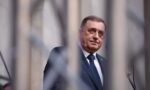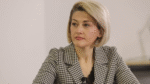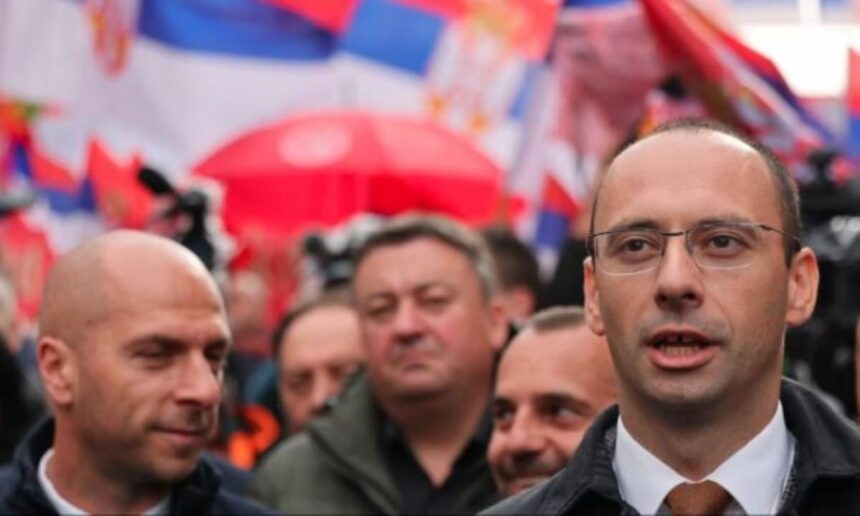
The Deputy Leader of the Srpska Lista, Igor Simić, has said that he and several other officials from the party have been summoned as suspects by the Terrorism Investigation Department of Kosovo’s Special Prosecution.
According to Simić, the summons concerns four alleged criminal offenses: joining an association with the aim of attacking Kosovo’s constitutional order, assaulting an official, endangering a person under international protection, participating in a crowd committing a criminal offense, and hooliganism.
“As always, I will respond to the summons because I have nothing to hide. I am aware, as are those who wrote this, that I have committed no criminal offense and that, as a political representative, I have an obligation to stand with my people and speak publicly about their suffering,” Simić wrote on Instagram.
Radio Free Europe contacted Kosovo’s Special Prosecution seeking clarification about the specific allegations against the Srpska Lista officials, the events to which the investigation relates and the number of people suspected of the offenses. The prosecution had not responded at the time of publication.
Simić, who is also a member of the Kosovo Assembly, described the summons as “pressure,” claiming that Srpska Lista officials are called in by Kosovo prosecutors whenever they raise concerns about what he described as violations of the individual and collective rights of Serbs.
Srpska Lista is the largest political party representing Kosovo Serbs and has the backing of authorities in Belgrade.
Its officials have previously been summoned by the Special Prosecution for questioning in cases related to alleged attacks on Kosovo’s constitutional order.
Previous tensions in northern Kosovo
In previous years, Serbs in northern Kosovo have erected barricades and organized protests in opposition to the implementation of decisions by Kosovo institutions, with Srpska Lista regularly supporting such actions.
In June this year, Kosovo prosecutors filed an indictment against six people over the erection of barricades in December 2022.
The barricades were set up amid tensions surrounding local elections in Kosovo’s Serb-majority northern municipalities, following the resignations of municipal officials as part of the collective withdrawal of Serbs from Kosovo institutions, an initiative supported by Srpska Lista.
The situation subsequently deteriorated, culminating in violent clashes in Zvečan in late May 2023. The violence erupted during protests by local Serbs opposing the entry of an Albanian mayor into the municipal building after he won an election boycotted by local Serbs.
More than 90 KFOR personnel were injured during the clashes. Kosovo authorities subsequently initiated proceedings against around a dozen people in connection with the violence. Most were released to defend themselves while at liberty under conditions, while several Serbian citizens were expelled from Kosovo.
The tensions culminated in the armed attack in Banjska, near Zvečan, on Sept. 24, 2023. The group was led by Milan Radoičić, who was then deputy leader of Srpska Lista. Kosovo police officer Afrim Bunjaku was killed in the attack, while three Serbian attackers were subsequently killed.
Kosovo has accused Serbia of involvement in the Banjska attack, a claim that Serbian authorities have denied.
The latest summons come amid continued legal proceedings and political tensions surrounding events in northern Kosovo, with the Special Prosecution continuing to investigate allegations related to violence and challenges to Kosovo’s constitutional order.