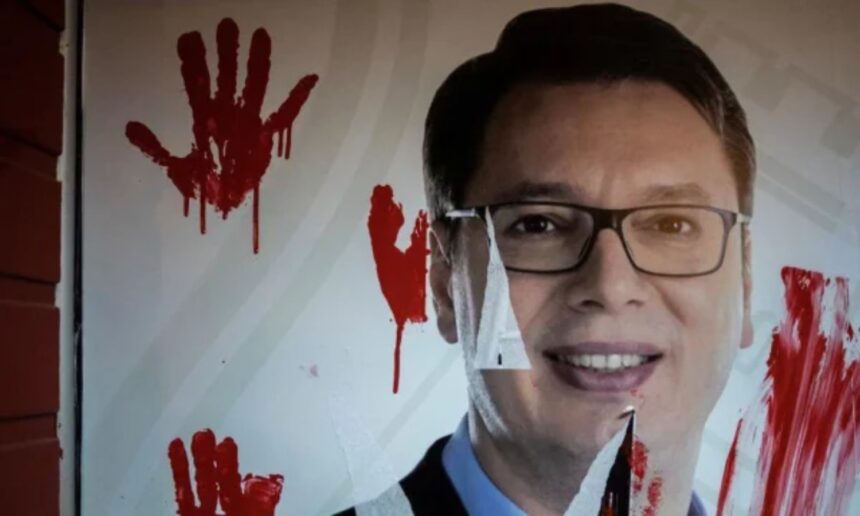
Serbian lawyer Božo Prelević has said he believes that people suspected or charged in several high-profile cases — including Jovanjica, the Banjska attack, the Generalštab affair and the collapse of the railway station canopy in Novi Sad — may be among the 49 people pardoned by former Serbian President Aleksandar Vučić.
Prelević told the Beta news agency that the authorities were unlikely to publicly disclose the full list of pardoned individuals, arguing that the 12 members of the so-called “Novi Sad group” whose pardons were announced publicly could be drawing attention away from the other 26 people whose identities remain undisclosed.
“I would not be surprised if those pardoned included suspects and defendants in the Jovanjica, Banjska, Generalštab and Novi Sad railway station canopy cases,” Prelević said.
His comments are an allegation, and there is currently no public evidence confirming that suspects or defendants in those cases were among the undisclosed recipients.
26 Names Remain Unknown
Vučić announced the pardons on September 27, shortly before resigning as president. He said that 49 people had been pardoned despite the opinions of parts of the relevant commission and security services.
According to Vučić, 23 of the 49 were connected to events surrounding the prolonged student-led protests: 12 members of the “Novi Sad group” and 11 people who had participated in incidents against protesters. The identities and alleged offences of the remaining 26 recipients have not been publicly disclosed.
The Novi Sad group consists of activists and students who were charged in connection with an alleged attempt to undermine Serbia’s constitutional order. Their proceedings were ongoing when Vučić announced the pardons.
As of September 30, the Higher Court in Novi Sad had reportedly not yet received official notification of the pardon concerning the 12 activists. The presidential decision itself had also not been publicly released.
Ministry of Justice Says It Does Not Know the Full List
Serbia’s Ministry of Justice told Beta that Vučić had personally selected the 49 people and that the ministry would not participate in implementing the decisions. A ministry source also said it could not confirm whether the legally prescribed procedure for selecting the recipients had been followed.
The ministry said that the relevant decisions should be forwarded to prosecutors and courts depending on the stage of each case, with courts then responsible for notifying correctional institutions where necessary.
Prelević argued that pardons should be transparent and said that the full list should be made public if the decisions were genuinely based on humanitarian considerations. He alleged that the authorities were withholding the names because of concerns about public reaction.
The controversy comes as Serbia prepares for early parliamentary elections on October 25, following Vučić’s resignation on September 27. Reuters reported that Vučić’s resignation came seven months before the end of his second presidential term and was linked to preparations for the snap parliamentary vote.
For now, however, the identities of the remaining 26 people pardoned by Vučić and the offences for which they were pardoned remain undisclosed.