Criminologist Dušan Stanković Calls for Greater Accountability and Preventive Policing Ahead of Elections
As Serbia approaches its upcoming elections, concerns are growing over potential electoral fraud, vote-buying, violence and attacks on journalists, election observers and citizens seeking to prevent irregularities.
In an analysis published by Radar on October 12, criminologist Dušan Stanković, an associate of the Belgrade Centre for Security Policy (BCBP) and a former police officer, argues that citizens should not give up on state institutions, even amid concerns about political influence over the police and judiciary.
Stanković maintains that not all police officers and prosecutors are under the control of the authorities and that citizens can help prevent electoral abuses by communicating directly with officials and holding them accountable for their actions.
Polling station officials can intervene
Stanković argues that members of polling station committees should act when they witness violations of electoral rules and notify the relevant election commissions.
If someone attempts to undermine ballot secrecy by monitoring another voter’s choice, polling station officials can intervene, warn the person involved and, if necessary, call the police.
He says similar action may be needed in cases of alleged vote-buying or the so-called “Bulgarian train” method, in which voters are pressured or manipulated into casting ballots according to predetermined instructions.
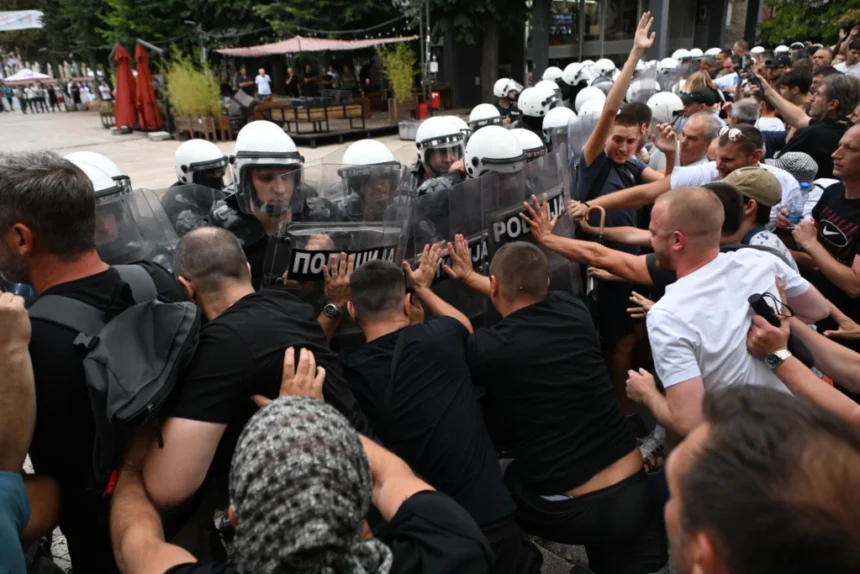
While citizens and election observers have a role in reporting and preventing such practices, Stanković warns that confrontations can escalate into violence and should be avoided.
Calls for preventive police patrols
The former police officer argues that police should proactively patrol polling stations and other locations considered at risk of electoral violence or irregularities.
He points to the 2023 parliamentary elections, when Serbia had 8,273 polling stations, compared with 31,290 authorised police officers, according to a 2025 Interior Ministry report.
Stanković also recalls that thousands of police officers were deployed around schools in the months following the mass shooting at Vladislav Ribnikar Elementary School, arguing that a similar deployment strategy could be organised around polling stations on election day.
Because he does not expect the police leadership to take sufficient preventive action on its own, he says citizens and election participants should request such measures directly.
Direct contact with local police
Stanković recommends that citizens contact local police stations and officers working in their communities rather than relying exclusively on formal letters, emails or calls to central police authorities.
He suggests meeting station commanders, neighbourhood patrol officers and community police officers to request preventive patrols around polling stations and other potentially sensitive locations.
Such meetings could also establish communication channels for election day and encourage officers to take greater responsibility for responding to reported violations.
According to Stanković, direct engagement with local officers may be more effective than contacting central police leadership, which he believes could be more susceptible to political pressure.
Contact police stations and prosecutors directly
The analysis also highlights the importance of knowing which police officials and prosecutors will be on duty during the elections.
Stanković warns that reports of electoral offences could be obstructed through delays in dispatching patrols, slow responses or the mishandling of evidence.
He therefore recommends establishing direct contact with local police stations and obtaining their publicly available telephone numbers in advance.
He also urges citizens to identify the prosecutors responsible for handling election-related cases and to monitor their response to reported offences.
According to the article, basic public prosecutor’s offices generally handle offences involving electoral rights, public order and less serious crimes, while more serious cases, including certain forms of organised corruption and serious bodily injury, fall under higher public prosecutor’s offices, depending on the applicable legal jurisdiction.
Accountability as a safeguard for elections
Stanković argues that greater transparency and public scrutiny could strengthen both individual and institutional responsibility during the electoral process.
He acknowledges that people in senior institutional positions may be politically loyal to the authorities, but maintains that many officials working on the ground retain a degree of independence and can cooperate with citizens to uphold the law.
Referring to the early months of student-led blockades and protests, he notes that some police officers and members of the judiciary expressed dissatisfaction with the subsequent crackdown.
His central argument is that citizens should not assume in advance that police and prosecutors will fail to act. Instead, they should document suspected irregularities, report them through appropriate channels, seek timely intervention and hold officials accountable for their response.
The objective, he concludes, should be to protect voters’ rights, prevent violence and ensure that elections are conducted lawfully and transparently.