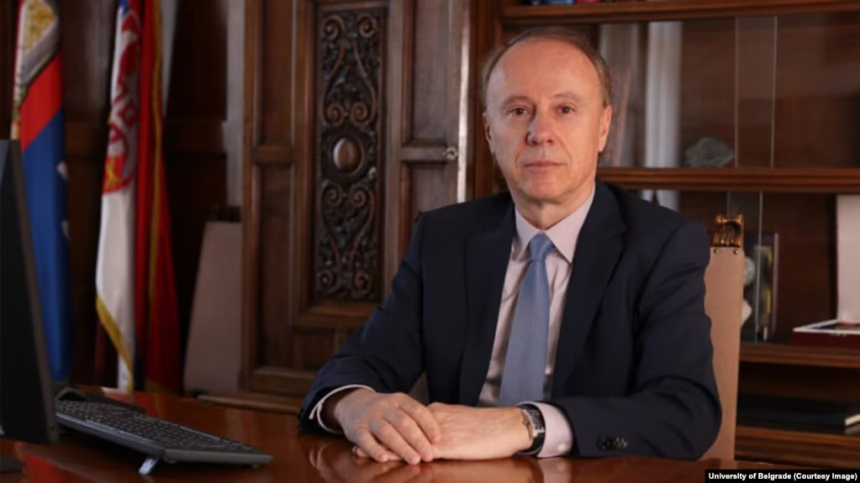
University of Belgrade Rector Vladan Đokić has announced that forensic analysis found Pegasus spyware on his phone, calling the discovery an attempt to intimidate him and urging Serbian authorities to launch an urgent, thorough and transparent investigation.
“Pegasus spyware on my phone is another attempt at intimidation aimed at preventing critical views and public engagement,” Đokić said in a written statement, demanding that authorities establish who installed and used the surveillance software.
The presence of the spyware was confirmed through a joint forensic analysis conducted by Canada-based Citizen Lab and Serbia’s SHARE Foundation, according to Radio Free Europe/Radio Liberty (RFE/RL).
Đokić has supported student protests in Serbia and the student movement’s decision to participate in the parliamentary elections scheduled for October 25.
The rector said the alleged surveillance was not only an attack on him personally but also a threat to the privacy of his data, contacts and communications.
“Everyone connected to me is also a potential target of the abuse of surveillance technologies,” he said.
Prosecutorial Official Also Reported Possible Spyware Attack
The Serbian-language BBC reported on October 19 that Rade Bajić, a senior prosecutorial associate who worked on the General Staff case, also received notifications from Apple in August warning of possible cyberattacks.
Forensic examinations of Bajić’s phone are ongoing. According to the BBC report, the notifications provide strong indications that his device may also have been compromised by spyware, although the analysis has not yet been completed.
Serbia’s Security Intelligence Agency (BIA) and Ministry of Internal Affairs did not respond to RFE/RL’s urgent request for comment on the latest allegations of unlawful surveillance.
At Least 14 Cases Documented in 2026
The latest findings follow a series of reports involving alleged spyware attacks against opposition politicians, student activists and other critics of the Serbian authorities.
An independent forensic investigation involving domestic and international experts confirmed at least 14 cases of spyware use since the beginning of 2026, according to RFE/RL. The outlet described this as the largest documented wave of such surveillance in Serbia to date.
Opposition representatives and students have accused the authorities, led by President Aleksandar Vučić at the time of the earlier allegations, of conducting unlawful surveillance. Government officials have denied spying on their opponents.
The BIA also rejected previous allegations, describing claims of surveillance as “ordinary trivial sensationalism.”
How Pegasus Works
Pegasus, developed by Israeli company NSO Group, is an advanced spyware tool capable of infecting devices without requiring the user to click a link or take any action.
Once installed, it can access sensitive information, including messages, contacts, photographs and application data. It can also reportedly record screen activity and activate a device’s microphone or camera without the user’s knowledge.
The use of spyware for unlawful surveillance can violate privacy and other legal protections.
NSO Group says its customers are governments and state security agencies rather than private individuals. The company has not publicly commented on the latest allegations in Serbia.
In response to an inquiry from Amnesty International in mid-2025, NSO did not confirm whether Serbia was a client or whether Pegasus had been used for unlawful surveillance in the country. The company said it does not comment on current or former clients, citing confidentiality obligations.
The latest findings add to concerns over the use of sophisticated surveillance technology against journalists, activists, opposition figures and other individuals engaged in public life. However, the identity of whoever allegedly deployed the spyware on Đokić’s phone has not been established publicly.