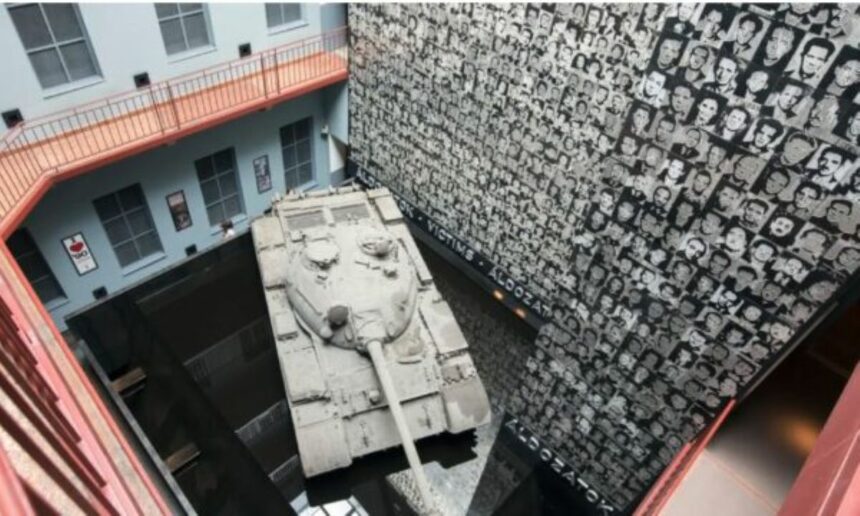
Hungarian authorities have made tens of thousands of secret police files from the country’s communist era available to the public through a new digital platform, offering unprecedented access to records documenting decades of surveillance and cooperation with the former regime.
The newly accessible materials shed light on an extensive network of informants and agents who monitored citizens on behalf of the communist authorities.
The archive was opened on November 4, 2026, a date marking the 70th anniversary of the Soviet invasion of Budapest, when Soviet tanks crushed the Hungarian uprising that had begun on October 23, 1956.
Prime Minister Peter Magyar described the initiative as the fulfillment of an important commitment, saying that more than 36 years after the fall of communism, Hungary was taking another step toward transparency and confronting its past.
“Now, after 36 years, we are keeping our promise of regime change,” Magyar said, announcing that approximately 60,000 names can already be searched by the public.
A further collection of documents is expected to be released in February 2027. However, the archive is incomplete, as many files were destroyed during the unrest of 1956 and again in 1988 and 1989, shortly before the collapse of the communist system.
Magyar urged citizens to approach the release with dignity and respect, warning that some of the information could be painful for families whose relatives are mentioned in the documents.
“I invite everyone to receive this long-delayed opening of the archives with dignity and humanity, because many families will encounter difficult information about a relative who is no longer alive. You cannot deal with trauma without conversations and questions,” he said.
Until now, access to the records had been restricted. Apart from researchers, individuals could generally request information only about their own files or those of close relatives. Under the new rules, anyone can search the former secret police archives through the online platform.
A network of tens of thousands of informants
During the Cold War, secret services across Eastern Europe, including Hungary and East Germany, relied on extensive networks of informants recruited through blackmail, intimidation or financial incentives.
In Hungary, approximately 55,000 secret informants were registered between 1956 and 1989. They monitored friends, family members, neighbors and colleagues, reporting signs of opposition to the regime or perceived Western influence. Information collected by the network could lead to arrests and interrogations.
Some clandestine meetings took place in private apartments in central Budapest, known as “K apartments,” which served as meeting points between secret police agents and their collaborators.
The documents are managed by Hungary’s Historical Archives of State Security and include the names of an estimated 50,000 to 60,000 people who cooperated with the communist regime’s secret services.
Different approaches across former Eastern Bloc countries
Unlike Hungary, other former Eastern Bloc countries have adopted more restrictive approaches to opening their secret police archives.
Poland has made records available for many years, although unrestricted searches are not permitted. Germany maintains restrictions on access to Stasi files, while the Czech Republic has not placed all its materials in a comprehensive online database.
Hungarian officials have emphasized that transparency and an understanding of the country’s history are essential foundations of a functioning democracy.
However, certain sensitive personal information will remain protected, including medical records and information concerning addictions and sexual orientation.
The opening of the archives is expected to provide historians, researchers and families with a broader understanding of how the communist-era surveillance system operated and how deeply it penetrated everyday life in Hungary.