Serbia cannot claim to be building a democratic future while continuing to hide the crimes of its past and protecting institutions accused of serving political power rather than the public. More than three decades after the fall of communism, the country still refuses to fully confront the legacy of its secret police, political persecution and state repression.
A growing debate in Serbia is once again putting the spotlight on the secret files of OZNA and UDBA, the communist-era security services, with calls for their archives to be opened and the names of their informants and collaborators made public. The demand has also raised a more uncomfortable question: what has changed within Serbia’s security structures, and who benefits from keeping the truth hidden?
The Union of Monarchists has urged Serbia’s future government to follow Hungary’s example and make the secret archives public. Its co-president, Vladimir Jelić, argues that Serbia cannot become a genuinely democratic state without confronting the crimes committed under communist rule.
For decades, families of people who were persecuted, imprisoned and killed have been left waiting for answers. The identities of those who informed on their compatriots, participated in political persecution or built careers through the suffering of others remain concealed.
But the problem goes beyond historical archives.
Former Serbian Renewal Movement leader Vuk Drašković recalls that his party submitted a bill on opening secret files to the Serbian Parliament in 2004. It was never adopted and remained buried in parliamentary drawers. According to Drašković, the Democratic Party, the Democratic Party of Serbia, the Radicals and the Socialists all refused to support it.
That failure exposes a political establishment that has repeatedly spoken about democracy while avoiding one of its most basic obligations: accountability.
The BIA Must Also Face Scrutiny
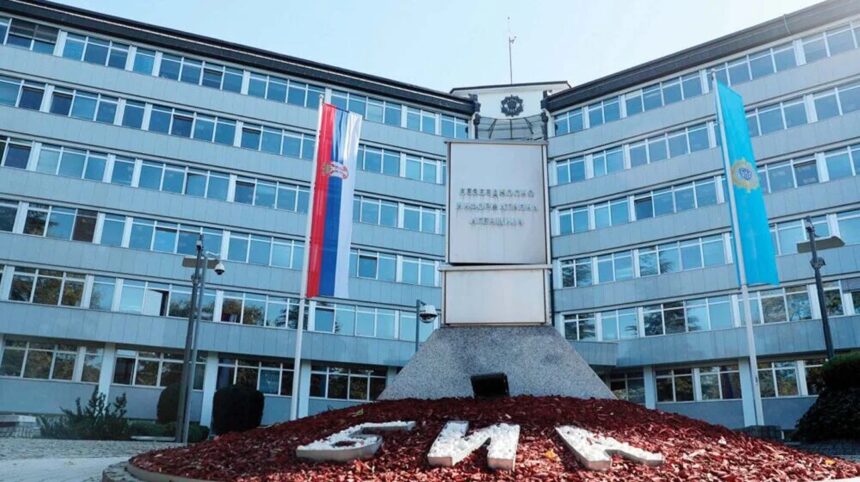
The debate has now extended to Serbia’s current security structures, particularly the Security Intelligence Agency (BIA).
Former SBPOK inspector Predrag Simonović argues that opening communist-era archives is only half the job. He calls for the BIA to be dismantled and rebuilt from the ground up, alongside a comprehensive review of everyone recruited into the agency over the past 15 years.
His argument raises serious questions about the relationship between intelligence institutions and political power in Serbia. Security agencies must protect the state and its citizens, not become instruments for protecting political interests, intimidating opponents or rewarding party loyalty.
Lawyer and League of Social Democrats of Vojvodina vice-president Aleksandar Olenik also supports opening all files dating back to 1945, including those belonging to military and civilian intelligence services. He argues that the BIA must be replaced with a completely new institution focused on protecting constitutional order and citizens’ freedoms rather than persecuting political opponents.
Serbia Cannot Escape Its Past by Keeping Its Archives Locked
The issue has remained unresolved since October 5, 2000, when the fall of Slobodan Milošević raised expectations of a democratic break with the country’s authoritarian past.
Yet successive governments have failed to deliver on the promise of opening the secret files.
Now, the question is whether another political change will finally bring accountability or simply replace one group of officials with another while leaving the same institutional culture untouched.
The issue is also directly relevant to Serbia’s European integration. The opening of secret archives and accountability for past abuses are part of the wider debate over democratic institutions, fundamental rights and the rule of law, areas covered by EU accession Chapters 23 and 24.
Serbia continues to seek European membership, but democracy cannot be built on concealed archives, unaccountable intelligence structures and political protection for those who abuse state power.
A country that refuses to expose the crimes of its former security services cannot convince anyone that it has broken with the system that produced them. And a government that fears the truth about its own institutions has every reason to keep those files locked.
The Files on War Crimes in Kosovo Must Also Be Exposed
And there is another truth Serbia must stop hiding: the secret archives containing evidence of war crimes committed in Kosovo must also be opened.
The files held by Serbia’s former security services, military intelligence and other state institutions may contain crucial evidence about the planning, execution and concealment of crimes against Kosovo’s Albanian civilian population during the 1998–1999 war. They may help establish who gave the orders, which military and police units were involved, who participated in the operations and who helped conceal evidence, including the removal and transportation of victims’ bodies to mass graves in Serbia.
For decades, families of those killed and forcibly disappeared have been denied the truth. Mass graves, missing persons and the fate of thousands of victims cannot be separated from Serbia’s responsibility to disclose what its institutions know.
Opening these archives must not be limited to exposing communist-era informants and political persecution. It must also mean releasing documents that could help establish responsibility for war crimes, forced disappearances and the systematic concealment of evidence in Kosovo.