
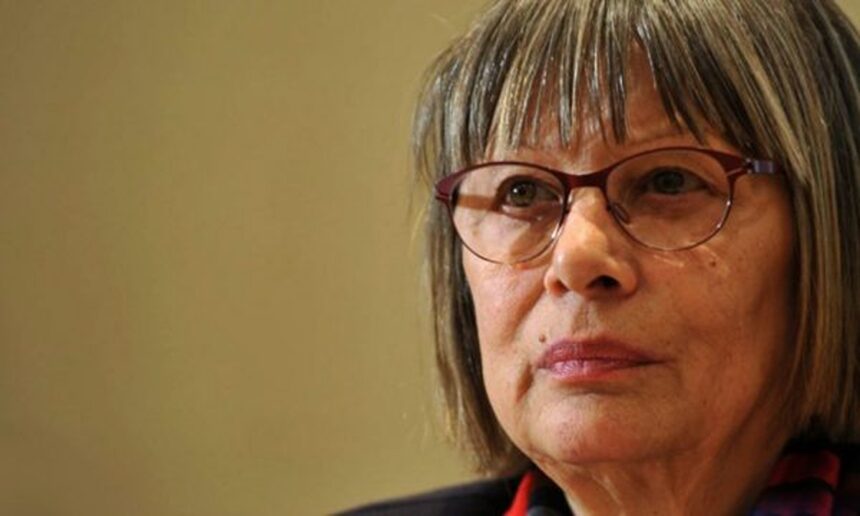
Nataša Kandić, founder of the Humanitarian Law Center (HLC), has criticised practices in Serbia that suppress judicial rulings and facts established through court proceedings, replacing them with what she described as a so-called “people’s truth”.
In a statement addressed to European Union Ambassador to Serbia Andreas von Beckerath, Kandić said that, alongside his warning that glorifying convicted war criminals contradicts European values, he should also have addressed the ongoing denial and distortion of established facts about war crimes.
According to Kandić, the most significant distortions concern the genocide in Srebrenica and the victims of the war in Kosovo.
“Responsible confrontation with the past requires an end to these practices,” she stressed.
Kandić highlighted the documentation collected by the Humanitarian Law Center, which she described as the most comprehensive database of human losses in Kosovo, documenting the individual fate of victims from all ethnic communities.
She also pointed to the organisation’s extensive collection of court documents, testimonies from victims’ family members and witnesses, as well as a specialised archive of video recordings of testimonies presented before the International Criminal Tribunal for the former Yugoslavia (ICTY), covering the wars that began in 1991, including the conflict in Kosovo.
According to Kandić, this documentation could provide valuable assistance to Serbia’s War Crimes Prosecutor’s Office, but only if the institution operates independently and bases its work on facts and evidence rather than political instructions from the authorities.
“Judicial independence, which the EU insists on, must also extend to the prosecution of war crimes,” Kandić stated.
She also called on the European Union to provide political and financial support for involving younger generations, particularly students and university graduates, in researching the wars of the 1990s.
Kandić argued that young people should have the opportunity to examine evidence, draw their own conclusions and critically reassess dominant narratives about the past.
Concluding her statement, she warned that memory politics has become a new weapon of war, deepening national divisions, denying crimes and glorifying those responsible for them.
She stressed that knowledge and facts documented by independent research organisations could help establish a different culture of remembrance and strengthen regional cooperation based on accountability for war crimes and respect for all victims.